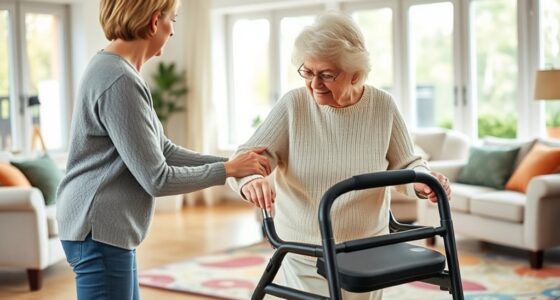

To move a larger senior safely, always plan the transfer first and clear the area of obstacles. Use assistive devices like slide sheets, transfer belts, or lifts to reduce your effort and prevent injury. Maintain proper body mechanics—bend your knees, keep your back straight, and engage your core. Communicate clearly with the senior and don’t attempt to lift alone if it feels unsafe. Explore more tips to master safe and effective transfers.
Key Takeaways
- Use slide sheets, transfer belts, and patient lifts to reduce physical effort and prevent injury during transfers.
- Ensure proper training in body mechanics and assistive device use before moving a larger senior.
- Prepare the environment by clearing obstacles and locking furniture wheels for safe, smooth transfers.
- Communicate clearly with the senior, encouraging cooperation and informing them about each movement.
- Never attempt heavy lifting alone; seek help or mechanical aids to ensure safety for both caregiver and senior.
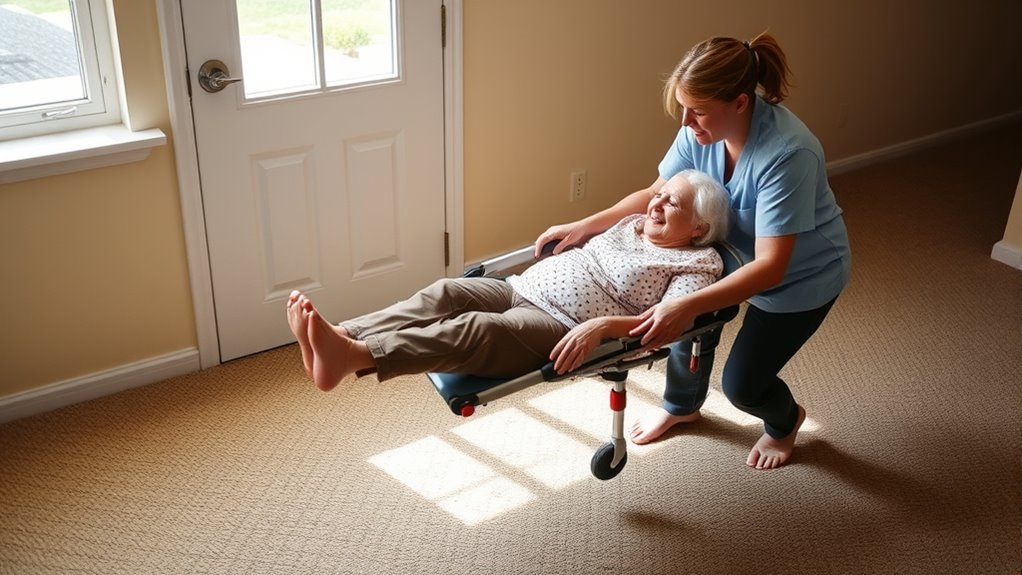
Moving a larger senior can be challenging and risky if not done properly, but with the right techniques, you can prevent injuries for both yourself and your loved one. One of the most effective ways to do this is by using assistive devices designed for safe transfers and mobility. These devices, such as slide sheets, transfer belts, and patient lifts, reduce the physical strain on you and provide a safer, more comfortable experience for your loved one. Before attempting any move, make sure you’re familiar with how to properly use these tools. Proper caregiver training is essential—it guarantees you understand the correct techniques for lifting, transferring, and positioning your loved one without risking injury. Many healthcare providers or home care specialists offer training sessions, which can considerably boost your confidence and competence.
Start by evaluating the situation carefully. If your senior is able to assist in any way, encourage them to do so, but always be prepared to support their weight fully. Use assistive devices like slide sheets to reduce friction and make sliding or repositioning easier. These sheets help you shift your loved one smoothly across a bed or chair, minimizing the need for strenuous lifting. When moving someone larger, always plan your approach in advance—clear the pathway, lock wheels on beds or chairs, and ensure the environment is safe. This preparation reduces the risk of slips, trips, or falls. Additionally, knowing the importance of proper body mechanics**** can significantly decrease the risk of injury during transfers.
Position yourself correctly to protect your back. Stand with your feet shoulder-width apart, bend your knees, and keep your back straight. Engage your core muscles, and avoid twisting your torso during the move. Utilizing assistive devices properly helps maintain proper body mechanics and reduces strain. Remember, never attempt to lift or move a senior alone if it feels unsafe; always ask for help or use mechanical aids. Caregiver training emphasizes the importance of teamwork and proper technique, which are vital for safe handling.
Additionally, communicate clearly with your loved one throughout the process. Let them know what you’re about to do, and encourage cooperation if possible. This makes the transfer smoother and safer. If you feel unsure at any point, pause and seek assistance. The right combination of assistive devices and caregiver training can make all the difference, transforming a potentially risky task into a manageable, safe procedure. Prioritizing safety and proper technique not only protects your loved one but also preserves your own health, making caregiving a sustainable and positive experience.
Frequently Asked Questions
How Do I Assess if a Senior Needs Professional Moving Assistance?
You should assess if a senior needs professional moving help by checking for household obstacles and mobility limitations. If they struggle with stairs, narrow doorways, or balance issues, or if household obstacles make movement difficult, it’s time to contemplate professionals. Also, if they experience pain or fatigue during tasks, don’t risk injury—seek expert assistance. Prioritize safety to prevent accidents and ensure a smooth, stress-free move.
Are There Specific Tools Recommended for Lifting Heavier Seniors Safely?
Yes, there are specific tools you should use. Assistive devices like slide sheets, transfer belts, and ergonomic tools help you lift heavier seniors safely. These tools reduce strain on your back and improve stability during transfers. Always make sure you’re trained in their proper use, and consider asking for help or using mechanical lifts if necessary. Prioritize safety to protect both yourself and the senior you’re assisting.
How Can I Prepare the Environment to Prevent Falls During Moving?
To prevent falls during moving, you should first clear the home environment of clutter, loose rugs, and cords that could cause tripping. Guarantee adequate lighting in all areas and use non-slip mats in bathrooms and hallways. Securing furniture and installing grab bars adds extra fall prevention. These steps create a safer environment, reducing the risk of injury and making the move smoother for both you and the senior.
What Signs Indicate a Senior Is at Risk of Injury During Transfer?
If you notice a senior displaying muscle weakness or balance issues, they’re at higher risk of injury during transfers. Signs include unsteady gait, trembling, or difficulty maintaining posture. You’ll also see reluctance to move, or they might lean heavily on support. Pay close attention to these cues, so you can prepare proper assistance, use transfer aids, and guarantee their safety during the move.
How Can I Support a Senior’s Emotional Well-Being During the Move?
You can turn a stressful move into a moment of comfort by offering genuine emotional support and reassurance. Speak softly, listen actively, and show patience to reduce their stress. Use kind words and gentle gestures to convey safety and care. Making sure they feel heard and valued can dramatically ease anxiety, helping them stay calm and secure during the move. Your compassion can transform their experience into one of trust and peace.
Conclusion
Remember, moving a larger senior is like tending a delicate garden—you need patience and the right tools. Use slide sheets and proper techniques to keep everyone safe, preventing injuries and ensuring a smooth shift. Approach each move with care, like handling fragile blooms, and you’ll create a safe, comfortable environment. With the right preparation, you’ll navigate this process gently and confidently, turning a potentially stressful task into a successful journey for everyone involved.