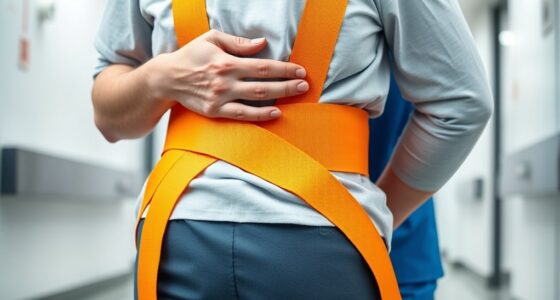
To safely reposition a bedridden senior, clear the area and gather your equipment, maintaining good body mechanics like bending your knees and keeping your back straight. Use assistive devices like slide sheets or transfer belts to reduce friction and strain. Communicate clearly with the senior, support their body gently, and check their skin afterward for redness or discomfort. Following proper techniques and routines guarantees comfort and safety—keep exploring for detailed guidance.
Key Takeaways
- Assess the senior’s mobility, skin condition, and comfort needs before repositioning.
- Prepare the environment and equipment, ensuring proper lighting, clearance, and assistive devices.
- Use proper body mechanics: bend knees, keep back straight, and stay close to the resident during movement.
- Communicate clearly with the senior, explaining each step to reduce anxiety and ensure cooperation.
- Monitor skin color, redness, and discomfort during and after repositioning to prevent pressure injuries.
Understanding Why Proper Repositioning Matters

Understanding why proper repositioning matters is essential because it directly impacts a senior’s health and comfort. When you reposition a bedridden senior correctly and regularly, you help prevent pressure injuries that can lead to serious infections. Adequate repositioning redistributes weight and alleviates pressure on vulnerable areas like hips, heels, and sacrum. It also enhances circulation, reducing the risk of blood clots and tissue damage. Additionally, consistent repositioning decreases discomfort and pain, improving overall quality of life. It’s not just about avoiding complications; it’s about maintaining dignity and independence for your loved ones. By understanding the importance of precise timing and technique, you ensure safe, effective care that keeps seniors comfortable and healthy. Proper pressure redistribution is a key component of comprehensive caregiving.
Preparing the Environment and Equipment Safely
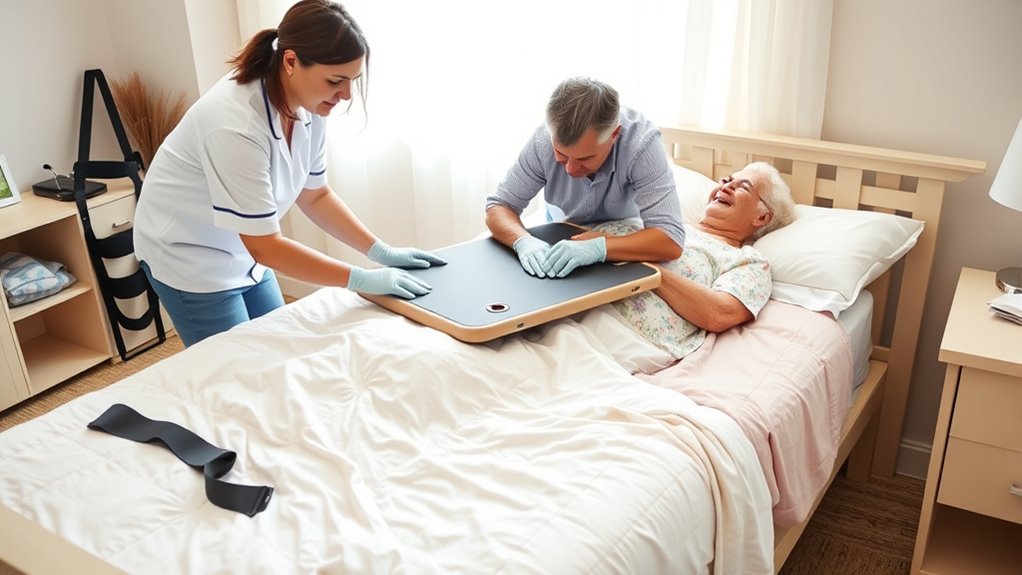
Creating a safe environment and selecting the right equipment are essential steps before repositioning a bedridden senior. First, guarantee the area around the bed is clear of obstacles, clutter, and tripping hazards. Adjust the bed height to match your comfort and the senior’s mobility level, ideally at a waist height to reduce strain. Use appropriate equipment like turning mattresses, lateral tilt beds, or transfer aids to support safe movement. Check that all devices are in good condition and properly positioned. Secure bed rails if needed, and make sure call buttons or emergency devices are within easy reach. Proper lighting is crucial to prevent accidents. Preparing the environment reduces the risk of falls, injuries, and discomfort for both you and your senior during repositioning. Additionally, understanding proper deep-sky imaging techniques can help you better plan and execute safe repositioning, especially in settings where lighting or environment control is important. Incorporating Proper lighting adjustments can further enhance visibility and safety during the process. Familiarity with transfer techniques can also improve safety and efficiency. Paying attention to environmental safety standards ensures all precautions are met for optimal safety.
Selecting the Right Technique for Your Senior’s Needs

Choosing the right repositioning technique depends on your senior’s specific physical condition, mobility level, and comfort needs. You need to assess their strength, joint flexibility, skin integrity, and pain levels. For seniors with limited movement or fragile skin, gentle log-rolling or using assistive devices might be best. If they’re more mobile, supportive sliding or pivot techniques can help maintain independence. Implementing appropriate cookie preferences ensures a respectful approach to their comfort and safety. Additionally, understanding safe movement practices can significantly reduce the risk of injury for both caregiver and senior.
Using Assistive Devices to Ease Repositioning

Using assistive devices can considerably ease the repositioning process, reducing strain for both caregivers and seniors. These tools help move seniors safely and comfortably, minimizing injury risk. Devices like slide sheets, transfer belts, and mechanical lifts make repositioning smoother and less physically demanding. For example, slide sheets minimize friction, while transfer belts offer better grip and control. When selecting equipment, consider your senior’s mobility level and needs. Here’s a quick overview:
| Device | Purpose | Benefits |
|---|---|---|
| Slide Sheets | Reduce friction during moves | Easier, less force required |
| Transfer Belts | Improve grip and control | Safer transfers |
| Mechanical Lifts | Assist with heavy lifting | Prevent caregiver injury |
| Turning Mattresses | Facilitate repositioning | Pressure redistribution |
Proper training and technique are also essential to ensure safety and effectiveness during repositioning. Incorporating proper technique helps prevent injuries and ensures comfort for the senior. Additionally, understanding safe repositioning methods can further reduce risks and improve outcomes. Being knowledgeable about assistive device usage can empower caregivers to perform transfers confidently and safely. Developing caregiver skills through proper training enhances overall safety and comfort during the process.
Protecting Your Back and Maintaining Proper Body Mechanics

To safeguard your back, always use proper body mechanics when repositioning a senior, like keeping your back straight and bending at your knees. Utilizing assistive devices can reduce strain and make the process safer for both of you. By staying mindful of your posture and equipment, you minimize injury risk and ensure smoother transfers. Being aware of safe lifting techniques can further enhance your safety during these tasks. Incorporating ergonomic principles into your approach can also help prevent injury and promote better body mechanics. Additionally, understanding the importance of risk management strategies can help you prepare for unexpected challenges during repositioning. Applying assistive technology can further support safer and more efficient repositioning efforts, especially when considering proper equipment use.
Proper Body Mechanics
Protecting your back while repositioning a bedridden senior is essential to prevent injuries and ensure safe handling. To do this, always maintain proper body mechanics. Keep your feet shoulder-width apart, bend at your hips and knees, and keep the load close to your body. Avoid twisting your torso; instead, pivot your feet when turning. Use your leg muscles to lift, not your back, and communicate clearly with your patient to coordinate movements. Incorporating proper lifting techniques from trusted sources can further enhance safety and effectiveness. Remember:
- Maintain a straight back and avoid bending at the waist.
- Use smooth, controlled motions to prevent sudden pulls.
- Keep the person close to your body to reduce strain.
Practicing proper body mechanics minimizes injury risks and makes repositioning safer for both you and the senior.
Use of Assistive Devices
Assistive devices play an essential role in safeguarding your back and maintaining proper body mechanics during repositioning. Using tools like transfer belts, sliding sheets, and hoists can reduce strain and prevent injury. When repositioning a senior, always select the right device for their mobility level and care needs. For example, a slide sheet helps move a patient smoothly with less effort, while a hoist minimizes lifting altogether. Properly positioning and securing assistive devices ensures safety for both you and the senior. Keep your back straight, bend your knees, and use your leg muscles rather than your back to shift or lift. Regularly inspect equipment for damage or wear, and always follow manufacturer instructions to prevent accidents. Incorporating ergonomic practices and household cleaning robots into your environment can also promote a safer, more accessible space for caregiving tasks. Proper use of assistive devices keeps everyone safe and preserves your physical health.
Step-by-Step Guide to a Safe Repositioning Process
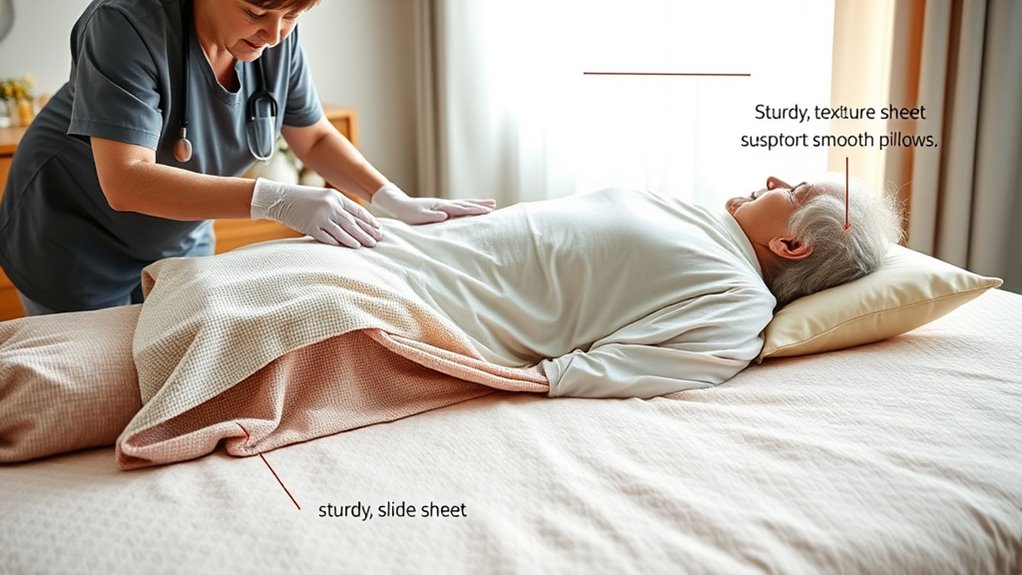
Repositioning a bedridden senior safely requires careful planning and technique to prevent injury to both the resident and caregiver. First, gather all necessary equipment and ensure the bed is stable. Communicate clearly with the senior, explaining each step to ease anxiety. Use proper body mechanics: stand close, bend your knees, and keep your back straight. When turning, gently guide their body with your hands, supporting the shoulders and hips. Always check for discomfort or skin redness afterward. Remember: proper body mechanics are essential to prevent injury and reduce strain during repositioning. Being aware of skin integrity can help prevent pressure ulcers and other complications. Incorporating appropriate positioning techniques can further promote comfort and safety during transfers. Stay alert for signs of pain or distress throughout the process.
Monitoring for Discomfort and Skin Integrity
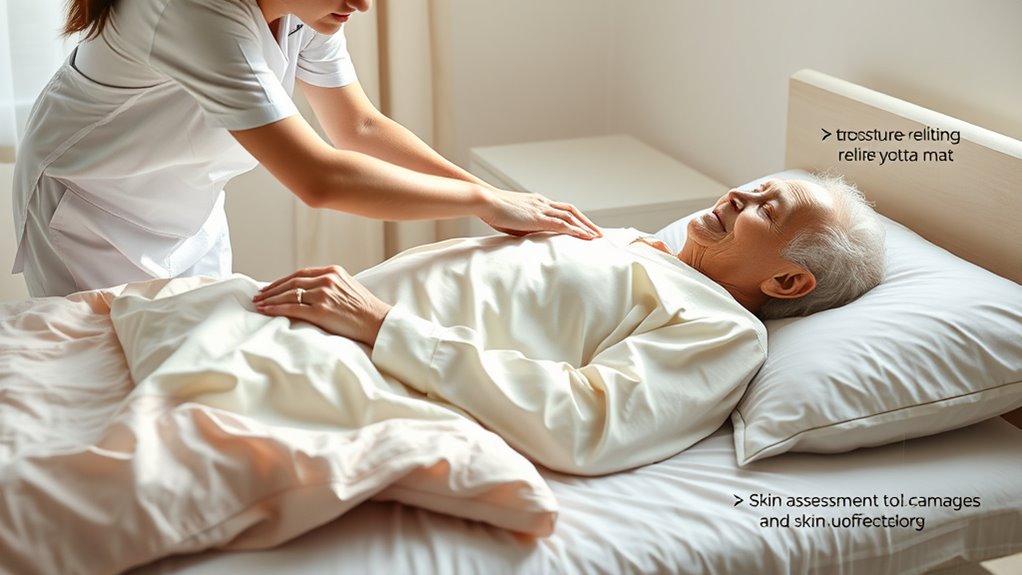
As you reposition a senior, keep an eye out for skin color changes like redness or pallor, which can signal pressure issues. Watch for signs of discomfort, such as fidgeting or grimacing, that indicate pain or irritation. Recognize early pressure ulcer indicators, including open sores or discoloration, to prevent worsening skin damage.
Skin Color Changes
Monitoring skin color changes is essential for detecting early signs of discomfort or skin breakdown in bedridden seniors. You need to observe their skin carefully during repositioning, looking for areas that turn red, purple, or pale. These color changes may signal pressure points or compromised circulation, alerting you to potential injury. Pay close attention to bony prominences like the sacrum, heels, elbows, and hips.
Be aware that:
- Persistent redness that doesn’t fade could indicate developing pressure ulcers.
- Pale or white patches might suggest poor blood flow or ischemia.
- Bluish or purple discoloration may signal tissue damage beneath the surface.
Regularly checking skin color helps catch issues early, preventing severe injuries. Your vigilance can make the difference between comfort and serious skin problems, ensuring your loved one stays safe and pain-free.
Signs of Discomfort
Pay close attention to any signs your loved one shows of discomfort, as these can indicate underlying skin issues or pain. Watch for facial grimacing, fidgeting, or vocalizations that suggest discomfort. Changes in body language, like tense muscles or restlessness, may also signal distress. Keep an eye on non-verbal cues such as clenched fists, shifting positions frequently, or attempts to move away. Notice if they react negatively to repositioning, wincing or pulling away, which can indicate pain. Skin discoloration, swelling, or warmth in certain areas could point to pressure or developing skin problems. Regularly check for these signs during and after repositioning to ensure your loved one remains comfortable and to catch potential issues early.
Pressure Ulcer Indicators
Watch for signs that your loved one may be developing a pressure ulcer, such as skin discoloration, swelling, or warmth in specific areas. Keep an eye out for:
- Darkened or mottled skin that doesn’t blanch when pressed
- Unexplained redness or shiny patches, especially over bony prominences
- Tenderness or pain when touching certain spots
These indicators signal that pressure is affecting skin integrity. Early detection allows you to act quickly, relieving pressure and improving comfort. Regularly inspect areas prone to ulcers, like hips, sacrum, heels, and elbows. If you notice any of these signs, seek prompt medical advice and adjust repositioning schedules accordingly. Staying vigilant helps prevent ulcers from worsening and ensures your loved one’s skin stays healthy and safe.
Tips for Consistent and Effective Repositioning Routines

Establishing a consistent repositioning routine is essential for preventing pressure injuries and ensuring patient comfort. To do this, create a schedule—such as every 2 or 3 hours—and stick to it. Use reminders or documentation tools to stay on track. Consistency helps reduce skin breakdown and promotes overall well-being.
| Repositioning Interval | Key Benefit |
|---|---|
| Every 2 hours | Ideal for high-risk patients |
| Every 3 hours | Balances safety and comfort |
| Every 4-6 hours | Suitable for lower-risk residents |
Adjust based on individual needs, and always assess skin condition regularly. Keeping a routine minimizes confusion, ensures safety, and improves care quality.
Frequently Asked Questions
How Often Should I Reposition a Bedridden Senior During the Night?
You should reposition a bedridden senior every 2 to 4 hours during the night, depending on their specific needs and risk factors. While 2-hourly is standard for high-risk patients, some may require less frequent moves. Keep an eye on their comfort and skin condition, and adjust your schedule accordingly. Regular repositioning helps prevent pressure injuries and maintains their comfort, safety, and overall well-being.
What Are the Signs of Discomfort or Skin Issues to Watch For?
You might think discomfort is obvious, but subtle signs often reveal skin issues first. Look for redness, swelling, or warmth, especially over bony areas. Watch for tears, blisters, or skin discoloration that won’t fade. Notice if your senior winces when moved or if they complain of pain or itching. Changes in skin texture, temperature, or color are early signals. Regular checks help catch problems before they worsen.
Which Equipment Best Reduces Caregiver Strain During Repositioning?
You should use equipment like hoists, air-assisted devices, and friction-reducing aids to lessen caregiver strain during repositioning. These tools help you move seniors smoothly and safely, reducing physical effort and risk of injury. Turning mattresses, lateral tilt beds, and transfer belts also support easier repositioning. Proper equipment use minimizes your strain, prevents injuries, and guarantees a safer, more comfortable process for both you and the senior.
How Can I Personalize Repositioning Schedules for Individual Needs?
You can personalize repositioning schedules by evaluating each senior’s specific needs, such as their risk of pressure injuries, mobility level, and comfort preferences. Regularly monitor their skin condition and overall response to repositioning. Collaborate with healthcare providers to adjust intervals accordingly, whether more frequent for high-risk patients or less for others. Document these plans and update them regularly to guarantee they remain tailored, effective, and safe for each individual.
What Training Is Recommended for Safe Transfer Techniques?
You should receive hands-on training in safe transfer techniques, including proper body mechanics, pivot and sliding methods, and equipment use. Look for courses led by experienced instructors that emphasize practical skills, such as using transfer belts, hoists, and friction-reducing devices. Practice with supervision until you’re confident. Also, training should cover environmental assessments and patient comfort, ensuring both your safety and the senior’s dignity during transfers.
Conclusion
Did you know that proper repositioning can reduce skin breakdown by up to 70%? By following the right techniques and using assistive devices, you protect your loved one’s comfort and health while safeguarding your own back. Consistency is key—regular repositioning prevents pressure sores and promotes circulation. Stay patient, attentive, and gentle, and you’ll ensure your senior stays safe and comfortable. Your care makes all the difference in their well-being and quality of life.