
To use bedpans and urinals safely, prioritize hygiene by wearing gloves, cleaning, and disinfecting equipment regularly. Position your loved one comfortably, ensuring the bedpan or urinal is well-placed to prevent spills and maintain dignity. Communicate calmly, offering reassurance and explaining each step. Be gentle during assistance and keep the environment respectful. Proper technique and thoughtful care help prevent infections and make the process smoother—continue exploring ways to improve this routine effectively.
Key Takeaways
- Ensure proper hygiene by wearing gloves, cleaning, and disinfecting the bedpan after each use.
- Position the bedpan correctly to prevent spills and maximize comfort for the patient.
- Communicate clearly and gently to ease anxiety and maintain the patient’s dignity.
- Use privacy measures and offer emotional support to make the process less embarrassing.
- Wash hands thoroughly after assisting and follow routine cleaning protocols to prevent infection.
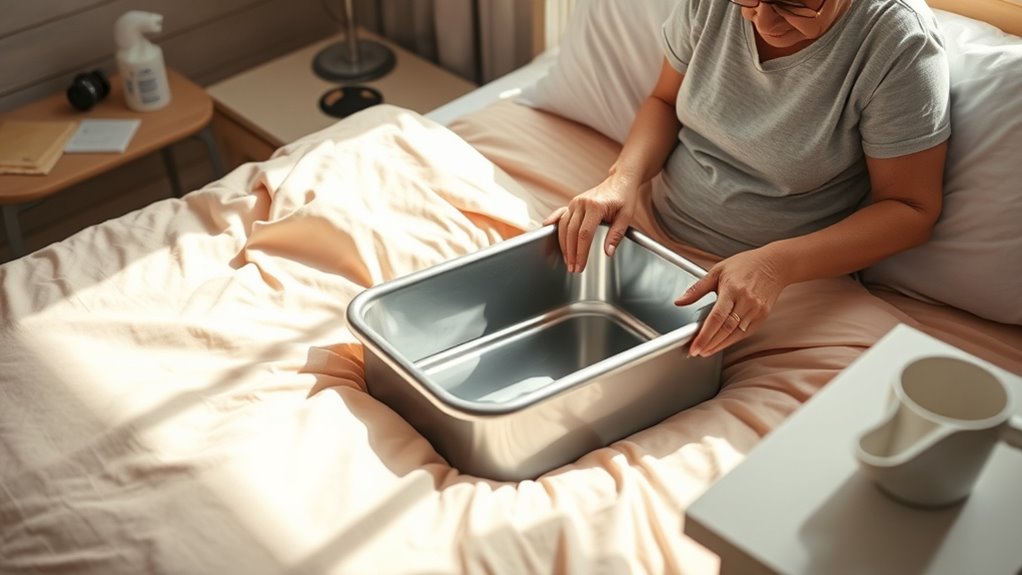
Have you ever wondered what you need to know about bedpans? When caring for a loved one who’s bedridden, understanding proper bedpan use is essential for their comfort and health. One of the most important aspects is maintaining infection control. Proper hygiene helps prevent infections, which can be common if bedpans aren’t cleaned and handled correctly. Always wear gloves when handling the bedpan to protect yourself and your loved one from germs. After use, wash the bedpan thoroughly with soap and water, and disinfect it regularly with a suitable hospital-grade cleaner. Ensuring the bedpan is clean minimizes the risk of bacteria spreading and keeps your loved one safe from urinary tract infections or skin irritations. It’s also helpful to keep a routine for cleaning and disinfecting, so there’s consistency and fewer chances for contamination.
Alongside infection control, providing emotional support is equally vital. Using a bedpan can be an uncomfortable and embarrassing experience for your loved one, especially if they’re feeling vulnerable or anxious. Approach the situation with patience and empathy, reassuring them that you’re there to help and that their dignity is your priority. Use gentle words and maintain a calm demeanor to ease any embarrassment or frustration they might feel. Sometimes, just holding their hand or offering comforting words can make a significant difference. Remember, emotional well-being is a crucial part of their overall health, especially during times of discomfort. Encouraging open communication can also help them express any concerns or discomfort they have, making the process smoother for everyone involved.
When assisting with a bedpan, it’s important to be discreet and respectful. Position the bedpan correctly to prevent spills and ensure comfort. After use, help your loved one wipe or clean themselves as needed, and always wash your hands thoroughly afterward. Offering privacy when possible can help preserve their dignity during this sensitive process. Consider using bedpan liners or disposable covers to make cleanup easier and more hygienic. Communicate clearly throughout, explaining each step to reduce any confusion or anxiety. Remember, your calmness and attentiveness can transform a potentially stressful situation into a manageable routine.
Frequently Asked Questions
How Often Should a Bedridden Person Use the Bedpan?
You should aim for a regular urination schedule based on your loved one’s needs, typically every 2 to 4 hours. This helps prevent discomfort and skin issues. Keep an eye on their cues and consider their health condition when planning bedpan frequency. If they can’t communicate, consult their healthcare provider for personalized guidance. Regular use guarantees comfort and reduces the risk of infections or skin irritation.
What Are Signs of Infection From Bedpan Use?
If you notice signs of infection like fever, foul-smelling urine, or pain during urination, it could be linked to poor bedpan hygiene. Look for cloudy or discolored urine, chills, or redness and swelling around the genitals. To prevent infections, always guarantee proper bedpan hygiene, wash hands thoroughly, and clean the bedpan after each use. Regular monitoring helps catch infections early and keeps your loved one comfortable.
How Can I Prevent Bedsores During Bedpan Use?
To prevent bedsores during bedpan use, you should regularly change your loved one’s position and guarantee proper hygiene maintenance. Check their skin for signs of skin irritation, redness, or breakdown, and gently clean the area after each use. Use soft padding or cushions to reduce pressure, and encourage movement as much as possible. Keeping skin dry and clean helps protect against bedsores and promotes overall comfort.
Are There Alternatives to Traditional Bedpans?
You might find urinal alternatives and portable options more comfortable than traditional bedpans. These devices, like bedside commodes or portable urinals, offer convenience and dignity, especially for frequent use. They reduce discomfort and make cleanup easier, transforming what used to be a cumbersome task into a manageable routine. Exploring these alternatives can improve your loved one’s comfort and your caregiving experience, making daily routines less stressful and more respectful.
How Do I Dispose of Used Bedpans Properly?
To dispose of used bedpans properly, first wear gloves for sanitation and carefully pour the waste into a toilet, ensuring you flush immediately. Clean the bedpan thoroughly with disinfectant, following proper waste disposal and sanitation procedures. Rinse and dry it before storing or reusing. Always wash your hands afterward to maintain hygiene and prevent the spread of germs. Proper disposal keeps everyone safe and maintains a clean environment.
Conclusion
Mastering bedpan and urinal use can truly save your loved one from the chaos of discomfort. With these tips, you’ll become a superhero in their eyes—fighting off embarrassment and turning everyday moments into smooth, easy routines. Remember, your patience and care can transform what feels like an impossible task into a simple, dare I say, legendary act of love. So keep practicing, because you’re not just helping—you’re changing lives, one bedpan at a time!