

To safely and respectfully bathe your elderly parent, prepare the environment by installing grab bars, non-slip mats, and ensuring good lighting. Communicate kindly about the process, involving them in decisions and offering choices to maintain their dignity. Gather supplies like soap, towels, and assistive devices beforehand. Support them during entry and exit, ensuring water temperature is safe. Protect their privacy during drying and dressing. If you keep these tips in mind, you’ll find ways to make bathing both safe and comforting for your parent.
Key Takeaways
- Prepare the environment with non-slip mats, grab bars, and adequate lighting to ensure safety and dignity.
- Communicate clearly, offering choices and maintaining a respectful, calm tone throughout the process.
- Gather all supplies and assistive devices in advance, verifying their safety and accessibility.
- Support safe entry and exit using proper techniques, secure equipment, and slow, steady movements.
- Dry and dress the elderly gently, respecting privacy and promoting independence to preserve dignity.
Preparing the Bathroom for Safe and Comfortable Bathing

To guarantee safe and comfortable bathing for your elderly parent, start by evaluating and modifying the bathroom environment. Check for slip hazards like slick floors and ensure non-slip mats are in place. Install grab bars near the shower, tub, and toilet to provide stable support. Consider replacing a traditional tub with a walk-in or level-access shower to make entry easier. Keep the space clutter-free to prevent trips and falls. Adjust water heater settings to 110–120°F (43–49°C) to avoid scalds. Ensure lighting is bright and even, reducing shadows that can cause disorientation. Test the usability of fixtures, like handheld showerheads and easy-to-reach controls. Making these adjustments creates a safer, more accessible environment that promotes independence and reduces fall risks during bathing. Additionally, choosing energy-efficient appliances can help reduce overall household energy consumption while maintaining safety standards. Incorporating ergonomic fixtures can further enhance ease of use and comfort during bathing routines. For added safety, consider installing temperature-control devices to prevent accidental scalding. Using water filtration systems can also help improve water quality, which is especially important for elderly individuals with sensitive skin or health conditions.
Communicating With Your Parent About Bathing Preferences and Concerns

Open and respectful communication is essential when discussing bathing preferences and concerns with your parent. Approach the topic gently, emphasizing your desire to keep them safe and comfortable. Listen actively to their feelings about bathing, acknowledging any fears or frustrations they share. Ask about their preferred bathing methods, routines, and any specific needs or dislikes. Respect their autonomy by involving them in decision-making and offering choices whenever possible. Be patient and avoid rushing the conversation, as this can cause resistance or distress. Reassure your parent that safety measures are intended to protect their dignity and independence. Additionally, understanding their comfort level with bathing can help tailor a routine that respects their preferences and promotes a positive experience. Recognizing the importance of personal autonomy can help foster a supportive environment where your parent feels valued and in control. Building mutual trust through open dialogue also enhances the likelihood of successful care plan implementation, ensuring their needs and wishes are prioritized. Establishing a communication routine can further facilitate ongoing discussions and adjustments to their bathing preferences. Open dialogue fosters trust, making it easier to implement adaptations and support that align with their preferences. Incorporating knowledge about hydrotherapy options or other water-based therapies might also reassure your parent that their comfort and well-being are central to their bathing routine.
Gathering Necessary Supplies and Assistive Devices Before Starting
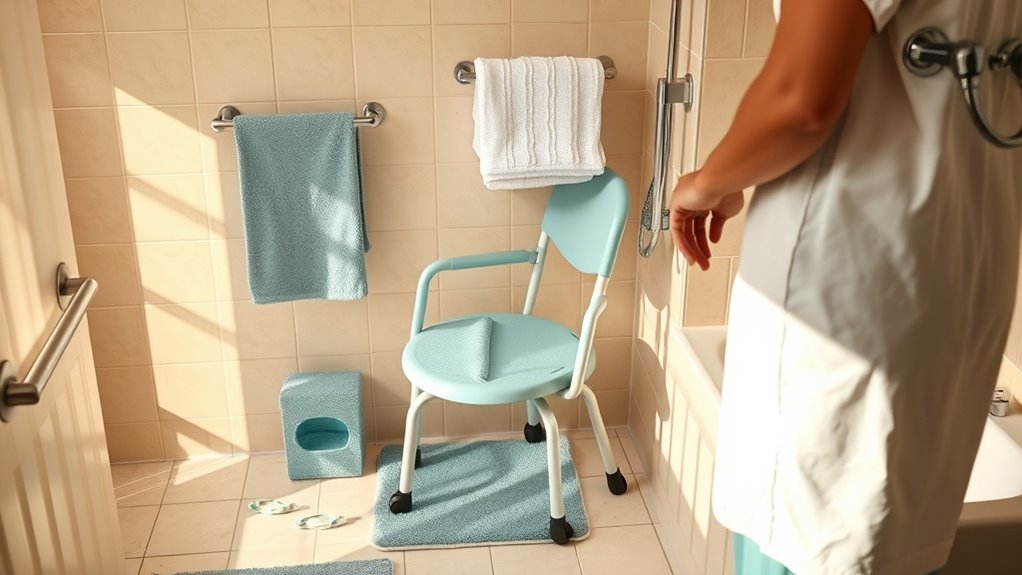
Before you begin bathing your parent, gather all the supplies and devices you’ll need to make the process safe and smooth. Check that you have essentials like soap, towels, and clean clothing, along with assistive tools such as grab bars, a bath chair, or a handheld showerhead. Having everything ready beforehand helps you stay organized and guarantees your parent’s comfort and safety throughout the bath.
Essential Bathing Supplies
Ensuring all necessary bathing supplies and assistive devices are gathered beforehand can make the process safer and more efficient. Start with basics like a gentle, pH-balanced soap and a washcloth or sponge suited to your parent’s skin sensitivity. Have a soft towel ready for drying, and waterproof barriers if needed. Prepare clean clothes or a bathrobe for after the bath. Assistive devices such as a grab bar, bath seat, or handheld showerhead are essential for safety. Always check that supplies are within easy reach to avoid unnecessary movement or stretching. Keep a non-slip mat in place to prevent falls. Having everything prepared minimizes interruptions, reduces anxiety, and helps maintain your parent’s dignity during bathing.
Assistive Device Checklist
Gathering all necessary assistive devices and supplies before starting the bath helps create a safe, smooth process. Verify you have grab bars, non-slip mats, and a sturdy bath seat or bench to support stability. Check that a handheld showerhead is within reach and functioning properly for easy water control. Keep a waterproof towel or robe nearby for quick coverage to maintain dignity. Have a thermometer to monitor water temperature, preventing scalds, and make sure all supplies—soap, washcloths, and assistive devices—are within arm’s reach to minimize movement. Confirm that the bathroom environment is clutter-free and well-lit. Gathering everything beforehand reduces the risk of falls, accidents, or disruptions during the bath, ensuring safety and comfort for your parent. Additionally, proper lighting and environmental control can significantly enhance safety and ease during the bathing process. Incorporating knowledge of electric bikes and assistive technology can also inspire ways to support mobility and independence outside of bathing routines. Ensuring the bathroom is equipped with AI-powered safety features, such as motion sensors or automated alerts, can further enhance safety. Properly monitoring water temperature is crucial to prevent burns and ensure a comfortable bathing experience. Utilizing assistive devices designed for safety can make the bathing process more comfortable and secure for your parent.
Assisting With Getting Ready: Clothing, Footwear, and Safety Checks
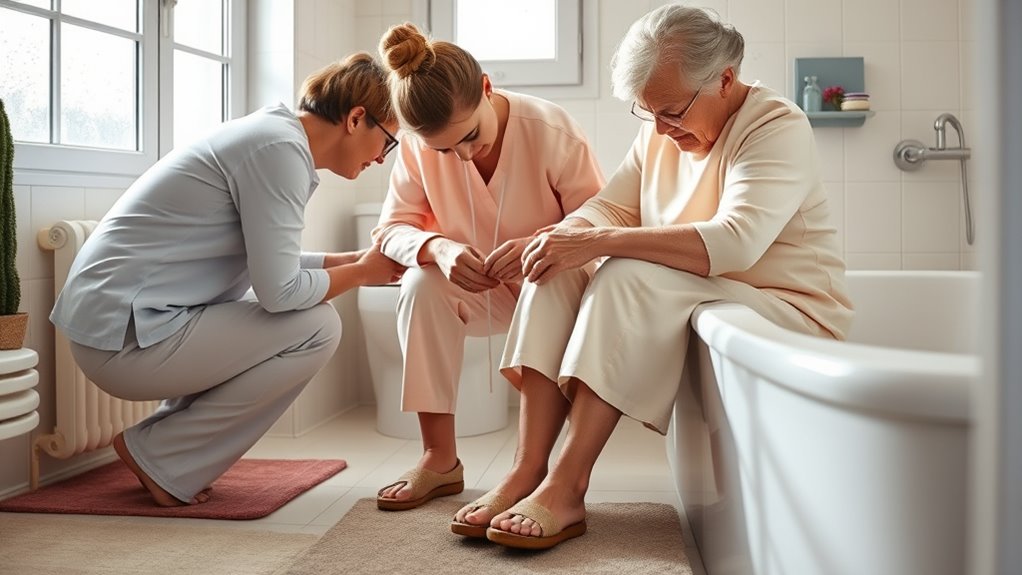
Before helping your parent get into the bath, focus on selecting comfortable, easy-to-wear clothing and slip-resistant footwear to prevent falls. Check the environment for hazards like clutter or wet surfaces, and guarantee all safety features are in place. Taking these quick steps can make the process safer and more comfortable for both of you. Additionally, ensuring proper home safety & accessibility measures are in place can further reduce fall risk and promote independence. Implementing reliable backup power solutions can help maintain necessary safety devices without interruption during power outages. Familiarizing yourself with deep-sky imaging concepts can also be useful in understanding how to set up and maintain reliable safety systems at home.
Clothing Selection Tips
Helping your elderly parent select and put on clothing requires attention to safety and comfort, especially if they have mobility or balance issues. Choose loose-fitting, easy-to-don clothing made from soft, breathable fabrics to prevent irritation and make dressing easier. Avoid buttons, zippers, or tight waistbands that can cause discomfort or require fine motor skills. Opt for clothing with elastic waistbands or Velcro fasteners to simplify dressing. Ensure their garments are appropriate for the weather and indoor temperature. Lay out clothes in an accessible, organized manner to minimize movement and reduce fall risk. Use non-slip mats or a sturdy chair to support stability during dressing. Always check that clothing doesn’t have loose threads or sharp edges that could cause injury or irritation.
Footwear Safety Measures
Ensuring your elderly parent wears safe and well-fitting footwear is essential for preventing falls and maintaining independence. Check that shoes have non-slip soles to provide good traction on wet or smooth surfaces. Avoid loose or ill-fitting shoes that can cause tripping or slipping; they should fit snugly without pinching. Look for footwear with adjustable straps or Velcro closures for easy on and off, especially if dexterity is limited. Consider slippers with non-slip bottoms for indoor use, and sturdy, supportive shoes for outside. Make sure the footwear is clean and in good condition, with no worn-out soles or damaged parts. Proper footwear supports balance and stability, reduces fall risk, and helps your parent feel confident during daily activities. Wearing supportive shoes can significantly improve safety and comfort for your parent. Selecting Proper footwear fitting is crucial for preventing slips and falls. Well-fitting footwear can also promote better posture alignment, enhancing overall mobility and safety for your parent. Reversible motors in ceiling fans can be useful for maintaining a comfortable indoor temperature year-round, which can also contribute to overall safety and comfort.
Pre-Bathing Safety Checks
Preparing your elderly parent for bathing starts with a quick safety check of their clothing and footwear. Guarantee their clothes are loose and easy to remove, avoiding buttons or zippers that may cause struggles or falls. Check that their shoes are slip-resistant and fit well, providing proper support to prevent trips. Remove any clutter or obstacles from their path to the bathroom, and verify the area is dry and free of hazards. Make sure their eyeglasses or hearing aids are in place to help them stay alert and balanced. Confirm that any assistive devices, like walkers or canes, are nearby and in good condition. These safety checks help reduce risks and set the stage for a safe, comfortable bathing experience.
Supporting Safe Entry and Exit From the Bathing Area
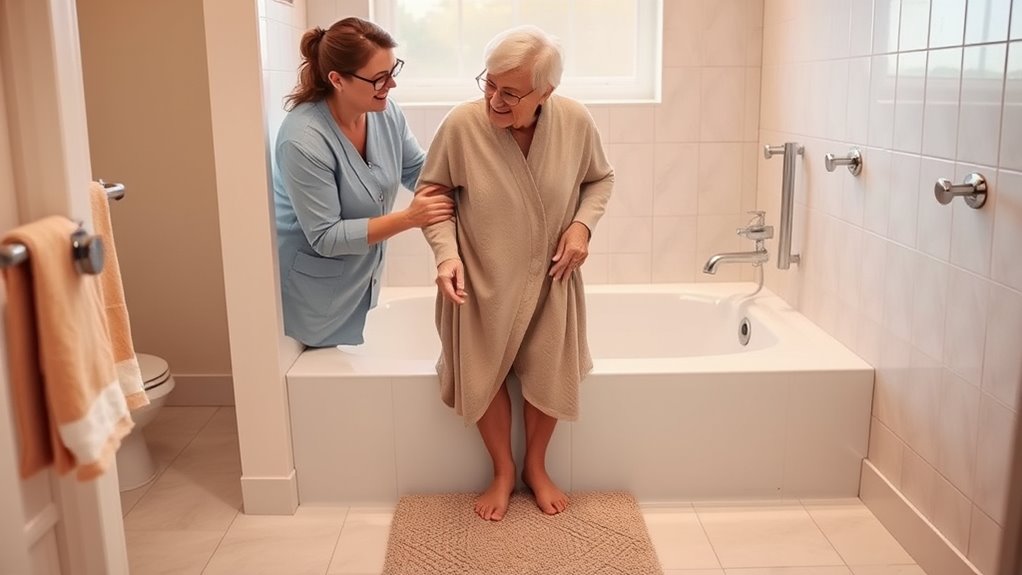
Supporting safe entry and exit from the bathing area is essential to prevent falls and injuries for elderly individuals. You should verify the bathroom floor is dry, clean, and free of clutter before entry. Use non-slip mats and install grab bars near the tub, shower, and toilet to provide stable support. Consider a sturdy bath seat or stool to help your parent sit safely during entry and exit, reducing fatigue and balance issues. When assisting, guide them slowly, holding their arm or waist for stability. Encourage them to use supports rather than rushing, and always stay within arm’s reach. Regularly check that grab bars and other safety devices are secure, and adapt the environment as needed to keep them safe and confident during these transitions. Incorporating energetic alignment into your caregiving approach can also promote a calmer and more positive bathing experience. Ensuring proper bathroom safety measures can further reduce risks and foster independence during bathing routines. Additionally, maintaining a safe environment can help prevent accidental slips or falls during these crucial moments.
Using Proper Techniques to Help Your Parent Bathe Independently and Safely

To help your parent bathe safely, start by preparing the bathroom to minimize hazards and guarantee easy access. Use supportive equipment like grab bars and shower chairs correctly to stabilize your parent and prevent falls. Always communicate respectfully, explaining each step clearly and encouraging their independence while offering assistance when needed.
Prepare the Bathroom Safely
Ensuring the bathroom is safe before your parent begins to bathe is essential for preventing falls and injuries. You can achieve this by addressing environmental hazards and optimizing accessibility. Start by installing non-slip mats or flooring to reduce slipping risks. Place grab bars near the shower, tub, and toilet for added stability. Make sure pathways are clear of clutter and obstacles to prevent tripping. Adjust water temperature settings to safe levels (110-120°F) to prevent scalds. Additionally, ensure that controls are easy to operate and within reach.
- Install secure grab bars and handrails in strategic locations
- Use non-slip mats or textured flooring to enhance traction
- Keep the bathroom clutter-free with clear walkways for safety
Use Supportive Equipment Properly
Using supportive equipment correctly is essential for helping your parent bathe safely and maintain independence. Ensure grab bars are securely installed and within easy reach, providing stable support when entering, exiting, or moving in the shower or tub. Use a sturdy shower chair or bath stool to reduce fatigue and prevent falls, positioning it on a non-slip surface. Handheld showerheads should be adjusted to a comfortable height and used with gentle, controlled movements to avoid slips. Always check that equipment is in good condition—no cracks or loose parts—and clean regularly. Demonstrate proper use, encouraging your parent to hold onto supports and sit securely. Properly used equipment reduces fall risks, preserves dignity, and promotes confidence during bathing.
Communicate With Respect
Effective communication plays a key role in helping your parent bathe safely and maintain their dignity. Approach conversations with empathy, patience, and respect, ensuring they feel heard and valued. Use gentle tone and simple language to explain each step, allowing them to stay informed and in control. Focus on their comfort and preferences, avoiding commands that may cause embarrassment. To foster trust and cooperation, consider these techniques:
- Maintain eye contact and use reassuring gestures to show support.
- Listen actively to their concerns and adjust your approach accordingly.
- Offer choices whenever possible, empowering them to participate in decision-making.
Incorporating Safety Features: Grab Bars, Non-Slip Mats, and Seating

Incorporating safety features like grab bars, non-slip mats, and seating can substantially reduce fall risks and improve independence during bathing. Grab bars provide sturdy support, helping your parent steady themselves when entering, exiting, or repositioning in the shower or tub. Non-slip mats or textured flooring prevent slips on wet surfaces, lowering the chance of falls. Seating, such as a waterproof chair or bath stool, allows your parent to sit comfortably, reducing fatigue and instability. Proper placement of grab bars near the shower, tub, and toilet ensures safety where it’s needed most. Keep these features securely installed and regularly checked for stability. Using these safety enhancements makes bathing safer and more comfortable, promoting dignity and independence for your elderly parent.
Ensuring Water Temperature and Environment Are Comfortable and Safe

To guarantee your elderly parent’s safety during bathing, controlling water temperature is essential. You should always test the water before they get in, aiming for a comfortable, safe range between 110°F and 120°F (43–49°C). Adjust the thermostat to prevent accidental scalds and consider installing anti-scald devices. Ensure the bathing environment feels calm and inviting by maintaining good lighting, reducing noise, and keeping the bathroom warm to prevent chills. To enhance safety and comfort, focus on:
- Setting the water temperature to a safe, consistent level
- Using thermostatic mixing valves or anti-scald devices
- Maintaining a warm, clutter-free environment to prevent slips and chills
These measures help prevent burns, hypothermia, and anxieties, ensuring a safer, more pleasant bathing experience.
Drying, Dressing, and Post-Bath Care to Maintain Dignity and Comfort

After bathing, paying careful attention to drying and dressing helps guarantee your elderly parent stays comfortable and maintains dignity. Gently pat their skin dry with soft towels, paying extra attention to skin folds to prevent irritation or infections. Use a clean, warm cloth or towel to avoid chills. When dressing, choose comfortable, loose-fitting clothes that are easy to put on and take off. Offer assistance respectfully, allowing them to do as much as possible independently. Keep their skin moisturized if needed, especially in dry weather, to prevent discomfort. Ensure their clothing is appropriate for the weather and easy to manage. Throughout, speak kindly, maintain eye contact, and respect their privacy to foster a sense of dignity and control during post-bath care.
Monitoring and Adjusting the Routine as Needs Change

As your elderly parent’s needs evolve, regularly monitoring their bathing routine guarantees safety and comfort. Observe how they respond to current methods and note any signs of discomfort, fatigue, or difficulty. Be attentive to changes in mobility, strength, or cognitive function that may affect safety. Adjust the routine accordingly, such as modifying water temperature, changing assistive devices, or altering bathing frequency. Consider:
- Reassessing bathroom safety features like grab bars, non-slip mats, and lighting
- Updating techniques to support independence or reduce caregiver effort
- Consulting healthcare professionals for tailored modifications
Continually evaluate whether their current routine meets their needs or requires refinement. Staying proactive ensures their bathing experience remains safe, dignified, and adapted to their changing condition.
Frequently Asked Questions
How Can I Motivate My Parent to Accept Bathing Assistance?
To motivate your parent to accept bathing assistance, approach the topic gently, emphasizing safety and their comfort. Show understanding of their feelings and involve them in choosing adaptations or schedules that work for them. Highlight how assistance maintains their independence and dignity. Use positive language, offer reassurance, and be patient, reinforcing that your goal is to support their well-being while respecting their preferences and autonomy.
What Are Signs My Parent Is Uncomfortable or Unsafe During Bathing?
If you notice your parent’s face tensing like a drawn bow, they might be uncomfortable or unsafe during bathing. Watch for signs like verbal resistance, trembling, or clutching supports tightly. Unusual facial expressions, attempts to escape, or sudden silence can also signal distress. Keep a close eye on their movements, expressions, and responses—these cues are like warning lights flashing to tell you they’re feeling uneasy or at risk.
Which Specific Assistive Devices Best Promote Independence and Safety?
You should consider installing grab bars, non-slip mats, and a sturdy shower chair or bath stool. A handheld showerhead makes rinsing easier and reduces the need for movement. Level-access showers or walk-in tubs eliminate tripping hazards. These devices support your parent’s independence by providing stability, safety, and comfort, allowing them to bathe more confidently while reducing fall risks and promoting dignity during the process.
How Often Should I Reassess Bathroom Safety Modifications?
You should reevaluate bathroom safety modifications at least every 6 to 12 months or whenever your parent’s physical or cognitive condition changes. Regular checks help identify new hazards, verify devices still function properly, and adapt to evolving needs. Stay attentive to signs of instability, discomfort, or recent falls, and involve professionals like occupational therapists for expert evaluations. Consistent reassessment keeps the bathroom safe, accessible, and supportive of your parent’s independence.
What Are Effective Ways to Handle Resistance or Cognitive Challenges During Bathing?
When your parent resists or faces cognitive challenges during bathing, stay calm and patient. Use gentle reassurance, speak softly, and maintain eye contact to foster trust. Offer choices to give them a sense of control, like selecting a towel or clothing. Break the process into smaller steps, and involve familiar routines or objects. If needed, seek support from a caregiver or occupational therapist to adapt strategies and guarantee safety.
Conclusion
Remember, caring for your parent’s bathing needs is about honoring their comfort and preserving their sense of grace. With patience and attention, you create a moment of gentle reassurance that helps them feel valued and secure. By thoughtfully tending to their routine, you build trust and maintain their dignity, turning a simple task into a tender act of love. Your caring hands make all the difference in their well-being and peace of mind.