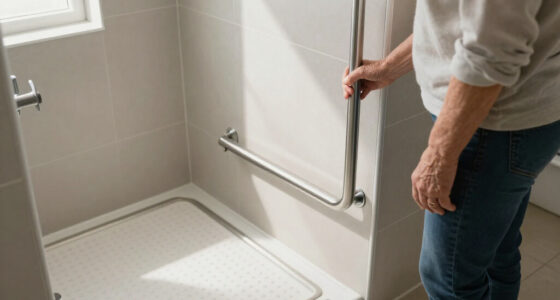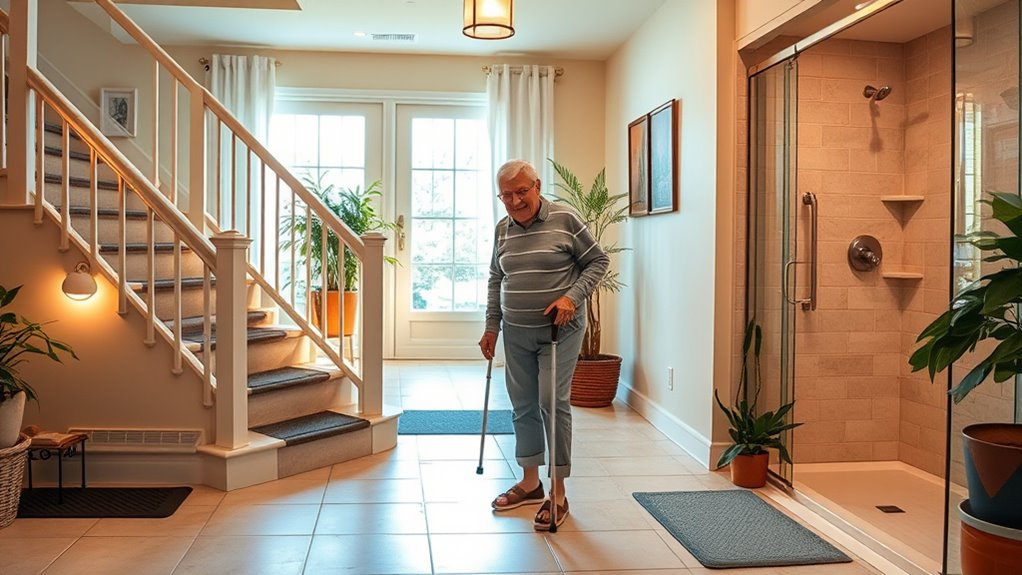

To prevent falls at home, assess and remove hazards like loose rugs, clutter, and uneven flooring. Improve lighting with bright bulbs and nightlights, and install sturdy handrails on stairs and in bathrooms. Keep up with foot care and regular eye exams, and choose supportive footwear. Incorporate balance exercises and use assistive devices properly. Taking these steps can make your home safer; learn more tips to protect your senior loved ones today.

Turn quiet afternoons into listening time
- Thousands of audiobooks, podcasts and originals
- Listen on your phone, tablet or Echo — also offline
- Cancel anytime
Key Takeaways
- Remove tripping hazards like clutter, loose rugs, and cords, and ensure walkways are clear.
- Install sturdy handrails and secure lighting to improve visibility and support.
- Choose slip-resistant flooring and secure rugs with non-slip backing to prevent slips.
- Schedule regular eye and foot health checkups, and wear supportive, well-fitting shoes.
- Encourage balance exercises and review medications to minimize dizziness and improve stability.
Assessing and Removing Home Hazards
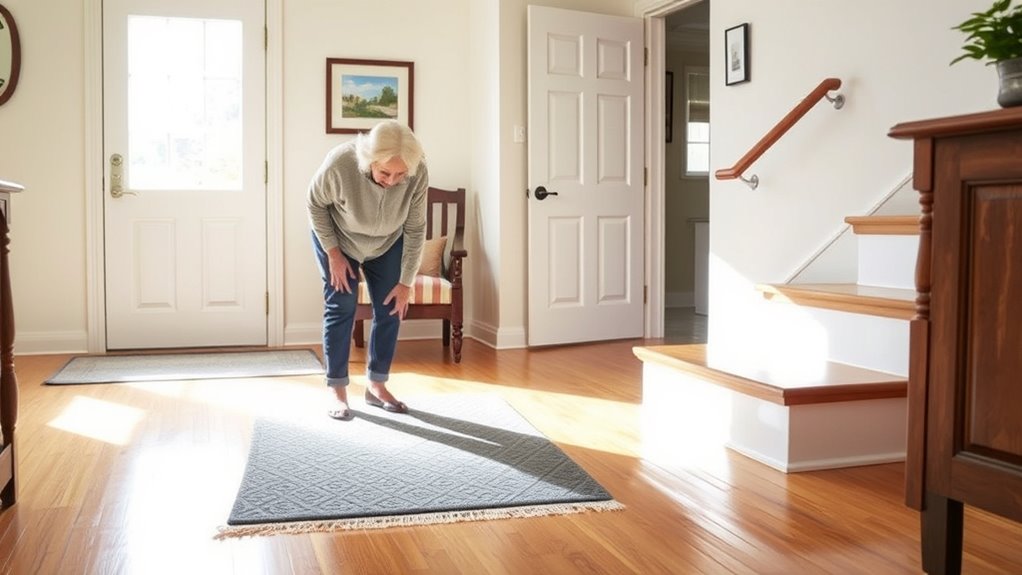
To effectively prevent falls at home, you need to start by identifying and removing common hazards. Look around each room carefully and check for uneven or broken steps, loose rugs, clutter, and cords that could cause trips. Clear walkways of unnecessary furniture or objects that might block your path. Ensure that floors are clean, dry, and free of spills. Remove or secure throw rugs with non-slip backing to prevent slipping. Fix broken handrails or loose banisters, especially on staircases. Address clutter in hallways and around furniture, keeping pathways clear. Regularly inspect your home for hazards that can change over time. Additionally, consider proper lighting to illuminate dark areas and reduce the risk of accidents. Incorporating home safety assessments can also help identify hidden dangers before they lead to falls. Using safety technology such as motion-activated lights or alert systems can further enhance your home safety. Paying attention to environmental factors like temperature and humidity can also help prevent slips and falls. Furthermore, installing furniture with stable support can provide additional stability for seniors. Taking these simple steps can considerably reduce your risk of falling and make your environment safer.
Enhancing Lighting and Visibility

Improving lighting throughout your home can considerably reduce fall risks by making hazards more visible. Bright, well-placed lights help you see obstacles, clutter, and uneven surfaces clearly. Use high-wattage bulbs in main living areas, hallways, staircases, and bathrooms. Install motion-activated lights in frequently used spaces to make certain of continuous illumination, especially at night. Keep light switches easily accessible, and add nightlights in bedrooms, bathrooms, and hallways to prevent tripping in the dark. Avoid shadows and glare by using multiple light sources, such as lamps alongside ceiling fixtures. Regularly clean fixtures to maximize brightness. Good lighting enhances visibility, helping you navigate safely and reducing the chance of accidental falls at home. Additionally, selecting the right lighting technology can improve overall illumination quality and energy efficiency. Incorporating lighting controls like dimmers or timers can further optimize lighting levels based on your needs and time of day. Using appropriate bulbs designed for specific fixtures can also improve lighting performance and longevity. Proper lighting setup is an essential part of fall prevention strategies, creating a safer environment for seniors.
Installing Supportive Devices and Handrails
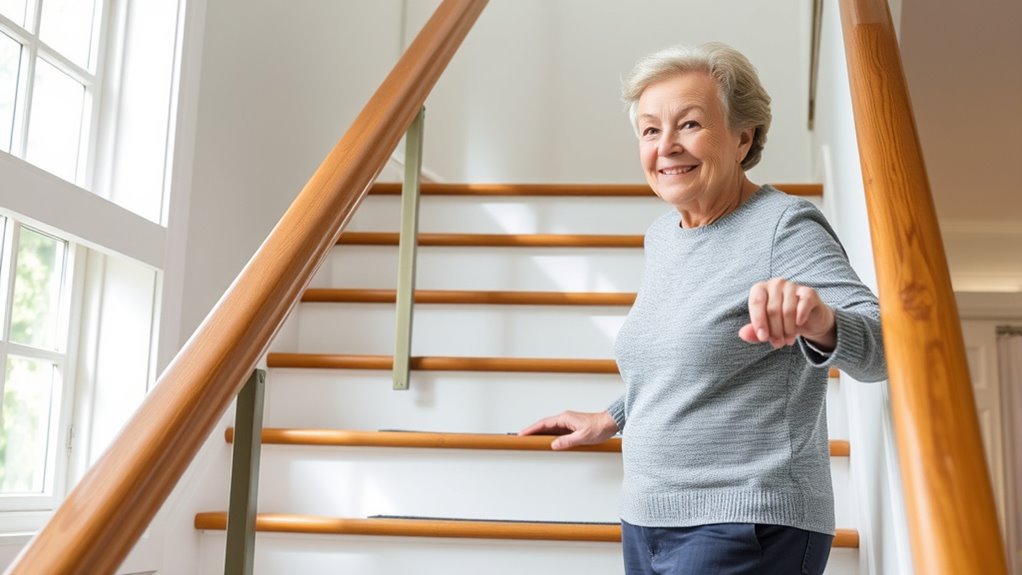
You should guarantee handrails are placed in key areas like staircases and bathrooms to provide stable support. Proper mounting techniques are essential to secure handrails firmly to prevent any accidents. Don’t forget to check and maintain these devices regularly to keep them safe and effective.
Proper Handrail Placement
Proper handrail placement is essential for enhancing safety and preventing falls in the home. You want handrails where they’re most needed, such as along stairs and ramps, to support balance and steady movement. Mount handrails between 34 and 38 inches above the stair nosing for optimal grip. Ensure they extend beyond the top and bottom of stairs for added stability. Handrails should be sturdy, easy to grasp, and free of obstructions. To maximize effectiveness:
- Place handrails on both sides of staircases
- Use non-slip, textured finishes for a secure grip
- Position handrails continuously along stairs and ramps
- Incorporate supportive devices like wall brackets to reinforce stability
Additionally, choosing appropriate materials for handrails can improve durability and grip, further enhancing safety. Proper placement ensures you can rely on your support when traversing tricky areas, reducing the risk of falls. Proper handrail height and secure attachment are crucial for safety. Being aware of fall prevention strategies can significantly decrease accidents in your home. Keep these points in mind to make your home safer.
Secure Mounting Techniques
Secure mounting techniques guarantee that supportive devices like handrails and grab bars stay firmly in place to provide reliable support. To achieve this, ensure you anchor fixtures into wall studs or solid surfaces using appropriate hardware, such as lag bolts or heavy-duty anchors. Avoid mounting devices into drywall alone, as they can become loose and pose safety risks. Use a level to verify proper placement, preventing misalignment that could compromise stability. Tighten all screws securely, but don’t overtighten, which may damage fixtures or wall surfaces. Regularly check mounted devices for looseness or movement, and tighten as needed. Proper installation and maintenance and firm attachment are essential to ensure your support devices effectively reduce fall risks and provide confidence when navigating your home. Additionally, understanding supportive device types can help you select the most suitable options for your specific needs. Ensuring secure mounting techniques are followed is essential for long-term safety and stability of your supportive devices. Incorporating appropriate hardware tailored to your wall material can further enhance fixture security and installation safety.
Regular Maintenance Checks
Regular maintenance checks are essential to guarantee that supportive devices like handrails and grab bars remain safe and effective over time. You should inspect these devices regularly for signs of looseness, rust, or damage. Tighten loose fittings and replace any corroded or worn components immediately to prevent accidents. Ensuring these devices are securely anchored helps maintain stability and reduces fall risk. Additionally, verifying that the hardware and mounting surfaces are in good condition helps ensure long-term safety and supports proper load distribution. Regular inspections also help identify issues related to structural integrity, which is crucial for preventing unexpected failures. Incorporating preventative maintenance routines can further extend the lifespan of these safety features and ensure ongoing protection. Performing routine checks of supportive devices can help detect early signs of wear, thereby enhancing overall safety.
Planning Safe Flooring and Rugs

Planning safe flooring and rugs is essential to prevent slips and trips that can lead to falls at home. Choose slip-resistant flooring materials like vinyl, linoleum, or textured carpet to provide better grip. Avoid slick surfaces such as polished tiles or hardwood without proper rugs. If you use rugs, secure them with non-slip backing or double-sided tape to keep them in place. Remove or replace loose or uneven flooring that creates tripping hazards. Keep pathways clear of clutter and ensure rugs are flat and stable. Proper lighting is critical so you can see potential hazards clearly. Regularly inspect flooring and rugs for wear or damage, and repair or replace as needed. Incorporating appropriate flooring options can further enhance safety and reduce fall risks effectively. Additionally, selecting flooring with a textured surface can help improve traction and decrease the likelihood of slipping. Implementing smart home safety devices, such as motion-activated lighting or fall detection systems, can provide an extra layer of security and alert you promptly if a fall occurs.
Promoting Regular Vision and Foot Care
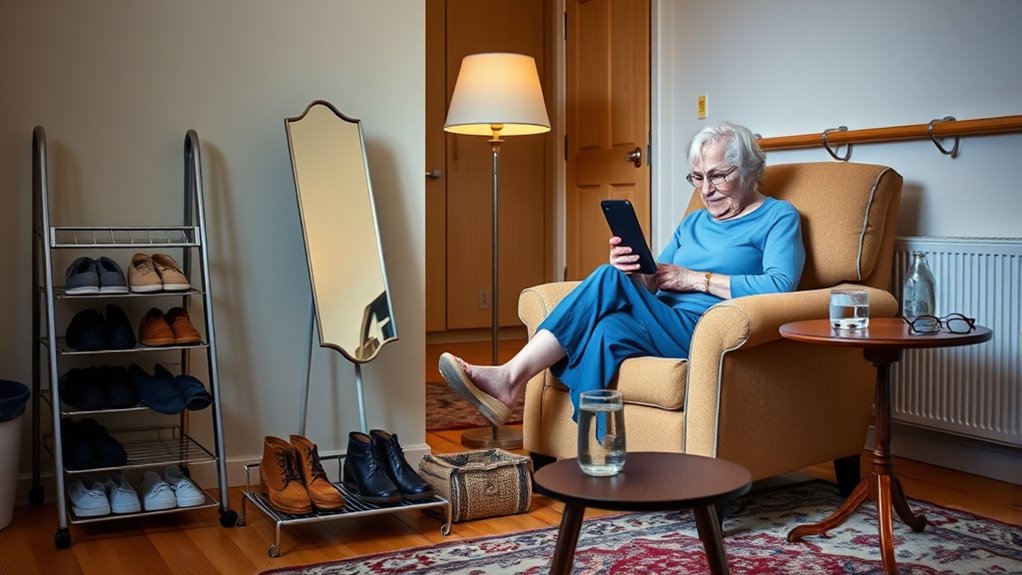
Maintaining regular vision and foot care is essential for preventing falls among older adults. Poor eyesight can make it difficult to see obstacles or uneven surfaces, increasing the risk of tripping. Similarly, foot problems or improper footwear can cause gait instability and stumbling. To stay safe, schedule annual eye exams and address any vision changes promptly. Also, get your feet checked regularly to detect issues like bunions, neuropathy, or infections that could affect balance. Proper footwear with good support and non-slip soles is vital. Consider these tips:
- Have annual vision and foot assessments to catch problems early
- Wear well-fitting, supportive shoes with non-slip soles
- Keep walkways clear and well-lit to minimize hazards
Staying vigilant about vision and foot health helps you maintain balance and avoid falls.
Managing Medications for Balance and Dizziness
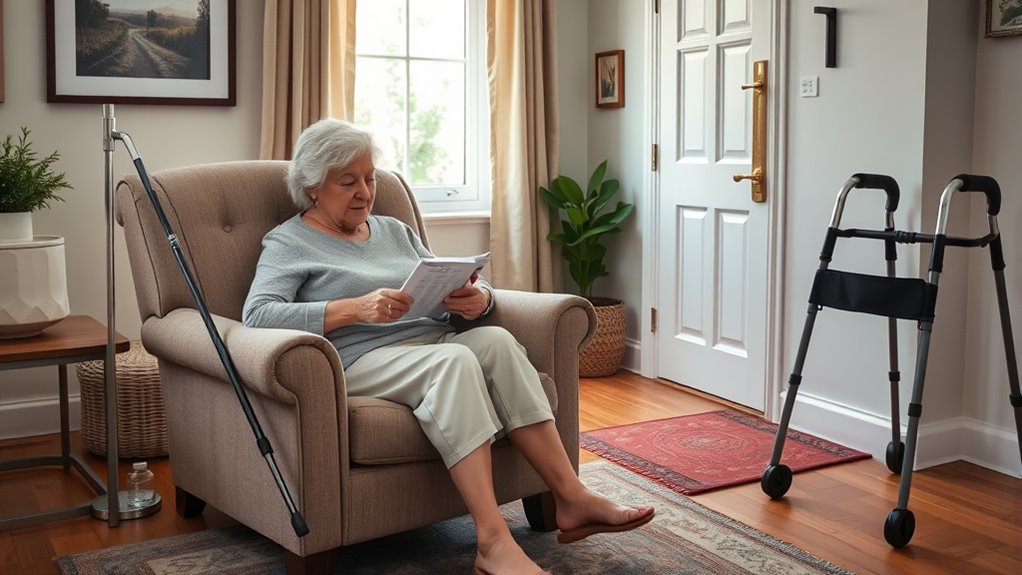
Managing your medications is a crucial step in preventing falls, especially since many drugs can cause dizziness, drowsiness, or balance issues. Regularly review your medications with your healthcare provider to identify those that may increase fall risk. Don’t hesitate to ask about side effects or alternatives if you notice dizziness or unsteadiness. Keep a current list of all prescription and over-the-counter medicines and share it during each visit. Be cautious when starting new medications, and follow dosage instructions carefully. Avoid mixing drugs without consulting your doctor, as interactions can worsen balance problems. Staying informed and proactive about your medications can considerably reduce your chances of falling and help you stay safe at home.
Choosing and Using Assistive Devices Properly

Choosing the right assistive device guarantees you have the support you need to stay safe. When you learn proper usage techniques, you reduce the risk of falls caused by misuse or instability. Regular assessments help keep your devices fitted correctly and functioning well as your needs change.
Selecting the Right Aid
Selecting the right assistive device is essential for enhancing stability and preventing falls. You need to choose equipment that matches your specific needs, physical abilities, and environment. Proper selection guarantees safety and promotes independence. When choosing a device, consider these key points:
- Consult a healthcare professional to assess your mobility and recommend suitable aids.
- Prioritize comfort and fit to prevent discomfort and ensure stability.
- Test devices before committing to ensure they feel secure and easy to use.
Correct Usage Techniques
Using assistive devices correctly is essential for guaranteeing safety and maximizing their benefits. Always follow the manufacturer’s instructions and get proper training from a healthcare professional. Confirm your device fits well and is comfortable to prevent slips or loss of balance. Regularly inspect your device for damage or wear, and replace it if necessary. When using a cane or walker, keep your posture upright and walk slowly, placing your device firmly on the ground before stepping forward. Adjust the height for ideal support, usually aligning the top of the device with your wrist. Remember to keep pathways clear and avoid overreaching. Proper usage reduces fall risk and enhances independence.
| Device Type | Proper Technique |
|---|---|
| Cane | Keep it on your stronger side. Stay upright. |
| Walker | Lock brakes when stationary. Adjust height. |
| Wheelchair | Confirm footrests are secure. Sit back fully. |
| Scooter | Practice maneuvering in safe areas. Always wear a helmet. |
| Shower Seat | Securely attach and sit fully seated. |
Regular Device Assessments
Regular device assessments are essential to guarantee your assistive devices continue to provide the support you need safely. Over time, wear and tear, changes in your mobility, or improper fitting can compromise their effectiveness. Regular evaluations by a healthcare professional ensure your cane, walker, or other aids remain properly fitted and functional. This helps prevent slips, trips, and falls caused by faulty or ill-fitting devices. Keep in mind:
- Check for cracks, worn-out parts, or instability regularly
- Ensure your device fits comfortably and supports your mobility needs
- Adjust or replace devices as your condition changes
Incorporating Exercise and Balance Training

Incorporating exercise and balance training into daily routines is a proven way to reduce fall risk among older adults. Regular activity strengthens your leg muscles, improves stability, and enhances coordination, making you less likely to stumble or lose your balance. You don’t need to engage in intense workouts; simple practices like standing on one foot, heel-to-toe walking, or chair exercises can make a big difference. Community programs often include tailored balance and strength routines designed specifically for seniors. Consistency is key—aim for at least 20-30 minutes most days of the week. By making exercise a routine, you’ll build confidence in your mobility and reduce your chances of falling, helping you stay independent longer.
Frequently Asked Questions
How Often Should I Reassess My Home for Fall Hazards?
You should reassess your home for fall hazards every six months. Regular checks help you identify and fix issues like clutter, uneven surfaces, or poor lighting that could cause falls. After any major change or repair, do a quick inspection as well. Staying proactive guarantees your environment remains safe and reduces the risk of falls. Remember, consistent reassessment keeps your home a secure space for you or your loved ones.
What Types of Lighting Are Best for Safety?
Think of your home as a stage where good lighting is the spotlight that guides your steps. Opt for bright, warm LED bulbs with high lumens to eliminate shadows and reveal every obstacle. Install motion-activated lights in hallways and staircases for instant illumination when needed. Keep fixtures secure and free of flickers, so your path stays clear and safe, turning your home into a well-lit sanctuary where falls take a backseat.
How Do I Choose the Right Mobility Aid?
You should choose a mobility aid based on your specific needs, ensuring it provides adequate support and stability. Visit a healthcare professional for an assessment, and try different options like canes, walkers, or wheelchairs to see which feels most comfortable and secure. Make sure the device fits properly, is lightweight, and easy to use. Regularly check and maintain it to keep it safe and effective for your mobility needs.
When Should I Update or Replace My Assistive Devices?
You should update or replace your assistive devices whenever they no longer fit properly, show signs of wear, or feel less stable. Regularly check for cracks, loose parts, or worn-out grips, and make sure they meet your current mobility needs. If your balance, strength, or health changes, consult your healthcare provider to verify your devices are still appropriate and safe, reducing your fall risk effectively.
How Can I Motivate Seniors to Stay Active Regularly?
You can motivate seniors to stay active by making exercise enjoyable and easy to incorporate into daily routines. Encourage activities they love, such as walking, dancing, or gardening, and join them to boost motivation. Set achievable goals, celebrate progress, and highlight the health benefits like improved balance and strength. Creating a social aspect, like group classes or walking buddies, helps seniors stay committed and feel supported.
Conclusion
By taking these simple steps, you can turn your home into a sanctuary that keeps you safe and steady. Think of it as your fortress against the unexpected, where every lamp shines bright and every handrail feels like an old friend guiding you. Remember, prevention is your best armor—so don’t wait for the storm to hit. With a little effort today, you’ll enjoy tomorrow with confidence, like a knight in shining armor ready for any adventure.
Fall Picks
fall essentials
As an affiliate, we earn on qualifying purchases.