To guarantee a smooth transition when moving your elderly parent into your home, involve them in decision-making and respect their cultural traditions and routines. Create a comforting environment by incorporating familiar items and gradually introducing new elements. Offer emotional support through active listening and reassurance, and maintain consistency in daily routines. Empower your parent by respecting their preferences and fostering independence. If you want to learn more about making this transition as seamless as possible, keep exploring helpful tips and strategies.
Key Takeaways
- Respect and incorporate your parent’s cultural traditions and routines to foster comfort and emotional security.
- Acknowledge feelings of anxiety or sadness, providing reassurance and active listening to build trust.
- Personalize their space with familiar items and gradually introduce changes to ease the transition.
- Involve your parent in decision-making to empower them and maintain a sense of control.
- Maintain consistent routines and create a supportive environment that nurtures independence and dignity.
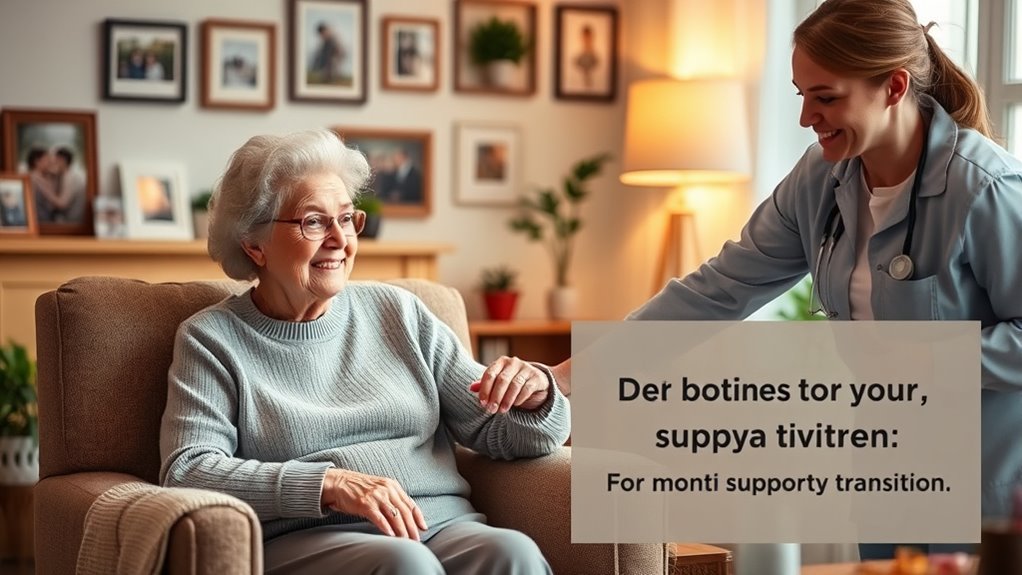
Smooth progressions are essential for guiding your audience seamlessly from one idea to the next. When you’re preparing to move your elderly parent into your home, understanding the importance of a thoughtful transition can make all the difference. One of the first things to consider is how cultural considerations may influence your approach. Every family has its unique traditions, beliefs, and routines, and respecting these can ease your parent’s adjustment. Take time to learn about their preferences, customs, and expectations. Incorporate these into the planning process, whether it’s about meal preparations, daily routines, or spiritual practices. Doing so shows respect and helps your parent feel valued, reducing feelings of disorientation or loss of identity.
Respect your parent’s traditions and routines to ease their adjustment and foster a sense of being valued.
Along with cultural considerations, emotional support plays a crucial role in ensuring a smooth transition. Moving can be overwhelming, especially for someone who’s used to their independence or familiar surroundings. It’s natural for your parent to experience a range of emotions—fear, sadness, or even frustration. Your role is to provide reassurance and a sense of stability. Listen actively to their concerns, validate their feelings, and reassure them that they’re not alone. Building a strong emotional support system begins with patience and empathy. Spend quality time together and maintain open communication to create an environment where your parent feels safe sharing their feelings. This emotional foundation helps reduce anxiety and fosters trust, making the transition less stressful.
As you plan the move, consider practical steps to support emotional well-being. Set up their space thoughtfully, incorporating familiar items like photographs, cherished keepsakes, or favorite furniture. This personal touch helps create a sense of familiarity and comfort. Be mindful of their routines and try to replicate aspects of their previous environment to help ease their adaptation. Keep routines consistent as much as possible and introduce new elements gradually, always checking in to see how they’re feeling. Remember, the goal is to make them feel at home, not just physically but emotionally as well. Additionally, understanding caregiving principles can guide you in providing ongoing support that respects your parent’s dignity and independence.
Finally, involve your parent in the process, giving them a voice in decisions. Empowering them will boost their confidence and sense of control during this significant life change. Keep in mind that cultural considerations and emotional support aren’t just one-time factors but ongoing priorities. By respecting their background and providing a compassionate presence, you’ll help your parent transition smoothly, turning what could be a stressful experience into a positive new chapter.
familiar items for elderly transition
As an affiliate, we earn on qualifying purchases.
As an affiliate, we earn on qualifying purchases.
Frequently Asked Questions
How Can I Prepare My Home for My Elderly Parent’s Needs?
To prepare your home for your elderly parent’s needs, focus on home safety and adaptive modifications. Remove tripping hazards, install grab bars in bathrooms, and ensure good lighting throughout. Consider widening doorways for easier mobility and adding ramps if needed. These adaptive modifications create a safer, more accessible environment, helping your parent feel comfortable and secure while promoting independence in your home.
What Are Effective Ways to Ease Your Parent’s Emotional Transition?
You can ease your parent’s emotional shift by providing consistent emotional support and practicing open communication strategies. Listen actively to their concerns, validate their feelings, and reassure them that they’re not alone. Encourage them to express their emotions and share their worries. Maintain patience and compassion, which helps build trust and security, making the transition smoother and more comfortable for your parent.
How Do I Balance Privacy and Caregiving Responsibilities?
You can balance privacy and caregiving by encouraging your parent’s independence while setting clear boundaries. Respect their need for personal space, and establish designated areas for privacy. Communicate openly about boundaries, and involve them in decisions to foster respect. This approach helps maintain their dignity and independence while allowing you to provide necessary support. Regularly reevaluate boundaries to guarantee both your needs and theirs are met, creating a harmonious living situation.
What Resources Are Available for Financial Assistance?
Think of financial assistance options as a safety net catching you when you need it most. You can explore federal programs like Medicaid and Social Security, along with local community resources. There are also veteran benefits and state-specific aid programs tailored for seniors. These financial programs are your allies, helping ease the burden and making the progression smoother, so your parent’s new chapter begins with stability and support.
How Can I Manage Conflicts Within the Household During This Transition?
To manage conflicts during this changeover, prioritize household communication by openly discussing everyone’s needs and concerns. Practice conflict resolution by staying calm, listening actively, and finding compromises that respect your parent’s independence while setting clear boundaries. Encourage everyone to share their feelings and work together to create a harmonious environment. Remember, patience and empathy are key to smoothing this adjustment for everyone involved.

Car Transfer Aid Easy Slide Sheet Positioning Patient Transfer Device Slip Slider Sheets for Vehicles Wheelchairs Bed Turning Repositioning Hospitals and Home Care Assist Moving Elderly Disabled
- Tubular Design: Folds for easy use and smooth transfer
- Time-Saving & Effort-Reducing: Low friction surface eases patient transfer
- Wearproof & Durable: Made from waterproof, breathable nylon fabric
As an affiliate, we earn on qualifying purchases.
As an affiliate, we earn on qualifying purchases.
Conclusion
Moving your elderly parent into your home can be a heartfelt journey. Remember, patience and clear communication make all the difference. For example, Sarah gently eased her mother into the new environment, creating familiar routines and respecting her independence. By staying flexible and compassionate, you’ll help your loved one feel safe and loved during this passage. With thoughtful planning, you’ll both enjoy this new chapter, strengthening your bond every step of the way.

SMASOLO 2pcs Self-Adhesive Door Pull Rings for Elderly and Disabled, No Drill Toilet Seat Opener with Widened Silicone Grip, Rounded Plastic Handle for Drawers and Furniture in Senior
- Safe, No Sharp Edges: Rounded, gentle design reduces scratches
- Multi-Environment Use: Suitable for homes, centers, assisted living
- Effortless Access: No drill, stress-free door and drawer grip
As an affiliate, we earn on qualifying purchases.
As an affiliate, we earn on qualifying purchases.
emotional support products for seniors
As an affiliate, we earn on qualifying purchases.
As an affiliate, we earn on qualifying purchases.