

To prevent and manage dehydration in seniors, make certain they follow a personalized hydration plan that suits their health, environment, and activity level. Encourage regular drinking habits, include water-rich foods like fruits and vegetables, and create a comfortable environment that promotes easy access to fluids. Monitor signs like dry mouth or dark urine, and seek medical help if dehydration occurs. Staying proactive and attentive can help keep hydration levels balanced—keep exploring for more helpful strategies.
Key Takeaways
- Encourage regular, small sips of fluids and include water-rich foods to maintain hydration.
- Monitor seniors for signs of dehydration, such as dry mouth, dark urine, and dizziness.
- Tailor hydration goals based on individual health, activity level, and environmental factors like climate.
- Educate caregivers and seniors on the importance of consistent fluid intake and environmental adjustments.
- Consult healthcare professionals for personalized hydration plans, especially for those with chronic illnesses or medication use.
Understanding Why Seniors Are More Susceptible to Dehydration
As you age, your body’s ability to stay hydrated diminishes due to several natural changes. You have less total body water because muscle mass decreases, and muscles store water, so reduced muscle leads to less water retention. Your kidneys also become less efficient at regulating fluid levels, making it harder to conserve or excrete water properly. Additionally, your sense of thirst declines markedly, so you often don’t feel thirsty even when your body needs fluids. These changes mean dehydration can develop silently, without obvious signs, and become severe before you realize you’re dehydrated. The natural decrease in free floating water further exacerbates the risk, as it affects overall hydration levels. Understanding these natural shifts helps explain why older adults are at higher risk, emphasizing the importance of proactive hydration strategies. The decline in total body water also means that even small fluid losses can have a significant impact on hydration status. Dehydration risk increases as these physiological changes progress, underscoring the need for vigilant fluid intake. Furthermore, hydration monitoring can be essential in preventing serious health complications related to dehydration in seniors.
Recognizing the Signs and Risks of Dehydration in Older Adults
You need to be alert for signs like dry mouth, dizziness, and dark urine, which can indicate dehydration. Recognizing risk factors such as reduced thirst sensation, chronic health conditions, and limited mobility helps you catch dehydration early. Staying aware of these symptoms and risks enables quicker intervention to protect your loved ones’ health. Incorporating simple hydration habits into daily routines can significantly reduce dehydration risk in seniors. Additionally, understanding how age-related physiological changes affect hydration can help tailor prevention strategies effectively. Being mindful of hydration challenges in aging allows caregivers to implement more effective hydration-support techniques. Moreover, awareness of dehydration’s impact on overall health emphasizes the importance of proactive management. For example, hydration monitoring devices can assist in tracking fluid intake and prevent dehydration before symptoms worsen.
Common Dehydration Symptoms
How can you tell if an older adult is dehydrated? Look for signs like dry mouth, sticky or cracked lips, and darker urine than usual. They may feel dizzy, weak, or experience headache, which can indicate low fluid levels. Reduced skin elasticity or a lack of tears when crying are common physical signs. Fatigue and confusion are also warning signals, especially if they suddenly appear or worsen. In severe cases, the person might have a rapid heartbeat or low blood pressure. Keep in mind that dehydration symptoms can be subtle and easily overlooked, especially since older adults often have diminished thirst. Monitoring these signs closely helps you identify dehydration early, so you can act quickly to prevent complications. Recognizing hydration status is crucial for maintaining health in seniors. Additionally, understanding how modern farmhouses incorporate natural and vintage elements can inspire ways to create comfortable, health-promoting environments for seniors. Being aware of factors like age-related changes in thirst regulation can further support proactive hydration management. Recognizing the importance of clinical assessment can also aid in more accurate detection of dehydration in elderly populations. Incorporating regular hydration checks into daily routines can greatly improve early detection and response.
Risk Factors Identification
Identifying the risk factors for dehydration in older adults is essential for early intervention. By recognizing these risks, you can help prevent dehydration before symptoms worsen. Here are key factors to watch for:
- Reduced thirst sensation, making seniors less likely to drink enough fluids
- Decreased muscle mass, which lowers the body’s water storage capacity
- Impaired kidney function, affecting fluid regulation
- Chronic illnesses or medications that increase fluid loss or interfere with intake
Being aware of these risks allows you to monitor for early signs, encourage proper hydration, and implement preventive measures. Seniors with these risk factors need extra attention to maintain adequate hydration and avoid complications.
Importance of Tailored Hydration Goals for Older Individuals

You need to recognize that each senior has unique hydration needs based on personal health, activity levels, and environment. Adjusting these goals for climate and health conditions guarantees proper hydration without overdoing it. Tailoring hydration plans helps prevent dehydration while respecting individual differences. Incorporating personalized hydration strategies ensures that hydration goals are both effective and adaptable to changing circumstances. Understanding the role of the solar system in climate regulation can also inform hydration needs by highlighting environmental influences. Additionally, considering the net worth of individuals can influence access to resources necessary for maintaining proper hydration. Recognizing the importance of essential oils for health can also support hydration by promoting overall well-being. Being aware of climate factors influenced by the solar system can further refine hydration recommendations for seniors in varying environments.
Personal Hydration Needs
Because dehydration risks vary among older adults, setting personalized hydration goals is essential for effective prevention. Your needs depend on factors like health status, activity level, and environment. To guarantee you’re staying well-hydrated, consider these key points:
- Monitor your body’s signals, like urine color and frequency, to gauge hydration.
- Adjust fluid intake based on activity, weather, and health conditions, rather than sticking to a fixed amount.
- Include a variety of fluids—water, milk, broths—to meet your unique preferences and nutritional needs.
- Consult healthcare providers regularly to tailor hydration goals, especially if you have chronic health issues or take medications affecting fluid balance.
- Develop simple routines to regularly remind yourself to drink fluids throughout the day, supporting long-term hydration habits.
- Recognizing cloud-based services vulnerabilities can help you prepare better contingency plans for maintaining hydration in emergency situations.
- Be aware of common dehydration symptoms to catch early signs and prevent complications effectively. Additionally, staying informed about hydration monitoring technologies can enhance your ability to maintain proper fluid intake.
Adjusting for Climate
Adjusting your hydration goals to match the climate is essential for staying properly hydrated, especially as weather conditions can considerably influence your fluid needs. In hot, humid environments, your body loses more water through sweating, so you need to drink more to replenish lost fluids. Conversely, in cooler weather, you might not feel as thirsty, but your hydration needs still increase with physical activity or exposure to wind and cold. High temperatures can cause rapid dehydration, so pay close attention to signs of thirst and monitor your urine color to ensure adequate hydration. If you’re outdoors or in warm environments, increase your fluid intake proactively. Tailoring your hydration to the climate helps prevent dehydration and supports overall health, especially as you age. Incorporating aroma oil diffusers into your environment can also promote relaxation and improve overall well-being, which is beneficial when managing health concerns like dehydration. Additionally, understanding how climate change impacts hydration needs can help you adapt your fluid intake more effectively over time.
Health Condition Factors
Health conditions substantially influence hydration needs in older adults, making personalized goals essential for effective dehydration prevention. Conditions like diabetes, heart failure, kidney disease, or medications such as diuretics can alter fluid requirements and loss. Tailoring hydration plans helps address these specific needs and prevents complications.
Consider these factors:
- Chronic illnesses that impact fluid balance, requiring closer monitoring.
- Medications that increase urine output or cause fluid retention.
- Physical limitations or cognitive impairments that hinder regular fluid intake.
- Symptoms like nausea or dry mouth that may reduce willingness to drink.
Practical Tips for Incorporating Hydration Into Daily Routines

Incorporating hydration into daily routines can be simple and effective when you make it a habit. Start by drinking a glass of water immediately after waking up to kick-start your day. After meals, take a moment to sip water or a hydrating beverage to reinforce the habit. Keep a water bottle within reach at all times, making it easy to take small drinks throughout the day. Set alarms or reminders on your phone to prompt regular sipping. Flavor your water with slices of lemon or berries to make it more appealing. Incorporate water-rich foods like cucumbers, strawberries, or watermelon into your meals. Consistently integrating these small actions helps maintain hydration, reduces dehydration risk, and keeps you feeling energized and healthy.
The Role of Water-Rich Foods in Supporting Hydration
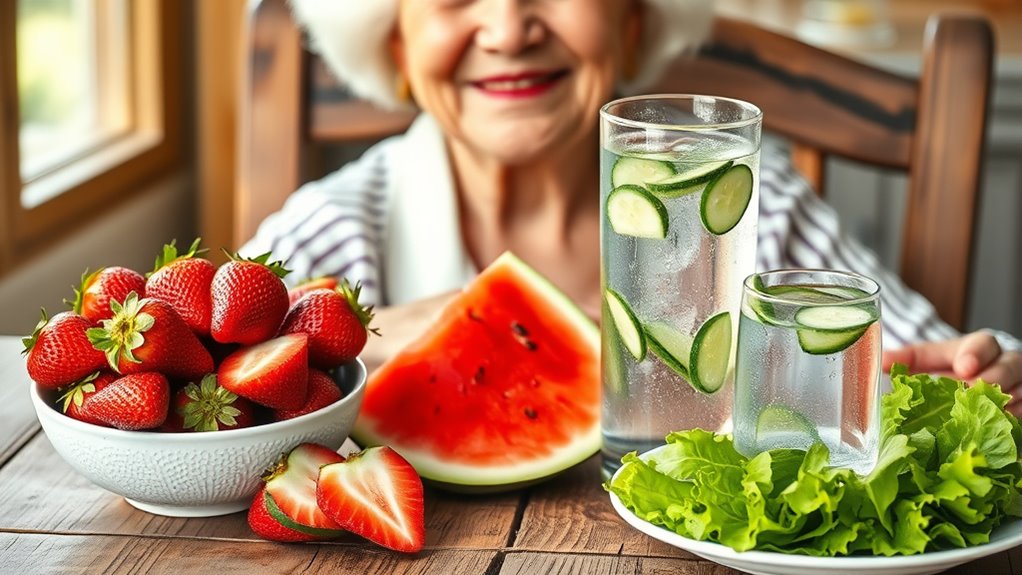
Water-rich fruits and vegetables can boost your hydration without you even noticing. They provide essential nutrients along with fluids, making them a smart choice for seniors. Including these foods in your diet helps maintain hydration and supports overall health.
Hydrating Fruits and Vegetables
Fruits and vegetables with high water content play a vital role in supporting hydration, especially for seniors who often struggle to meet their fluid needs. Incorporating these foods into your daily diet helps boost hydration naturally and provides essential nutrients. To enjoy their benefits, consider:
- Eating watermelon slices or adding them to salads for a sweet, hydrating boost.
- Snacking on cucumbers, which are crisp and contain over 95% water.
- Including strawberries in yogurt or cereal for flavor and moisture.
- Using vegetable broths or soups as flavorful, water-rich options.
These foods are easy to prepare, versatile, and delicious. They support hydration without the need for extra effort, making it simpler to stay properly hydrated throughout the day.
Nutritional Benefits of Water-Rich Foods
Consuming foods that have high water content naturally supports hydration by providing essential fluids alongside vital nutrients. Water-rich foods like watermelon, cucumbers, strawberries, and lettuce deliver hydration in a tasty, convenient form. These foods not only help maintain fluid balance but also supply vitamins, minerals, and antioxidants that support overall health. Eating water-dense fruits and vegetables can reduce the reliance on drinking plain water, especially if you find it difficult to consume enough fluids daily. Incorporating these foods into your meals and snacks makes hydration easier and more enjoyable. Plus, their natural flavors and textures can stimulate your appetite and improve nutrient intake, which is especially important for seniors managing multiple health concerns.
Strategies for Caregivers and Healthcare Providers to Promote Fluid Intake

Caregivers and healthcare providers play a crucial role in promoting fluid intake among seniors by implementing proactive strategies that make hydration easy and appealing. You can start by establishing regular drinking routines, such as offering fluids at set times like after meals or during medication rounds. Keep water accessible, using attractive bottles or cups to encourage use. Incorporate high-water-content foods into meals to supplement hydration naturally. Finally, personalize beverage choices—offer flavored water, milk, or diluted juices—to make drinking more enjoyable. Here are four practical strategies:
- Set specific hydration times throughout the day
- Keep a variety of appealing drinks within reach
- Use colorful, easy-to-handle containers
- Integrate water-rich foods into daily meals
These simple steps help ensure seniors stay adequately hydrated and reduce dehydration risks.
Creating a Supportive Environment to Encourage Regular Drinking

Creating a supportive environment is essential for encouraging seniors to drink regularly, especially since many have diminished thirst cues. You can make fluids more accessible by placing water within easy reach in frequently used areas, such as the kitchen, living room, or bedside. Offering drinks at routine times—like after meals or during activities—helps establish consistent habits. Flavoring water with lemon or fruit slices can make hydration more appealing. Providing a variety of beverage options, including milk or diluted juices, caters to preferences and reduces boredom. Reminding seniors gently and offering assistance when needed supports their independence and comfort. Creating a calm, encouraging atmosphere around drinking helps seniors view hydration as a natural, manageable part of their daily routine.
Monitoring and Assessing Hydration Status Effectively
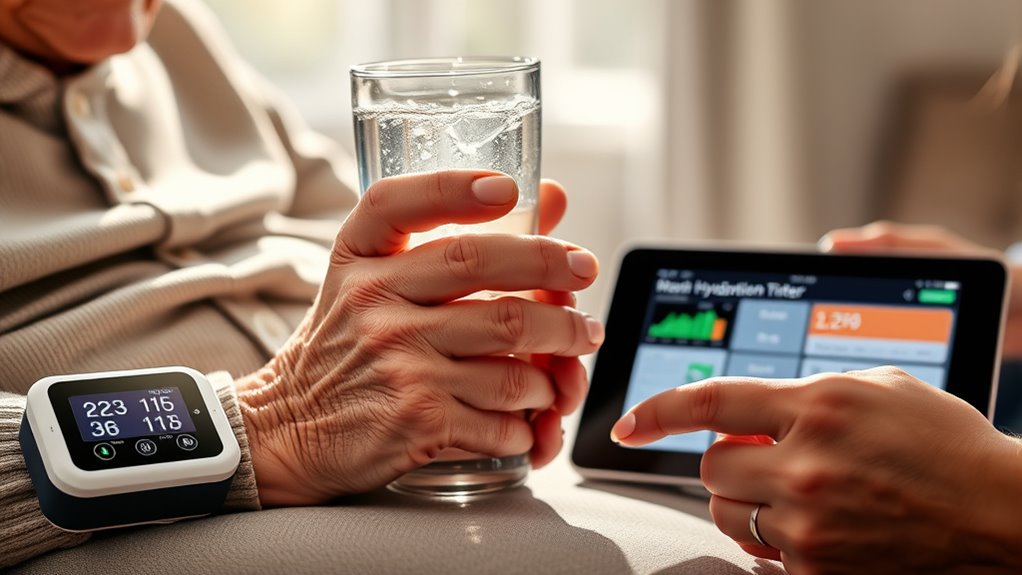
Monitoring and evaluating hydration status accurately is key to preventing dehydration in seniors. To do this effectively, you should focus on several practical assessments.
Effective hydration monitoring in seniors involves observing physical signs, urine, vital signs, and weight changes.
- Observe physical signs such as dry mouth, sunken eyes, and skin turgor to identify dehydration symptoms early.
- Track urine output and color; dark urine or infrequent urination can indicate low hydration levels.
- Monitor vital signs like increased heart rate or low blood pressure, which may signal dehydration.
- Assess weight changes regularly, as sudden weight loss can reflect fluid loss.
Using these measures together provides a thorough picture of hydration status. Remember, relying on a single indicator isn’t enough—combine observations for accurate assessment and timely intervention.
Managing Dehydration When It Occurs: Medical Interventions and Care

When dehydration is identified in seniors, prompt medical intervention becomes essential to restore fluid balance and prevent complications. Your healthcare provider may administer intravenous (IV) fluids to rapidly rehydrate the body, especially if dehydration is severe or accompanied by symptoms like dizziness, confusion, or low blood pressure. Mild cases might be managed with oral rehydration solutions or electrolyte-rich drinks to replace lost minerals and fluids. Monitoring vital signs, urine output, and electrolyte levels helps assess treatment effectiveness and guides ongoing care. If dehydration results from an underlying condition, addressing that issue—such as infections or medication side effects—is crucial. In some cases, hospitalization may be necessary for close observation, fluid management, and to prevent further health deterioration.
Developing Long-Term Habits to Prevent Dehydration in Seniors

Developing long-term habits to prevent dehydration in seniors involves integrating consistent hydration practices into daily routines. You can do this by establishing specific times to drink fluids and making it a natural part of your day. To help, consider these strategies:
Establish daily hydration routines with regular water intake and flavorful options to prevent dehydration in seniors.
- Drink water upon waking, after meals, and before bed to build routine.
- Incorporate water-rich foods like fruits and vegetables daily for extra hydration.
- Keep a water bottle nearby to remind yourself to sip regularly.
- Flavor water with lemon or berries to make drinking more appealing.
Frequently Asked Questions
How Can I Tell if an Older Adult Is Dehydrated Without Obvious Symptoms?
You can tell if an older adult is dehydrated without obvious symptoms by checking their urine output and color. If their urine is dark, concentrated, or they produce less than 0.5 mL/kg/hour, it indicates dehydration. Also, monitor their skin turgor, mental alertness, and blood pressure. Regular assessments and hydration status checks help catch dehydration early, especially since symptoms like thirst may be diminished in seniors.
What Specific Drink Options Are Best for Seniors With Dietary Restrictions?
You should offer seniors drinks that meet their dietary needs, like low-sugar or salt-restricted options. Unsweetened herbal teas, flavored water with natural fruit slices, and diluted fruit juices can be good choices. If they have lactose intolerance, try lactose-free milk or plant-based alternatives like almond or soy milk. Always verify with their healthcare provider to confirm the drinks align with their specific health restrictions and nutritional needs.
Are There Any Risks Associated With Giving Seniors More Fluids Than Recommended?
Imagine pouring extra water into a fragile vase; too much can cause it to overflow and crack. Giving seniors more fluids than recommended can lead to health risks like hyponatremia—dangerously low sodium levels—that may cause confusion, seizures, or even coma. Always observe their intake carefully, and consult healthcare providers to guarantee hydration is safe and appropriate, preventing those potentially costly spills in their health.
How Often Should Hydration Assessments Be Performed in Long-Term Care Settings?
You should perform hydration assessments at least daily in long-term care settings to guarantee seniors stay properly hydrated. Regular checks help you identify early signs of dehydration and adjust fluid intake accordingly. Incorporate assessments during routine care, such as bathing, medication administration, or meal times. Consistent monitoring enables you to respond quickly to changes in hydration status, reducing health risks and supporting overall well-being for your residents.
What Are Non-Invasive Methods to Monitor Hydration Levels in Seniors?
Think of your senior loved ones as delicate plants needing gentle care. You can monitor hydration with non-invasive methods like observing skin turgor, checking for dry mouth, and noting color and volume of urine. Regularly assess their alertness and mood, as changes can signal dehydration. Using these subtle signs, you become the gardener, tending to their well-being with attentive, compassionate care, ensuring they stay vibrant and healthy.
Conclusion
Think of hydration as the steady stream that keeps your loved one’s well-being flowing smoothly. By understanding their unique needs and creating supportive habits, you become the lighthouse guiding them safely through potential storms. Each sip, each nutritious food, acts as a beacon of care, illuminating the path toward health. Remember, your vigilance and compassion are the compass that guarantees their journey remains vibrant and full of life.