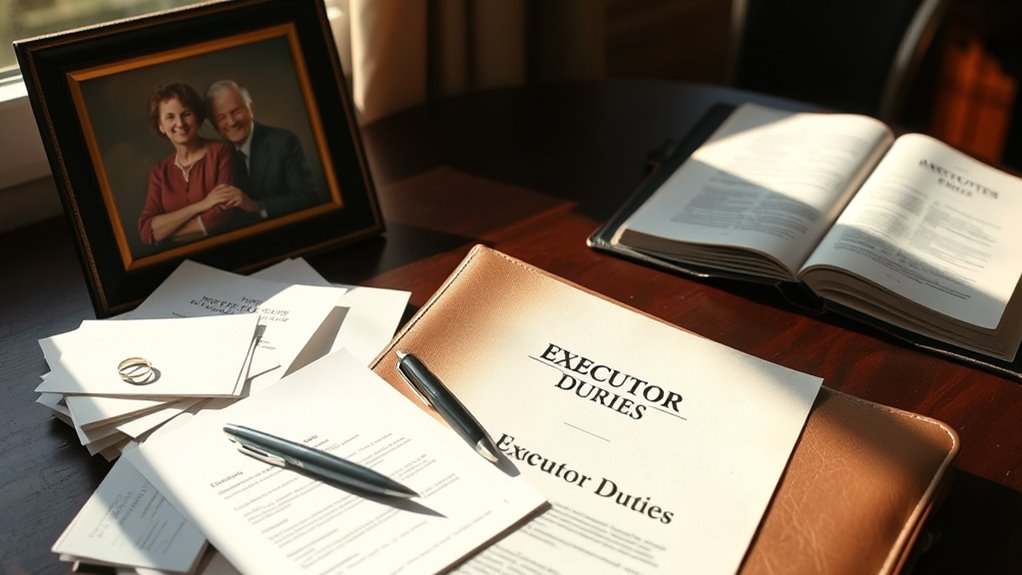

When your parent passes and you’re in charge, your first step is to locate the will and get it validated through probate, then obtain court approval to act on behalf of the estate. You’ll need to gather all assets, secure and document them, and notify creditors. Pay outstanding debts and taxes before distributing assets according to the will. Acting with integrity and following legal procedures are essential. To learn more about each step, continue exploring how to fulfill your responsibilities effectively.
Key Takeaways
- Locate and validate the will through probate to establish legal authority.
- Gather, secure, and document all estate assets and liabilities thoroughly.
- Notify creditors, settle debts, and file final tax returns for the deceased.
- Follow the will’s instructions for asset distribution after debts and taxes are settled.
- Act honestly, keep detailed records, and comply with estate laws to ensure proper settlement.

Ever wondered what exactly an executor’s responsibilities are when managing an estate? When you’re appointed as an executor, you’re stepping into a role that requires careful attention to detail and a clear understanding of your legal responsibilities. Your primary goal is to facilitate the estate settlement process, which involves gathering assets, paying debts, and distributing what remains to the beneficiaries. This process can be complex, so knowing what to expect helps you manage your duties efficiently and confidently.
Understanding an executor’s role helps ensure estate settlement is handled with care and confidence.
First, you need to locate the will and take steps to have it validated through the probate process. This legal procedure ensures that the will is genuine and gives you the authority to act on behalf of the estate. Once you have the court’s approval, your legal responsibilities include identifying and securing all assets. This means tracking down bank accounts, real estate, investments, personal belongings, and any other property owned by your parent. It’s vital to document everything meticulously and keep detailed records of all assets and transactions.
As part of estate settlement, you are responsible for notifying creditors and settling any outstanding debts or taxes owed by the estate. This involves sending formal notices, reviewing bills, and paying them from the estate’s funds. You must also file final income tax returns for your parent and pay any taxes due, which falls squarely under your legal responsibilities. Making sure these obligations are fulfilled is essential to protect the estate from legal complications or penalties.
Distributing assets is the final step in your duties, but it’s not as simple as handing over belongings. You need to follow the instructions laid out in the will, including specific bequests and the overall distribution plan. Before doing so, confirm that all debts and taxes are paid, and that the estate’s expenses are covered. If disputes arise or if the estate includes complex assets, you might need to seek legal advice to navigate these issues properly.
Additionally, understanding estate laws and regulations can be critical to ensuring your actions are compliant and that the estate is properly handled according to jurisdictional requirements.
Throughout this process, you must act in good faith and stay organized. Your actions should align with both the law and the wishes of your parent as outlined in the will. Failing to adhere to your legal responsibilities can lead to personal liability or delays in estate settlement. By understanding your duties clearly, you’ll be better equipped to handle this challenging task with confidence and integrity, ensuring the estate is settled correctly and efficiently for those who depend on it.
Frequently Asked Questions
How Do I Locate the Deceased’s Important Documents Quickly?
To locate the deceased’s important documents quickly, start by checking their personal spaces like drawers, filing cabinets, and safes. Look for keys or passwords that could open digital accounts. Gather essential papers such as the will, financial statements, and estate inventory forms. These documents are vital for the probate process and managing the estate. Acting swiftly helps make certain you cover all bases and avoid delays in settling the estate.
What Should I Do if Beneficiaries Dispute the Will?
If beneficiaries dispute the will, stay calm and gather all relevant documents related to inheritance disputes and will contestation. You should communicate openly and consider consulting a probate attorney to understand your options. Mediation might help resolve conflicts amicably, but if disagreements persist, be prepared for legal proceedings. Your goal is to protect the estate while respecting the beneficiaries’ rights, ensuring the process remains transparent and fair.
How Can I Manage Estate Taxes Efficiently?
Tax tactics transform estate taxes into manageable matters. You should start by scrutinizing estate planning documents for loopholes, then leverage legal and financial advice to apply smart tax strategies. Staying organized, exploring deductions, and considering charitable donations can substantially reduce liabilities. By proactively planning and consulting professionals, you can efficiently manage estate taxes, ensuring your loved ones inherit what’s intended without unnecessary financial burdens.
What Steps Are Involved in Closing the Estate?
To close the estate, you’ll need to complete the probate process, which involves settling debts, paying taxes, and gathering all assets. Once these steps are done, you’ll distribute the estate according to the will or state law. After confirming all debts and taxes are paid, you file a final accounting with the court. When approved, you can officially close the estate and transfer assets to the beneficiaries.
Who Can I Contact for Legal Assistance During This Process?
You should contact a legal counsel experienced in estate law or probate court to guide you through the process. They can help you understand the legal requirements, prepare necessary documents, and navigate court procedures. Reach out to local law firms, legal aid organizations, or the probate court itself for recommendations. Having professional support guarantees you handle all responsibilities correctly and efficiently during this challenging time.
Conclusion
Taking on the role of executor can feel overwhelming, but knowing your duties helps you navigate the process confidently. Remember, almost 60% of executors find the task more complex than expected, so seek help when needed. Staying organized and understanding your responsibilities guarantees you honor your parent’s wishes and settle their estate smoothly. With careful planning, you’ll not only fulfill your duties but also preserve the memory of your loved one with respect and integrity.