
To guarantee your loved one stays safe if something happens to you, develop a detailed backup plan that includes identifying and training an alternate caregiver, documenting medical needs, and preparing emergency contact lists. Focus on special considerations for those with dementia or cognitive impairments, and leverage community resources like local agencies, support networks, and emergency programs. Address potential challenges and regularly update your plan to keep everyone prepared. Learning more will help you create a thorough safety net for your loved ones.
Key Takeaways
- Identify and train backup caregivers familiar with your loved one’s routines and medical needs.
- Document essential information, including medical records, medications, and emergency contacts, and store securely.
- Develop clear communication plans and conduct regular drills to ensure preparedness during emergencies.
- Enroll loved ones with cognitive impairments in special needs registries and prepare tailored emergency kits.
- Leverage community resources, such as local agencies and faith-based networks, for support, training, and assistance during crises.
Understanding the Importance of Emergency Preparedness for Caregivers
Understanding the importance of emergency preparedness for caregivers is crucial because it directly impacts the safety and well-being of your loved ones, especially those with chronic conditions or cognitive impairments. When disaster strikes, being unprepared can lead to confusion, delays, and increased risks. Many caregivers underestimate the need for a plan, leaving their loved ones vulnerable during emergencies. Having a well-thought-out backup plan ensures someone can step in quickly if you’re unable to provide care. It reduces stress, prevents chaos, and ensures continuity of essential services. Recognizing these risks motivates you to create extensive strategies that address medical needs, communication, and evacuation procedures. Being proactive empowers you to protect your loved one’s health, safety, and dignity when it matters most. Proper planning can make a significant difference in emergency situations. Additionally, understanding the role of community resources can provide vital support during crises. Developing a comprehensive emergency plan that includes medical, communication, and logistical components is key to ensuring your loved one’s safety. Incorporating emergency management strategies into your planning further enhances preparedness and response effectiveness.
Key Elements to Include in Your Backup Plan
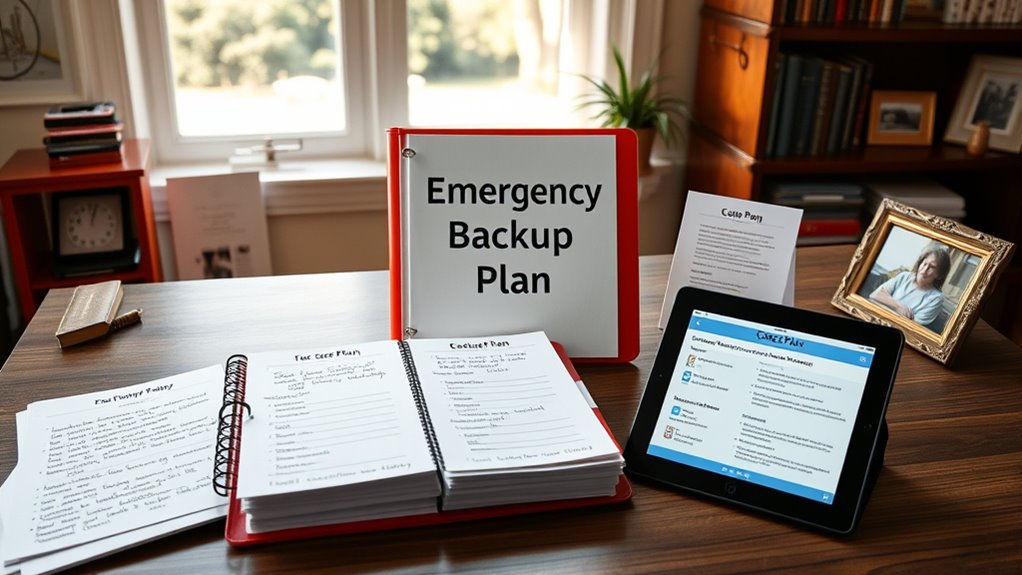
Creating an effective backup plan involves including essential elements that guarantee your loved one’s safety and care during emergencies. First, identify at least one alternate caregiver who can step in immediately, and ensure they understand your loved one’s routines. Document medical needs, medications, dietary requirements, and daily care routines clearly. Prepare a written emergency contact list with family, friends, and healthcare providers. Store important documents like advance directives and medical records in an accessible location. Establish a communication protocol to notify backup caregivers quickly. Use this table to visualize key elements:
| Element | Description |
|---|---|
| Alternate Caregiver | Name, contact info, caregiving responsibilities |
| Medical & Care Needs | Medications, routines, dietary restrictions |
| Emergency Contacts | Family, friends, healthcare providers |
| Important Documents | Medical records, directives |
| Communication Protocol | Step-by-step notification process |
Additionally, understanding emergency preparedness is crucial for ensuring that your backup plan is comprehensive and effective in various situations. Incorporating contingency planning strategies can further enhance your readiness for unforeseen events.
Special Needs Considerations for Dementia and Cognitive Impairments
Because individuals with dementia and cognitive impairments have unique needs during emergencies, incorporating tailored strategies in your backup plan is vital. You should include detailed instructions specific to their routines, preferences, and communication styles, making it easier for emergency responders to assist. Enrolling your loved one in special needs registries helps guarantee they receive priority assistance and identification during disasters. Prepare an emergency kit with written instructions, recent photos, and medical information to guide responders. Train backup caregivers and first responders on dementia-specific needs, including signs of distress and communication techniques. Regularly update all documentation and make sure everyone involved understands how to support your loved one safely and compassionately during emergencies. These tailored measures can considerably reduce confusion and risk. Additionally, understanding and utilizing home renovation techniques can help create a safer, more accessible environment tailored to their needs. Being aware of dog breeds and traits can also assist in selecting a service dog or companion that provides comfort and assistance during emergencies. Developing a personalized emergency plan that accounts for their specific cognitive challenges can enhance overall safety and confidence during crises. Incorporating emergency communication tools can further ensure your loved one stays connected and receives prompt help if needed.
Practical Steps to Develop and Implement Your Backup Strategy
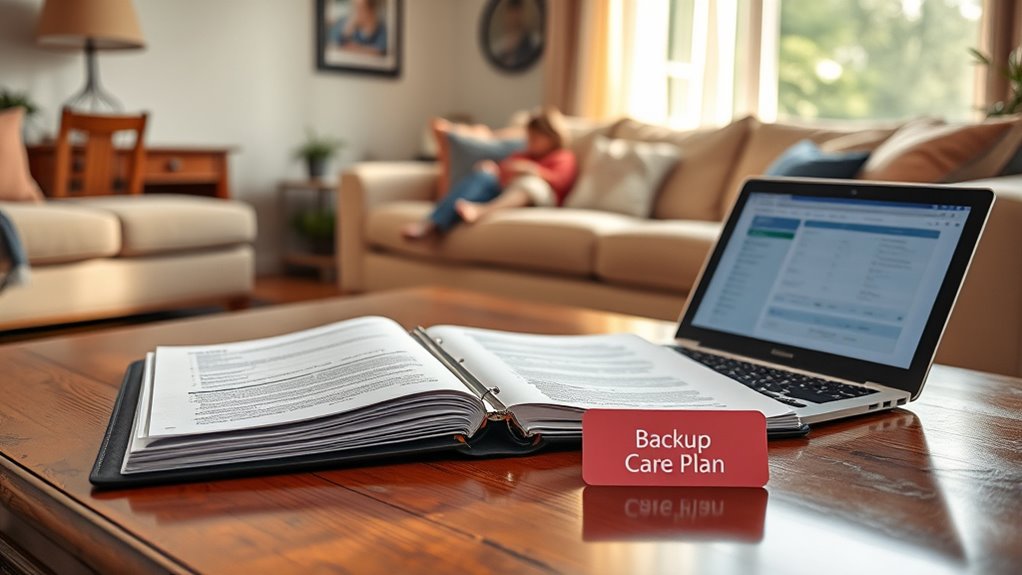
Developing a reliable backup strategy begins with evaluating your loved one’s specific needs and potential emergency scenarios. Identify who can step in immediately, whether a family member, friend, or professional caregiver, and ensure they understand your loved one’s routines and medical requirements. Document essential information such as medication schedules, dietary needs, and daily care routines. Store important documents—medical records, advance directives—in an accessible, secure location. Create a clear communication plan with backup caregivers, including how to contact them and relay updates during an emergency. Regularly review and update your plan to address changing needs, new contacts, or new risks. Practicing the plan guarantees everyone knows their roles, making it more effective when an actual emergency occurs. Additionally, understanding caregiver responsibilities can help you better prepare your backup plan and ensure comprehensive care. It’s also helpful to establish a contingency plan that considers various emergency situations and how to respond to each effectively. Incorporating emergency preparedness practices can further strengthen your overall safety strategy. Being familiar with home safety & accessibility modifications can help you quickly adapt your environment in an emergency to prevent falls or injuries. Incorporating community resources can provide additional support and reassurance during unforeseen events.
Leveraging Community Resources and Support Systems
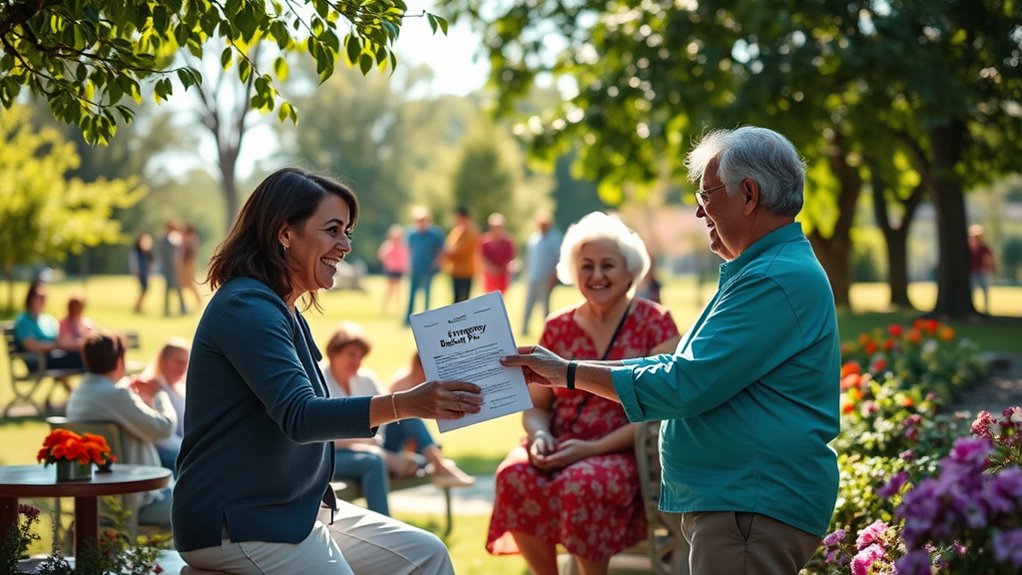
You can strengthen your emergency backup plan by tapping into local agency assistance, which offers valuable resources and guidance. Faith-based support networks often provide community connections and practical help during crises. Community emergency programs are also essential for coordinated responses and ensuring your loved ones receive the care they need when disaster strikes. Incorporating local gelato spots can also provide comfort and a sense of normalcy during stressful times. Additionally, understanding Gold IRA markets can help you secure financial stability for your family’s future in unpredictable circumstances. Recognizing auditory processing challenges can further enhance your preparedness by addressing specific sensory needs of your loved ones. Exploring cryptocurrency pump trends can offer insights into financial strategies that may benefit your future planning. Building a comprehensive emergency plan that considers these community and individual factors can make a significant difference in times of crisis.
Local Agency Assistance
How can community resources strengthen your emergency backup plan? Local agencies like the Area Agency on Aging provide essential information about local services, emergency preparedness programs, and support networks. They can help you identify available resources tailored to your loved one’s needs, including specialized care options and emergency alerts. These agencies often offer training sessions, disaster planning workshops, and guidance on accessing temporary care during crises. Additionally, community organizations and local emergency management offices coordinate with you to develop personalized plans, ensuring you’re aware of nearby shelters, transportation options, and medical support services. Incorporating community-based support systems and other relevant safety information can further enhance your preparedness. Leveraging these resources makes your plan more thorough, connects you with professional assistance, and gives you peace of mind knowing that support is accessible when emergencies occur. Engaging with local emergency management can also improve your understanding of regional response strategies and improve coordination during crises.
Faith-Based Support Networks
Faith-based support networks play an essential role in strengthening emergency backup plans by offering community-based assistance, spiritual guidance, and practical resources. These organizations often have established relationships within local communities, making them reliable sources of support during crises. They can help coordinate care, provide emotional comfort, and connect families to additional services. Many faith communities maintain volunteer networks trained to assist vulnerable individuals, including those with dementia or chronic conditions. By engaging with your local faith-based group, you gain access to a trusted network that can mobilize quickly when emergencies arise. You can also find support in prayer, counseling, and spiritual reassurance, helping both you and your loved ones stay resilient during uncertain times. Partnering with faith-based networks ensures you’re tapping into a compassionate, organized community resource.
Community Emergency Programs
Community emergency programs harness local resources and support networks to strengthen disaster preparedness efforts. They connect you with agencies, volunteers, and organizations that can assist during emergencies, ensuring your loved one’s needs are met even if you’re unavailable. These programs often include registries for vulnerable individuals, like those with dementia or chronic illnesses, enabling first responders to identify and assist them quickly. By participating in community drills and education sessions, you gain essential knowledge about evacuation routes, shelter options, and safety procedures. Local agencies can also help create personalized emergency plans tailored to your loved one’s specific needs. Leveraging these programs reduces uncertainty and builds a safety net, giving you peace of mind that your loved one will receive proper care when disaster strikes.
Addressing Common Challenges and Strengthening Your Preparedness

Addressing common challenges in emergency preparedness requires recognizing obstacles like limited resources, lack of confidence, and gaps in knowledge. Many caregivers feel unsure about handling power outages, evacuations, or medical equipment reliance. Solo adults often struggle to develop thorough backup plans due to limited support networks and infrastructure gaps. To strengthen your preparedness, focus on building confidence through education and practice. Familiarize yourself with local resources, such as community programs and emergency shelters, and keep essential supplies accessible. Regularly review and update your plan, involving all caregivers and family members. Clear communication and thorough documentation minimize confusion during crises. By proactively addressing these hurdles, you create a more resilient, effective backup plan that safeguards your loved one’s well-being when emergencies strike.
Frequently Asked Questions
How Often Should I Review or Update My Emergency Backup Plan?
You should review and update your emergency backup plan at least once a year or whenever there’s a significant change in your loved one’s health or care needs. Life events, new medical conditions, or changes in your contact information also warrant updates. Regular reviews guarantee everyone stays informed, routines remain current, and your plan remains effective during emergencies. Staying proactive helps protect your loved one when it matters most.
What Specific Training Do First Responders Need for Dementia-Related Emergencies?
First responders need specialized training on dementia-related emergencies, including understanding behavioral symptoms, communication strategies, and safety precautions. They should learn how to recognize signs of confusion or agitation and how to approach individuals with dementia gently. Training should also cover how to assist with wandering, manage medical needs, and implement calming techniques. This knowledge guarantees responders provide respectful, effective care and safely support loved ones with dementia during emergencies.
How Can I Involve My Loved One in Emergency Planning Without Causing Distress?
Think of emergency planning as planting a garden together, where each flower represents your loved one’s comfort and safety. You involve them gently by explaining plans in simple terms, using familiar routines as a foundation. Keep communication calm and positive, and give them choices when possible. This approach helps them feel included, reduces distress, and strengthens your bond—turning a stressful task into a shared act of love and security.
Are There Recommended Technologies or Apps to Help Manage Emergency Contacts and Plans?
You should explore apps like Medisafe, CareZone, or Life360 to manage emergency contacts and plans. These tools allow you to store medical information, set reminders for medications, and share location data with trusted contacts. Using these apps keeps everyone informed and prepared, simplifies communication during emergencies, and guarantees your loved one’s needs are prioritized. Regularly update the information to stay current and maintain peace of mind.
What Resources Are Available for Solo Older Adults Without Family Support?
If you’re a solo older adult without family support, community resources are essential. For example, enrolling in local senior safety programs or special needs registries ensures help during emergencies. You can also use apps like “Nextdoor” to connect with neighbors who can assist. Reach out to area agencies on aging for personalized assistance, emergency planning, and access to volunteer networks that provide crucial support when needed.
Conclusion
By creating a solid emergency backup plan, you guarantee your loved one stays safe even if you’re unexpectedly unavailable. For example, imagine your neighbor steps in to care for your parent during a sudden illness, thanks to your preparedness. Taking these steps now provides peace of mind and peace of mind knowing your loved one is protected. Start today—your future self and loved ones will thank you for it.