To create a wheelchair-friendly home, guarantee pathways are wide enough, at least 36 inches, and free of obstacles. Use level, smooth surfaces and avoid steps by adding ramps and low-threshold doorways. Place switches, outlets, and controls within easy reach, and install lever handles on doors and faucets. Proper lighting enhances safety, while outdoor modifications like paved paths and railings improve accessibility outside. Keep these tips in mind to make your loved one’s space more navigable—see how you can optimize each area for comfort and independence.
Key Takeaways
- Ensure doorways are at least 36 inches wide with low-threshold or threshold-free entrances.
- Arrange furniture to maintain clear, unobstructed pathways of at least 36 inches.
- Incorporate ramps and level surfaces instead of stairs for seamless indoor and outdoor access.
- Install lever-style handles and reachable switches to facilitate easy operation.
- Use proper lighting and clear signage to enhance visibility and navigation throughout the home.
Are you looking to make your home more accessible for wheelchair users? Creating a space that’s both functional and welcoming involves thoughtful planning, especially when it comes to layout and features that enhance mobility. Home automation plays a pivotal role in streamlining daily routines, allowing your loved one to control lighting, doors, and even appliances with ease. Installing voice-activated systems or smart switches ensures they can operate essential devices without struggling with switches or remotes. This not only increases independence but also reduces frustration and potential hazards. When considering outdoor accessibility, think about smooth, level pathways that connect the interior with outdoor spaces. Removing steps, adding ramps, and ensuring that doorways are wide enough for wheelchair passage are fundamental steps. You might also consider automated gates or doors that open with a push of a button or voice command, making it easier for your loved one to navigate outside without assistance.
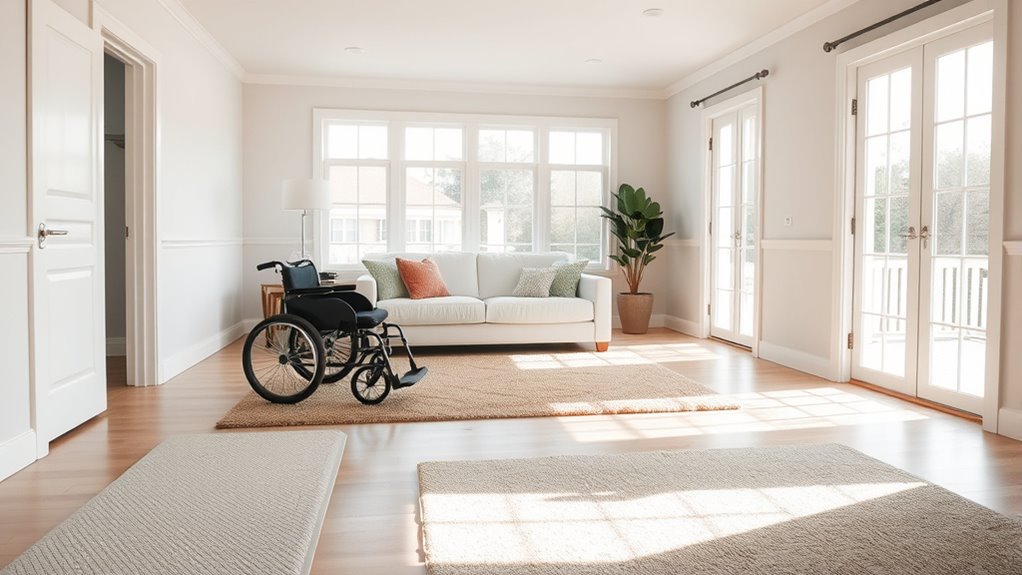
Inside the home, focus on creating open, unobstructed pathways. Keep furniture arranged to allow at least 36 inches of clearance, ensuring wheelchair users can move freely from room to room. Installing low-threshold or threshold-free doorways reduces tripping hazards and makes transitions smoother. Countertops and sinks should be at accessible heights, and switches, outlets, and controls should be within easy reach. Lever-style door handles and faucet fixtures are more manageable than knobs, especially for those with limited hand strength. Consider installing pull-out shelves or adjustable-height surfaces to accommodate various needs, making daily tasks more manageable. Lighting also plays a significant role; well-lit spaces help prevent accidents and improve visibility. Motion-activated lights can be especially helpful, automatically illuminating hallways or bathrooms when needed. Additionally, smart home automation can be integrated to control multiple devices and routines, further enhancing independence and safety.
In terms of outdoor accessibility, think about the terrain around your home. Gravel and uneven surfaces can pose challenges, so replacing them with concrete or paved pathways creates a safer, smoother surface. Landscaping should avoid overgrown plants or protruding roots that could hinder mobility. Adding railings along ramps and pathways provides extra support, and installing outdoor lighting enhances safety during evening visits. Automated outdoor features, such as sprinkler systems or lighting, can be operated remotely, making outdoor maintenance less cumbersome. These thoughtful modifications not only improve safety but also encourage your loved one to enjoy outdoor spaces independently. Overall, integrating home automation and improving outdoor accessibility can transform your home into a wheelchair-friendly environment, promoting independence and comfort. With careful planning, you’ll create a space that’s easy to navigate and welcoming for everyone.
Frequently Asked Questions
How Can I Ensure Safety in a Wheelchair-Accessible Bathroom?
You can guarantee bathroom safety by installing sturdy grab bars near the toilet and shower to provide support. Use slip-resistant mats in the tub and on the floor to prevent falls. Keep the bathroom clutter-free, and ensure that all essential items are within easy reach. Regularly check that grab bars are securely attached, and replace any worn or loose mats to maintain a safe environment for your loved one.
What Are the Best Flooring Options for Wheelchair Mobility?
Your choice of flooring can make or break wheelchair mobility—think of it as the foundation of effortless movement. Opt for sustainable flooring options like cork, bamboo, or recycled wood, which are eco-friendly and durable. Prioritize slip-resistant surfaces that provide stability and safety, reducing the risk of falls. These selections guarantee smooth navigation, comfort, and a conscious choice for the environment, transforming your space into a truly accessible sanctuary.
How Do I Modify Outdoor Spaces for Wheelchair Access?
You should focus on landscape design that creates smooth, level pathways, making outdoor spaces easily accessible. Install ramps where there are steps, ensuring they meet safety standards for slope and width. Use durable, slip-resistant materials for pathways to prevent accidents. Incorporate wide, clear spaces for turning and maneuvering. These modifications, including proper ramp installation, will make your outdoor area welcoming and functional for wheelchair users.
What Lighting Solutions Improve Navigation for Wheelchair Users?
Imagine guiding your loved one with a gentle glow—smart lighting and motion sensors make this possible. You’ll want to install smart lighting that automatically adjusts brightness, ensuring clear pathways. Motion sensors activate lights as soon as they’re needed, reducing surprises and making navigation smoother. These solutions create a safer, more welcoming environment, helping your loved one move confidently through your home with ease and independence.
How Can I Create a Sense of Independence in the Home?
You can foster a sense of independence in the home by installing accessible switches, lever handles, and easy-to-reach storage. Encourage your loved one to make decisions about their daily routine, empowering their personal autonomy. Use clear signage and organized spaces to simplify tasks, making everyday living more manageable. Creating an environment that promotes independent living helps your loved one feel confident and in control of their surroundings.
Conclusion
Creating a comfortable, convenient, and clutter-free wheelchair-friendly home guarantees your loved one can move with ease and independence. By blending thoughtful layout tips with a touch of tenderness, you foster a space that’s both functional and friendly. Remember, small steps make a significant difference—simplify spaces, secure surfaces, and streamline accessibility. Your caring commitment crafts a cozy, clutter-free haven where your loved one can confidently conquer daily challenges and comfortably coexist.