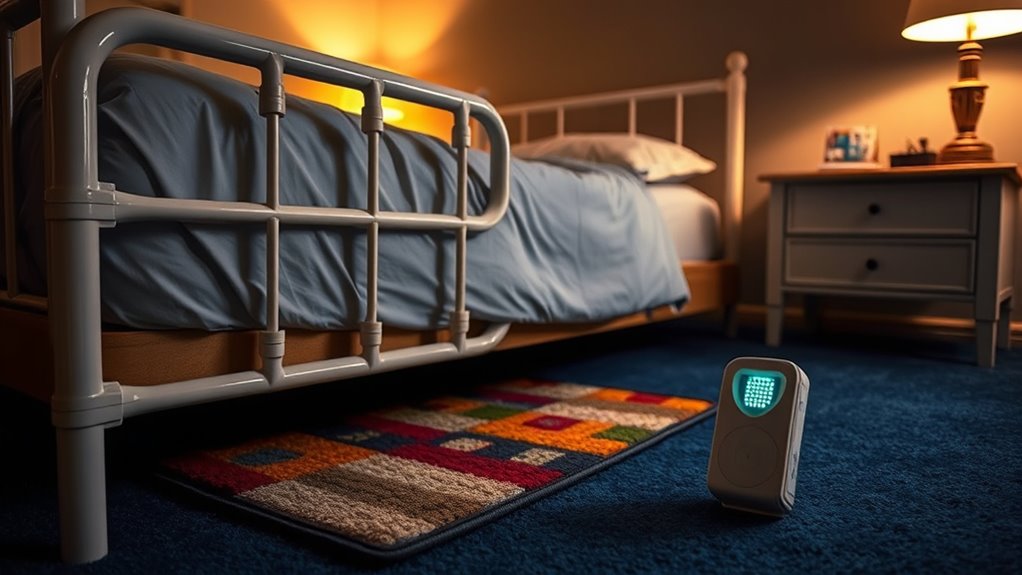

To prevent nighttime falls, you should combine bed rails, floor mats, and alarms for greater safety. Use well-maintained and properly installed bed rails to create a physical barrier, but always assess if they suit each patient’s needs. Add floor mats that alert staff if someone leaves the bed, and install alarms to signal when a patient tries to get up. By layering these measures, you reduce risks effectively. Keep exploring to discover how to implement these safety tools properly.
Key Takeaways
- Properly install and regularly inspect bed rails to prevent entrapment and ensure stability.
- Use floor mats strategically to alert staff if a patient attempts to leave the bed.
- Implement sensitive alarm systems to notify staff immediately of patient movement or attempts to get up.
- Combine multiple safety measures, like rails, alarms, and mats, for layered fall prevention.
- Train staff on correct device use, monitoring, and adapting safety protocols as patient needs evolve.
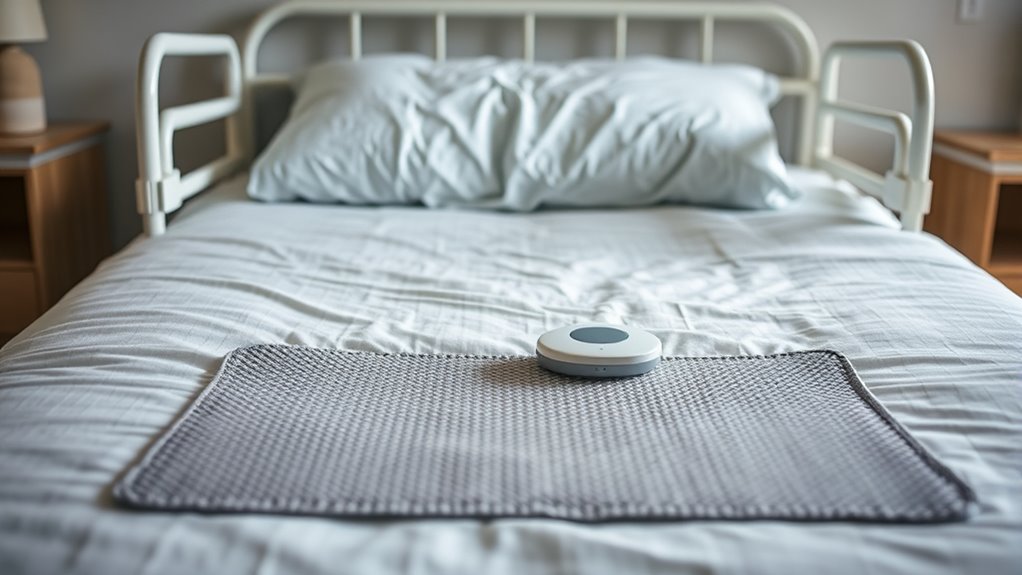
Falls from beds are a common safety concern in healthcare settings, especially for older or immobile patients. To prevent these incidents, many facilities rely on bed rails, alarm systems, and other safety measures. Bed rail safety is essential because improperly used or maintained rails can sometimes cause injuries, such as entrapment or falls from the bed. It’s imperative to ensure that bed rails are correctly installed and regularly inspected for stability. When used appropriately, they provide a physical barrier that helps prevent patients from accidentally rolling out of bed, particularly during sleep or moments of confusion. However, it’s crucial to evaluate each patient’s individual needs, as some may find bed rails restrictive or may attempt to climb over them, increasing fall risk. Proper staff training on bed rail safety ensures they understand when and how to use rails effectively, minimizing potential hazards. Additionally, understanding the importance of safety equipment**** can help staff better assess which measures are most appropriate for each patient’s situation.
Alarm system effectiveness is another indispensable component of fall prevention. These alarms, which alert staff when a patient tries to get out of bed, serve as an early warning system that allows quick intervention. The success of alarm systems depends on their placement, sensitivity, and maintenance. If alarms are too sensitive, they might produce false alarms, causing staff to become desensitized and potentially missing genuine emergencies. Conversely, if they’re not sensitive enough, they may fail to alert staff when needed most. Regular testing and calibration are necessary to keep alarm systems functioning properly. Combining alarms with other safety measures, like bed rails and floor mats, creates a layered approach that enhances overall effectiveness. For example, placing a floor mat at the bedside can provide an additional alert if a patient attempts to get out of bed, further reducing the likelihood of a fall.
Ultimately, the key to preventing bed falls lies in a thorough safety strategy. This means not only installing bed rails and alarm systems but also ensuring that all safety equipment is used correctly, maintained properly, and tailored to each patient’s specific risk factors. Constant staff education and vigilant monitoring are essential to adapt safety protocols as patients’ needs change. By prioritizing bed rail safety and optimizing alarm system effectiveness, you can markedly reduce the chances of nighttime falls, safeguarding your patients and creating a safer environment.
Frequently Asked Questions
Are Bed Rails Suitable for All Patients?
Not all patients find bed rails suitable. You need to take into account their level of independence and health condition. Some patients may feel restricted or unsafe with certain bed rail types, especially if they’re prone to falls or confused. Evaluate each patient’s specific needs, and choose from various bed rail types—like full-length or half rails—to ensure safety without compromising their comfort or independence.
What Are the Signs a Bed Alarm Is Working Correctly?
You can tell a bed alarm is working correctly if it activates when you move or sit up, indicating proper alarm sensitivity. Regular device maintenance, like checking batteries and wiring, guarantees it functions reliably. Test the alarm daily by gently triggering it to confirm it responds promptly. If it doesn’t sound or respond as expected, troubleshoot or replace components to keep it working effectively and prevent nighttime falls.
How Do Floor Mats Prevent Falls Effectively?
Floor mats prevent falls effectively by providing non-slip surfaces that enhance traction, reducing the risk of slipping. They also help identify trip hazards around the bed, alerting you to potential dangers. When placed correctly, floor mats create a safer environment, especially at night, by minimizing the chances of accidental falls. Regularly checking their condition guarantees they stay secure and continue to offer reliable protection.
Can These Safety Devices Interfere With Patient Mobility?
You might wonder if safety devices interfere with patient mobility, especially since over 60% of fall incidents involve restricted movement. Rest assured, when properly used, devices like bed rails, floor mats, and alarms are designed for device comfort and safety. They aim to prevent falls without compromising patient independence, allowing you to move comfortably and securely, knowing you’re protected while maintaining your autonomy.
Are There Any Risks Associated With Using Bed Rails?
There are risks associated with using bed rails, such as restricting patient independence and increasing the chance of entrapment. To minimize these risks, you should regularly assess device compliance and confirm rails are used appropriately. Always involve the patient in decisions about safety devices, and monitor for signs of discomfort or difficulty breathing. Proper training and vigilant supervision help balance safety with maintaining the patient’s dignity and independence.
Conclusion
By using bed rails, floor mats, and alarms, you create a safer environment for nighttime falls. While these tools act as your first line of defense, remember that awareness, proper lighting, and regular check-ins are equally essential. Think of safety measures as your shield, but never rely solely on them. Combining these strategies ensures you’re not just reacting to falls, but actively preventing them, turning a potentially dangerous night into a peaceful, secure rest.