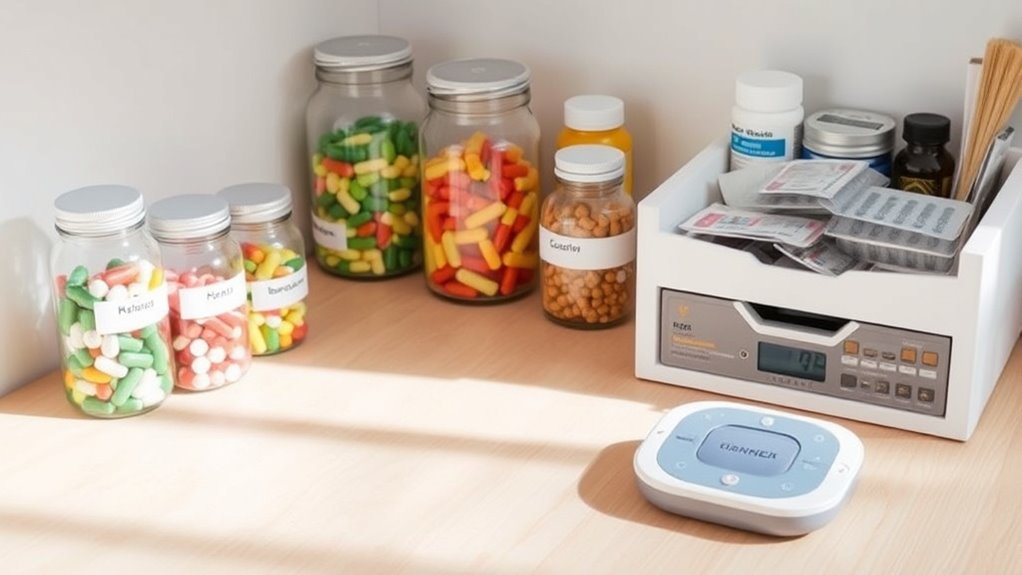

To establish your caregiving command center, pick a nearby, clutter-free spot with easy access and safety features like out-of-reach storage. Use clear labeled containers, bins, or drawers for different supplies and medications, and consider color coding for quick identification. Keep essential items within reach and track supplies with logs or charts. Regularly check expiration dates and organize for easy restocking. Discover more strategies to optimize your station and ensure safety.
Key Takeaways
- Choose a nearby, clutter-free space with easy access, safety features, and clear visibility for storing medications and supplies.
- Use labeled, transparent containers or small drawers to organize medications, supplies, and essential tools effectively.
- Incorporate color coding and large labels to quickly identify different medications, patient-specific supplies, and safety instructions.
- Store medications out of children’s and pets’ reach, using locking containers for controlled substances, and regularly check expiration dates.
- Maintain a medication log, inventory system, and organized restocking process for efficient management and safety.
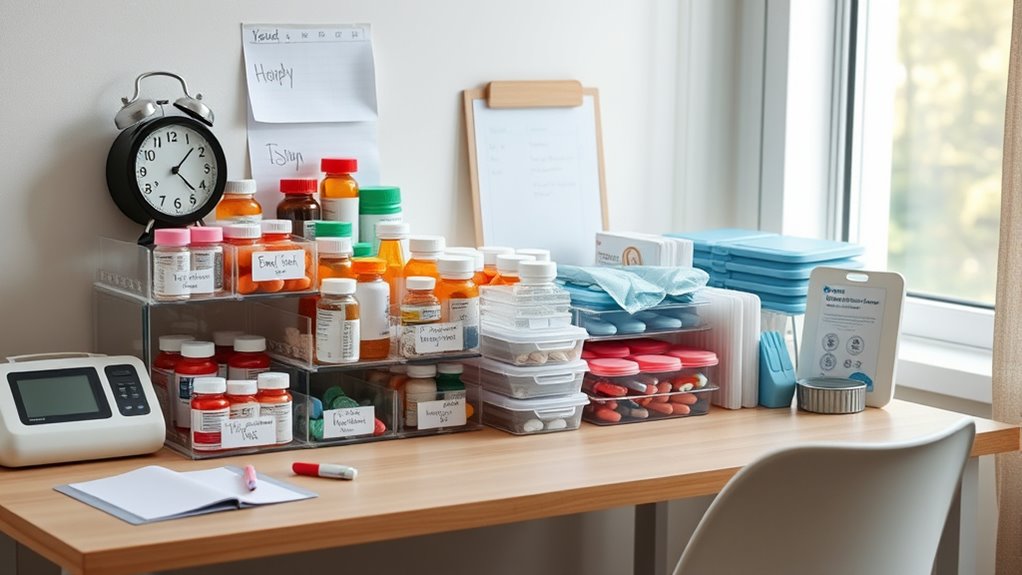
A Caregiving Command Center serves as your centralized hub for managing all aspects of caregiving. When it comes to medication management and supply organization, creating a dedicated space makes a significant difference in ensuring everything runs smoothly. You want a place where medications are easily accessible, properly labeled, and stored safely, so you don’t waste time searching or risking mistakes. Setting up this station involves thoughtful planning and organization, which helps reduce stress and keeps you in control.
Create a dedicated, organized space for medications to streamline care and reduce stress.
Start by choosing a specific location with enough space, preferably close to where the caregiver spends most of their day. A countertop, a sturdy shelf, or a corner of the kitchen or laundry room works well. Clear the area of clutter, so you have room to organize supplies systematically. Use clear containers, labeled bins, or small drawers to separate different types of medications, supplies, and tools. Label each container with large, easy-to-read tags, indicating contents such as “Pills,” “Topicals,” or “Injections,” to streamline medication management.
Invest in a medication organizer or pillbox that suits your needs. Weekly or daily pill organizers help prevent missed doses and make medication routines easier to follow. Keep a medication chart or log nearby, so you can track dosages, refill dates, and any side effects or issues. This not only improves medication management but also provides a quick reference during doctor visits.
Supply organization is equally critical. Stock up on essentials like pill bottles, measuring cups, syringes, and gloves, storing them in accessible yet secure spots. Regularly check expiration dates on medications and supplies, discarding expired items responsibly. Use labels and color coding to distinguish between different medications or patient-specific supplies, which minimizes errors, especially if multiple people are involved in caregiving tasks.
Think about safety features as well. Keep medications out of reach of children or pets, and consider locking containers for controlled substances. Incorporate a small trash bin nearby for disposal of used supplies or expired medications, keeping the area clean and hygienic. Having a dedicated space for medication management and supply organization also makes it easier to perform regular inventory checks, ensuring you never run out of essential supplies unexpectedly.
Additionally, incorporating medication tracking systems can further streamline administration and ensure safety.
Frequently Asked Questions
How Do I Choose the Best Location for the Command Center?
You should choose a location that’s easily accessible, well-lit, and close to daily activities. Make certain it has enough space for storage solutions and allows you to organize medications and supplies efficiently. Use clear labeling systems for quick identification, and pick a spot away from moisture or heat. This way, you’ll keep everything organized, safe, and easy to reach whenever needed, making caregiving tasks smoother.
What Safety Features Should Be Included in the Setup?
Did you know that medication errors affect 1.5 million Americans annually? To guarantee medication safety, include childproof locks, clear labeling, and secure storage in your setup. Also, add an emergency preparedness kit with first aid supplies, a list of emergency contacts, and important medical info. These features protect everyone and help you respond swiftly during emergencies, keeping your loved ones safe and secure.
How Often Should I Organize or Update Supplies?
You should organize and update supplies at least once a month to maintain effective inventory management and guarantee supply rotation. Regular checks help you identify expired medications, low-stock items, and necessary replenishments. By staying consistent, you prevent shortages and keep everything accessible. Incorporate a system for tracking expiration dates and stock levels, making it easier to quickly update your supplies and keep your caregiving station efficient and safe.
Can the Command Center Be Portable or Mobile?
Yes, your command center can be portable for mobile organization. You can use a sturdy cart or a portable tray with compartments to keep medications and supplies organized on the go. This setup allows you to easily move it between rooms or locations, making caregiving more flexible. Just make certain it’s lightweight yet durable, with secure storage to prevent spills or mix-ups when you’re on the move.
What Are Cost-Effective Ways to Establish an Organized Station?
You can establish an organized caregiving station cost-effectively by using budget tips like repurposing existing containers for storage and shopping sales or clearance items. Prioritize essential supplies to avoid unnecessary expenses, and look for multi-purpose organizers to save space and money. DIY solutions, such as labeling jars and bins, also help keep everything tidy without breaking the bank, ensuring your caregiving station stays organized and budget-friendly.
Conclusion
Setting up your caregiving command center isn’t just about organization—it’s a game-changer. As you gather your medications and supplies, you might find that the perfect container or label unexpectedly turns up, making everything even easier. Sometimes, the best solutions come when you least expect them, turning chaos into calm. With a little patience and a bit of luck, your station becomes a seamless hub, giving you confidence and peace of mind whenever you need it most.