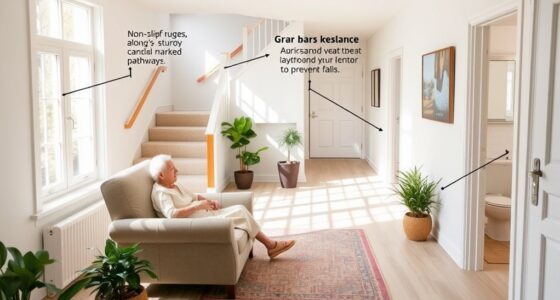
To slip-proof your floors and prevent trips, choose slip-resistant materials like textured tiles or rubber, especially in moisture-prone areas. Keep surfaces clean and dry, promptly wipe spills, and regularly inspect for damage or wear. Add anti-slip tapes or coatings to high-risk zones and install safety features like tactile strips or bright markings. For more tips on making your home safer, you’ll find practical ideas to help keep everyone protected.
Key Takeaways
- Choose slip-resistant flooring materials like textured ceramic tiles, rubber, or sealed concrete for better grip.
- Regularly clean and dry floors to remove debris, spills, and moisture that can cause slips.
- Use slip-resistant coatings or tapes on existing floors to enhance traction.
- Install safety features such as tactile warning strips and contrasting hazard markings in high-risk areas.
- Conduct routine inspections and promptly repair or replace damaged, worn, or smooth flooring surfaces.
Choose Flooring Materials With Natural Slip Resistance
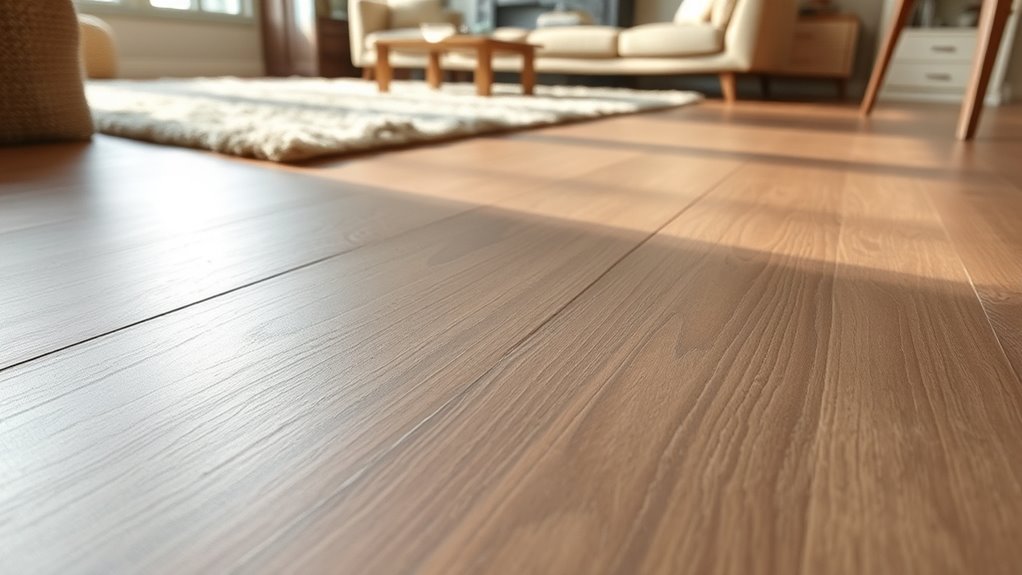
Choosing flooring materials with natural slip resistance is a smart way to enhance safety without relying solely on coatings or treatments. Materials like quarry tiles and textured ceramic tiles provide inherent grip thanks to their micro-surface roughness, reducing slip risk in wet conditions. Rubber flooring is another excellent choice, especially in moisture-prone areas, because of its high natural slip resistance. Concrete slabs with moderate roughness and certain metal surfaces also offer better traction, especially when kept clean. Additionally, energy-efficient cloud servers can support smart safety systems that monitor and alert about slippery surfaces, further reducing fall risks. By selecting these materials during your renovation or redesign, you create a safer environment that minimizes falls. Natural slip-resistant surfaces require less maintenance to stay effective, making them a practical and durable solution for homes and commercial spaces alike.
Prioritize Textured and Rough Surface Finishes
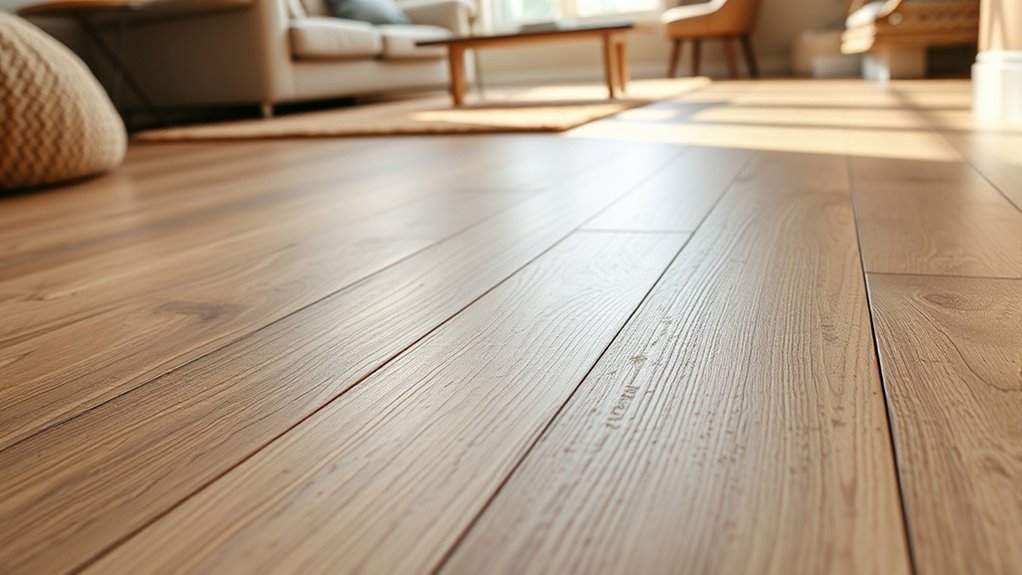
Opting for textured and rough surface finishes considerably enhances slip resistance, especially in high-moisture or high-traffic areas. These surfaces create more friction underfoot, reducing the chance of slipping. To maximize safety, consider these options:
Textured and rough finishes significantly boost slip resistance in high-traffic, moist areas for safer floors.
- Quarry tiles: Their natural micro-roughness offers excellent grip when kept clean.
- Rough ceramic tiles: Slightly textured surfaces provide better traction than smooth tiles.
- Rubber flooring: Its inherently textured surface is ideal for areas prone to moisture.
- Using appropriate flooring materials like textured tiles can further improve safety in slippery zones. Additionally, understanding hydraulics can help in proper drainage design, reducing water accumulation that contributes to slip hazards. Proper drainage systems help prevent water pooling, which is a common cause of slips and falls on textured surfaces. Incorporating surface maintenance routines ensures that the textured finishes retain their grip effectively over time. Choosing these finishes helps prevent falls, particularly in kitchens, bathrooms, or outdoor walkways. Remember, regular maintenance keeps the textured surfaces effective, maintaining their grip over time. Prioritizing textured finishes is a simple yet essential step toward safer, slip-resistant floors.
Keep Your Floors Clean and Dry

You should regularly sweep your floors to remove dirt and debris that can cause slipping. Promptly clean up any spills or moisture to prevent wet patches from becoming hazards. Keeping surfaces dry and clear reduces the risk of trips and falls, especially in high-traffic areas. Additionally, using non-slip flooring materials can further enhance safety. Ensuring that your flooring materials meet safety standards can provide extra peace of mind and reduce accident risks. Regularly inspecting your floors for wear and tear can help identify potential hazards before accidents occur. Incorporating field‑of‑view considerations into your flooring choices can help you better understand how surface safety impacts visibility and movement, further minimizing risks.
Regular Sweeping Practices
Regular sweeping is a vital step in maintaining slip-resistant floors, especially in high-traffic areas. It removes dirt, dust, and debris that can trap moisture and reduce friction, increasing slip risks. Consistent sweeping keeps your floors clean and dry, which is essential for safety. To make this easier, consider these tips:
- Use a sturdy broom with firm bristles to effectively pick up dirt and grit.
- Sweep in multiple directions to reach corners and hidden spots.
- Regularly clean your broom to prevent spreading dirt back onto the floor.
- Incorporate natural materials like hardwood or stone in flooring choices, as they often provide better slip resistance and are easier to maintain. Additionally, choosing flooring with inherent slip-resistant properties further enhances safety.
- Opt for flooring materials that are known for their durability and safety features, which can help reduce the likelihood of accidents over time.
Prompt Moisture Cleanup
Prompt moisture cleanup is key to maintaining slip-resistant floors, especially in areas prone to spills, wetness, or high foot traffic. When liquids or moisture appear, act quickly to wipe or dry the surface. Wet floors considerably reduce friction, increasing the risk of slips and falls. Use absorbent materials like towels or mops immediately after a spill, and ensure your flooring stays dry throughout the day. Regularly check for leaks or water sources, especially in kitchens, bathrooms, and entryways. Properly drying your floors not only keeps them safer but also helps preserve their slip-resistant properties over time. Automated cleaning robots can assist in maintaining dry floors by regularly detecting and cleaning spills. Additionally, understanding piercing aftercare can help prevent issues that might lead to moisture buildup around jewelry and skin. Incorporating floor maintenance routines can further enhance safety by identifying potential hazards early. Regularly inspecting your flooring for signs of wear can help prevent moisture from seeping into cracks or degrading surface coatings, which is especially important for slip-resistant surfaces. Being aware of water-resistant flooring options can also provide added protection against moisture-related hazards. Remember, quick cleanup prevents moisture from seeping into cracks or degrading surface coatings, ensuring your floors remain safe and slip-resistant for everyone.
Use Anti-Slip Coatings and Tapes
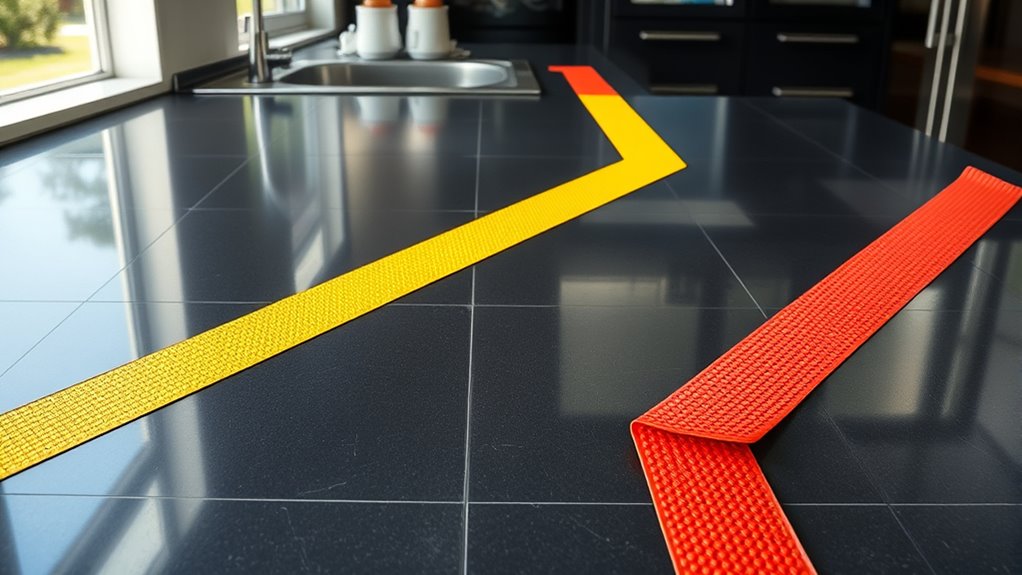
Anti-slip coatings and tapes offer an effective way to enhance floor safety, especially on surfaces prone to becoming wet or greasy. They provide immediate traction improvements without major renovations. Here are three tips to maximize their effectiveness:
- Choose the Right Product: Select coatings or tapes designed for your flooring type and environment, like rubberized coatings for high-moisture areas. Considering surface compatibility can ensure better adhesion and durability. Additionally, checking material safety ensures the coatings are suitable for indoor use and won’t emit harmful fumes. Researching application guidelines can help you apply these products correctly for optimal results. Recognizing testing methods can also verify the slip resistance of the coatings before full application, ensuring safety standards are met.
- Apply Properly: Clean the surface thoroughly before application to ensure adhesion and avoid debris that can reduce slip resistance. Proper surface preparation is crucial for long-lasting results.
- Regular Maintenance: Keep coated or taped areas clean and replace worn or damaged materials promptly to maintain peak traction. Utilizing ventilation considerations can help dry and preserve the longevity of slip-resistant surfaces in humid environments. Maintaining good airflow can also prevent mold or mildew buildup that might compromise the coatings.
Pay Attention to Proper Installation Techniques
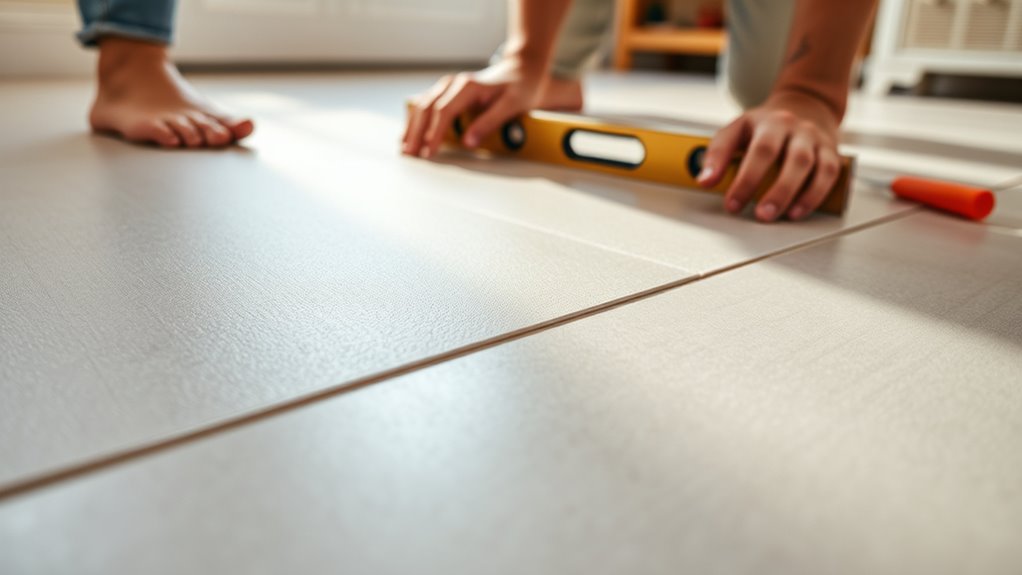
Proper installation techniques are essential to guarantee your flooring maintains its slip-resistant properties over time. If floors aren’t installed correctly, their grip can deteriorate prematurely, increasing fall risks. Make sure you follow manufacturer instructions carefully, especially regarding surface preparation, adhesive application, and grout sealing. Use recommended adhesives suited for your flooring material to secure surfaces firmly. Properly level the floor to avoid uneven spots that can cause tripping. Pay attention to seams, making sure they are sealed well to prevent moisture infiltration, which can reduce slip resistance. Additionally, install flooring components at the correct angles and with appropriate micro-roughness for safety. Ensuring proper filtration during installation can prevent debris from compromising slip resistance and prolong the life of the flooring. Good installation standards also include inspecting the surface for any damages or imperfections before finalizing the setup. Following proper installation standards ensures your flooring’s slip-resistant qualities are preserved longer, providing a safer environment for everyone in your home.
Maintain and Regularly Inspect Flooring for Wear and Damage
Regularly inspecting your flooring is crucial because wear and damage can quickly compromise its slip resistance and safety. Over time, scratches, cracks, or loose tiles develop, increasing fall risks. By catching issues early, you can prevent accidents before they happen.
Here are three key steps:
- Check for loose or cracked tiles, especially in high-traffic areas, and repair or replace them promptly.
- Look for signs of wear, such as smooth patches on textured surfaces, and consider reapplying slip-resistant coatings.
- Clean spills and debris immediately to prevent moisture buildup or dirt from reducing friction.
Consistent inspections keep your floors safe. Addressing damage early ensures your flooring maintains its slip-resistant qualities and protects everyone in your home.
Incorporate Safety Features in High-Risk Areas
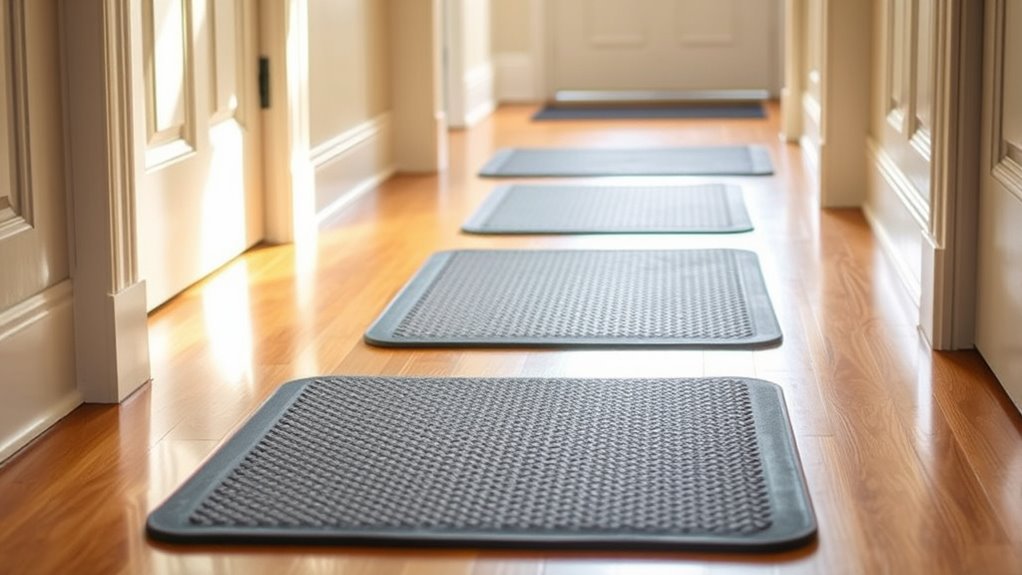
To reduce fall risks in high-risk areas, you should choose slip-resistant materials that provide better grip, especially when wet. Installing textured surfaces can enhance traction and prevent slips, while clear safety markings alert everyone to potential hazards. These features work together to make your flooring safer and help prevent accidents before they happen.
Use Slip-Resistant Materials
In high-risk areas where slips are more likely, choosing the right slip-resistant materials can markedly reduce fall hazards. You want flooring that offers better grip when wet or greasy. Consider these options:
- Rubber flooring – Ideal for kitchens or laundry rooms, it provides high slip resistance and durability.
- Quarry tiles – Their rough micro-surface naturally enhances grip, especially in entryways and bathrooms.
- Textured ceramic tiles – Opt for tiles with a moderate roughness level to improve traction without sacrificing style.
Using these materials helps prevent accidents, especially in places prone to moisture or spills. Regular maintenance and selecting surfaces with high slip resistance standards further ensure safety. Always prioritize slip-resistant options in your home’s high-risk zones.
Install Textured Surfaces
Have you considered how textured surfaces can enhance safety in high-risk areas? Installing textured flooring adds grip and reduces slipperiness, especially where water, spills, or moisture are common. Materials like quarry tiles, rubber, or textured ceramic tiles provide micro-roughness that helps prevent slips. For entryways, bathrooms, or kitchens, textured surfaces can be integrated during installation to improve traction without sacrificing aesthetics. Make sure the surfaces are properly roughened and maintained to retain their slip-resistant properties. Additionally, textured flooring can be combined with other safety features, like anti-slip coatings, for added protection. By choosing the right textured surfaces for high-risk zones, you markedly lower the chance of accidents while maintaining a stylish, functional space.
Add Safety Markings
Adding safety markings to high-risk areas complements textured surfaces by providing clear visual cues that alert people to potential hazards. These markings help prevent trips and falls by drawing attention to floor changes, steps, or slippery zones. To maximize effectiveness, consider these tips:
- Use bright, contrasting colors like yellow or red on stairs, edges, or wet areas to catch the eye immediately.
- Apply non-slip tape or paint with reflective properties in areas prone to moisture or spills.
- Install tactile warning strips near doorways or transitions to alert visually impaired individuals.
Consider Flooring for Special Needs and Aging Residents

When selecting flooring for special needs and aging residents, prioritizing safety and accessibility becomes essential. Choose surfaces with high slip resistance, like rubber or textured tiles, to reduce fall risks. Avoid smooth, glossy materials such as polished terrazzo or ceramic tiles that can become slippery when wet. Consider flooring with built-in shock absorption or cushioning to minimize injury if falls occur. Low-pile carpets or anti-slip vinyl options can provide stability and comfort. Ensure the flooring is easy to clean and maintain, preventing dirt and moisture buildup that compromise slip resistance. Additionally, select materials that are gentle on joints and compatible with mobility aids like walkers or wheelchairs. Proper installation and regular upkeep will help maintain safety over time.
Stay Informed About New Safety Technologies and Trends

Staying current with advancements in safety technology is essential for ensuring slip-resistant flooring remains effective and reliable. By keeping up with trends, you can select the best solutions for your home and avoid potential hazards. Here are three ways to stay informed:
- Subscribe to industry newsletters and safety publications to learn about the latest innovations like nanotechnology coatings or eco-friendly materials.
- Attend trade shows or webinars focused on flooring safety to see new products and technologies firsthand.
- Consult with flooring professionals who stay updated on evolving standards and advancements, ensuring your choices meet current safety requirements.
Remaining informed helps you make smarter decisions, adopt cutting-edge solutions, and create a safer environment for everyone in your home.
Frequently Asked Questions
What Flooring Types Naturally Have the Highest Slip Resistance?
You’ll find that quarry tiles and rubber flooring naturally have the highest slip resistance. Quarry tiles feature a rough micro-surface that provides excellent grip, especially when clean, while rubber flooring is recognized for its high slip resistance in moist or high-traffic areas. Both materials are ideal choices if you want to reduce the risk of slips and falls, especially in areas prone to moisture or heavy use.
How Does Surface Micro-Roughness Affect Slip Resistance Over Time?
Surface micro-roughness directly impacts slip resistance by increasing friction between your shoes and the floor. Over time, regular foot traffic and cleaning can smooth out these micro-textures, reducing slip resistance. You should monitor and maintain textured surfaces, especially in high-traffic areas, to keep friction levels high. Applying anti-slip coatings or replacing worn flooring helps preserve micro-roughness, preventing slips and falls as the surface gradually becomes smoother.
Are Anti-Slip Coatings Effective in Wet or Heavily Used Areas?
Absolutely, anti-slip coatings offer reliable resistance in wet and heavily trafficked areas. They create a protective, slip-resistant surface that markedly reduces risks, even when moisture or frequent foot traffic challenge safety. Regular reapplication and proper maintenance maximize their effectiveness, ensuring your floors stay slip-proof over time. By blending durability with design, these coatings keep your spaces safer, helping you prevent slips, trips, and falls in bustling, moisture-prone environments.
What Are the Best Installation Practices to Maintain Slip Resistance?
To maintain slip resistance, you should guarantee proper installation by using high-quality adhesives like epoxy grout and grout line sealants to prevent loosening. Regularly clean the floors with non-alkaline degreasers and sweep to remove dirt and moisture that reduce grip. Applying anti-slip coatings, such as SparkleTuff™, helps preserve slip resistance over time. Also, inspect surfaces frequently and address any damage or wear promptly to keep your floors safe.
How Often Should Flooring Be Inspected for Slip Hazard Safety?
You should inspect your flooring for slip hazards at least once a month, especially in high-traffic or moisture-prone areas. Regular checks help you spot dirt, grease, or damage that could reduce slip resistance. After cleaning or maintenance, reassess the surface too. If you notice any slick spots or worn areas, address them immediately with cleaning, repair, or applying anti-slip coatings to keep your floors safe.
Conclusion
By following these tips, you’ll help prevent slips and falls, keeping your home safe and secure. Choose slip-resistant materials, keep surfaces clean, and stay vigilant for wear and tear. Incorporate safety features where needed, especially for aging residents, and stay informed about new safety innovations. Remember, it’s better to be safe than sorry—taking proactive steps now guarantees your home remains a solid foundation for everyone living there.