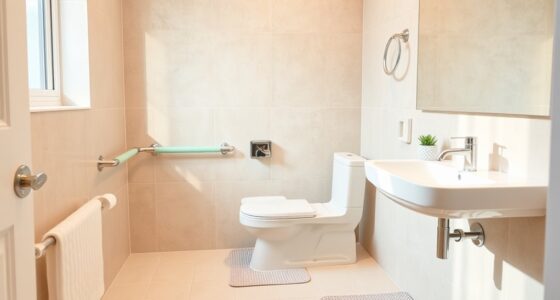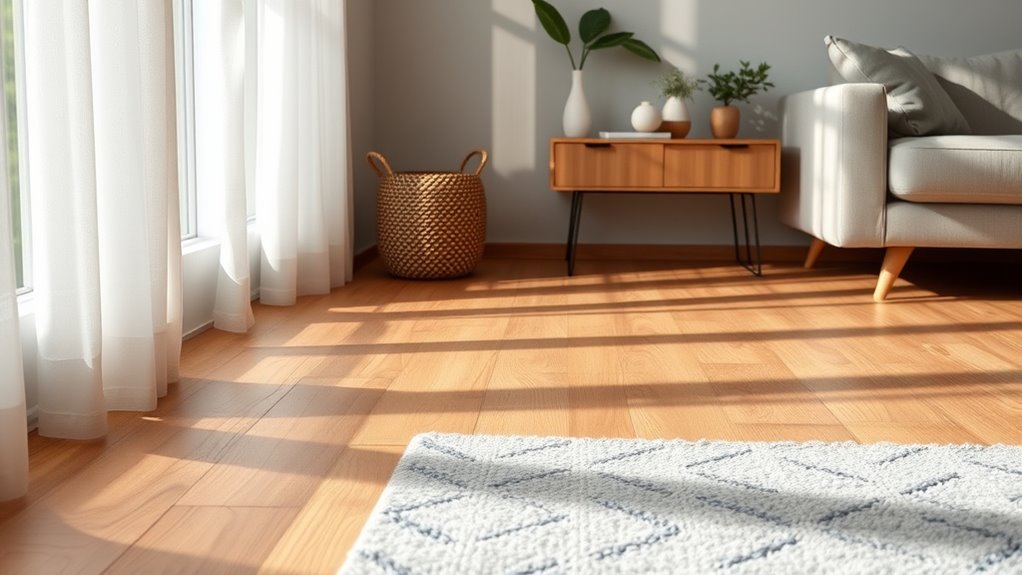

To reduce fall risks, choose flooring materials with slip-resistant surfaces, like textured vinyl or rubber, especially in moisture-prone areas. Use non slip coatings for added grip, and place safety mats in high-risk zones such as entryways and bathrooms. Combining these features creates a safer environment. Keep an eye on wear and tear, and select rugs with non slip backing for extra stability. If you’re interested, you’ll find helpful tips on creating slip-free spaces as you explore further.
Key Takeaways
- Select flooring materials with inherent slip-resistant properties, such as textured vinyl, rubber, or treated concrete surfaces.
- Use non slip coatings on existing floors to enhance traction and reduce slipperiness when wet or oily.
- Choose safety rugs and mats with non slip backing for entryways, kitchens, and wet areas to prevent slips.
- Regularly inspect and maintain flooring and rugs to ensure safety features remain effective and undamaged.
- Combine slip-resistant flooring with safety mats for comprehensive fall risk reduction in high-traffic or moisture-prone areas.
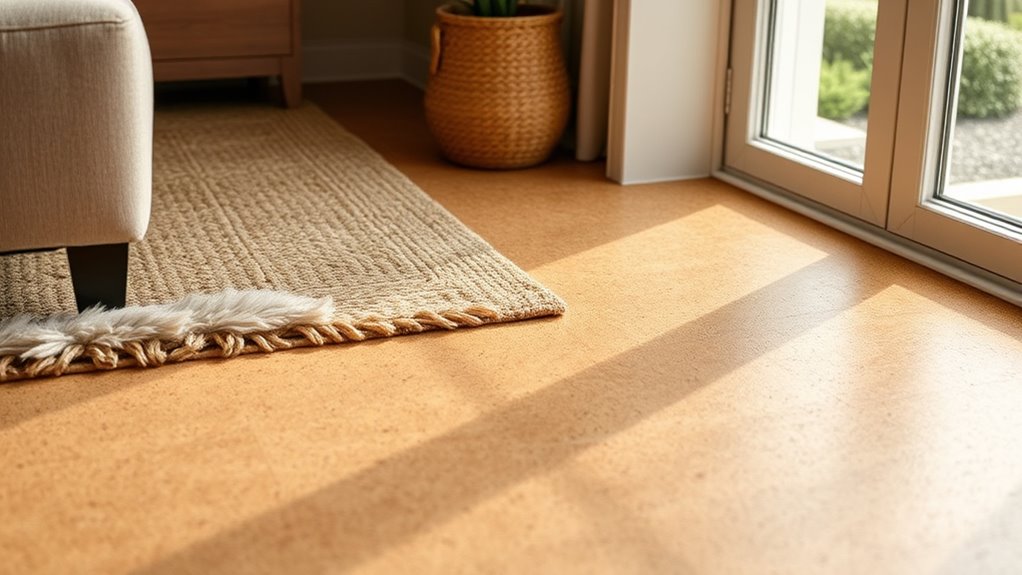
Ensuring safety in homes and workplaces starts with slip-free floors that keep you steady under any conditions. One of the most effective ways to achieve this is by using non slip coatings. These coatings are specially designed to increase the traction of existing floors, making them less slippery when wet or oily. Applying non slip coatings is a straightforward process that can dramatically reduce the risk of slips and falls, especially in areas prone to moisture like kitchens, bathrooms, and entryways. They work by creating a textured surface that enhances grip without compromising the floor’s appearance. When choosing a non slip coating, consider the type of flooring you have, the level of foot traffic, and environmental factors such as exposure to water or chemicals. Proper application guarantees durability and maximum safety, so following manufacturer instructions or consulting a professional can make a big difference.
In addition to coatings, safety mats serve as a practical, portable solution to prevent slips in high-risk zones. These mats are made from slip-resistant materials that grip the floor firmly, providing an extra layer of security where spills or wet conditions are common. You can place safety mats at entrances, in front of sinks, or in work areas where liquids are frequently present. They are particularly useful because they can be easily moved or replaced, offering flexibility based on your needs. Safety mats also help to absorb shock and reduce fatigue, which is beneficial in workplaces where standing for long periods is common. For added safety, choose mats with textured surfaces designed to channel water away and prevent pooling, further minimizing slip hazards.
Combining non slip coatings with safety mats creates an all-encompassing approach to preventing falls. Coatings treat the entire surface, making it inherently safer, while mats target specific problem spots. Regularly inspecting these safety features is vital; over time, coatings may wear down, and mats can become dirty or damaged, reducing their effectiveness. Cleaning and replacing them as needed ensures consistent safety. Additionally, floor materials play a crucial role in slip resistance, so selecting appropriate flooring options can further enhance safety measures. Remember, investing in slip-resistant solutions isn’t just about compliance or avoiding injuries; it’s about creating a secure environment where everyone feels confident moving around. Whether you’re outfitting a busy commercial space or upgrading your home, these measures help you maintain a safer, more stable environment so you can focus on what matters without worry.
Frequently Asked Questions
Are There Specific Flooring Materials Recommended for Elderly Safety?
Yes, you should choose flooring with textured surfaces or apply anti-slip coatings to improve safety for the elderly. Materials like vinyl, rubber, or cork are naturally slip-resistant and provide good traction. Avoid highly polished or smooth surfaces that can become slippery when wet. Using rugs with non-slip backing also helps. These options help reduce fall risks and create a safer environment for seniors.
How Often Should Rug Non-Slip Pads Be Replaced?
You should replace your rug non-slip pads every 1 to 2 years, depending on their rug pad lifespan and wear. Regularly check for signs of deterioration like thinning, cracking, or loss of grip. If you notice any of these issues, it’s time for a replacement to maintain safety and prevent slips. Keeping an eye on the replacement frequency guarantees your rugs stay secure and your floors slip-free.
Can Certain Cleaning Products Reduce Slip Hazards on Floors?
Imagine a slick, shiny floor that feels like ice under your feet—dangerous, right? Certain cleaning solutions and floor coatings can help reduce slip hazards by providing better grip. Use anti-slip cleaning solutions designed for your floor type, and consider applying slip-resistant coatings for extra safety. These products create a textured surface, giving you traction and peace of mind every step you take across your home.
Are There Flooring Options Suitable for Outdoor Use That Are Slip-Resistant?
Yes, there are outdoor flooring options that are slip-resistant. You should look for surfaces with textured outdoor surface textures, which provide better grip, even when wet. Additionally, weather-resistant coatings can enhance slip resistance and protect against the elements. Materials like textured concrete, rubber tiles, and treated stone are great choices, making sure your outdoor space remains safe and slip-free regardless of rain or other weather conditions.
How Do I Maintain Slip-Resistant Floors in High-Traffic Areas?
Imagine a busy restaurant where floors stay safe despite constant foot traffic. You should regularly clean the slip-resistant floors to remove dirt and spills, which can reduce traction. Use appropriate floor cleaning products designed for safety, and encourage staff to wear footwear choices with non-slip soles. Routine maintenance and mindful footwear choices will help maintain slip resistance, ensuring safety in high-traffic areas.
Conclusion
By choosing slip-free floors and rugs, you’re building a sturdy foundation where safety blossoms. Think of your home as a garden—each safe step is like planting a seed of confidence, growing stronger with every careful move. When you prioritize slip resistance, you’re weaving a safety net beneath your feet, turning your space into a sanctuary of stability. Embrace these choices, and watch your home become a fortress where falls are just distant echoes, never your reality.