
To make your kitchen safer, you should install easy-to-reach shelves, lower countertops, and safety devices like grab bars and smoke detectors. Use ergonomic tools, keep pathways clear, and stay attentive while cooking to prevent falls, burns, or fires. Regularly check appliances and keep clutter away. Simple modifications and safety practices can boost your confidence and independence in the kitchen. Keep going to discover practical tips that will help you stay safe and comfortable while cooking.
Key Takeaways
- Install safety devices like grab bars, stove shutoffs, and smoke detectors to prevent accidents and fires.
- Modify kitchen layout by lowering cabinets, installing pull-down shelves, and using ergonomic tools for easier access.
- Keep walkways clear, use non-slip mats, and ensure proper lighting to reduce fall and slip hazards.
- Use lightweight, easy-to-grip utensils and appliances to minimize strain and improve safety during cooking.
- Regularly maintain appliances, check safety devices, and stay attentive to prevent common kitchen hazards.
Common Kitchen Hazards Faced by Older Adults
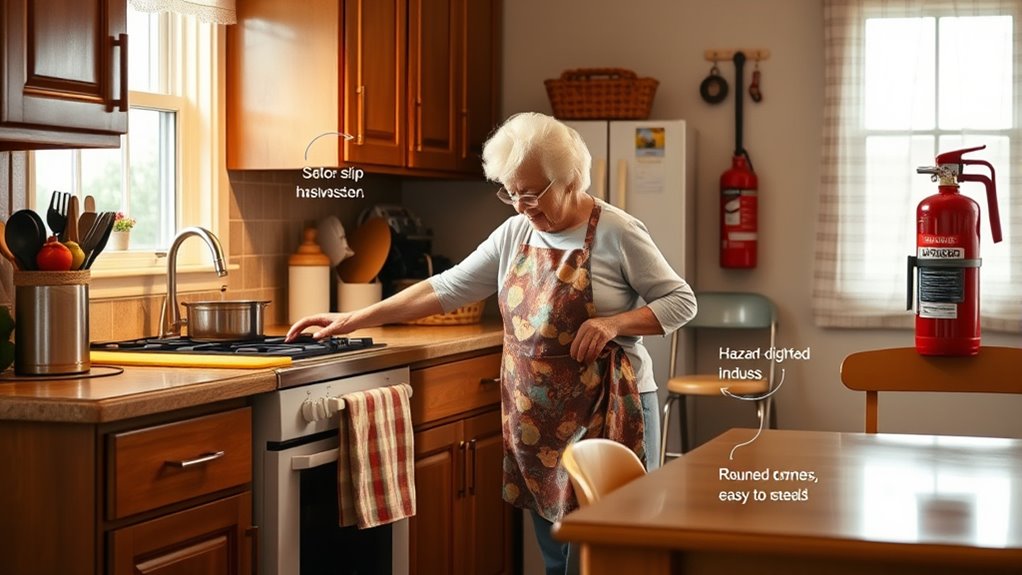
Older adults face several common hazards in the kitchen that can lead to injuries or accidents. Bending down to access low shelves or reaching up for high ones can cause awkward positions, increasing the risk of falls or strains. Weak muscles and limited flexibility make handling heavy pots and utensils more dangerous, raising chances of slips or drops. Reduced vision and slower reflexes heighten the likelihood of burns, cuts, or spills, especially around hot surfaces or sharp objects. Cognitive changes may cause forgetfulness, like leaving pots on the stove or misusing appliances, which can lead to fires or accidents. Additionally, slower movements and decreased sensation delay reactions to hazards, making simple tasks riskier. Proper kitchen organization is essential to minimize risks and create a safer environment for seniors. These challenges underscore the importance of tailored safety strategies in the kitchen.
Essential Design Changes for Safer Cooking Spaces
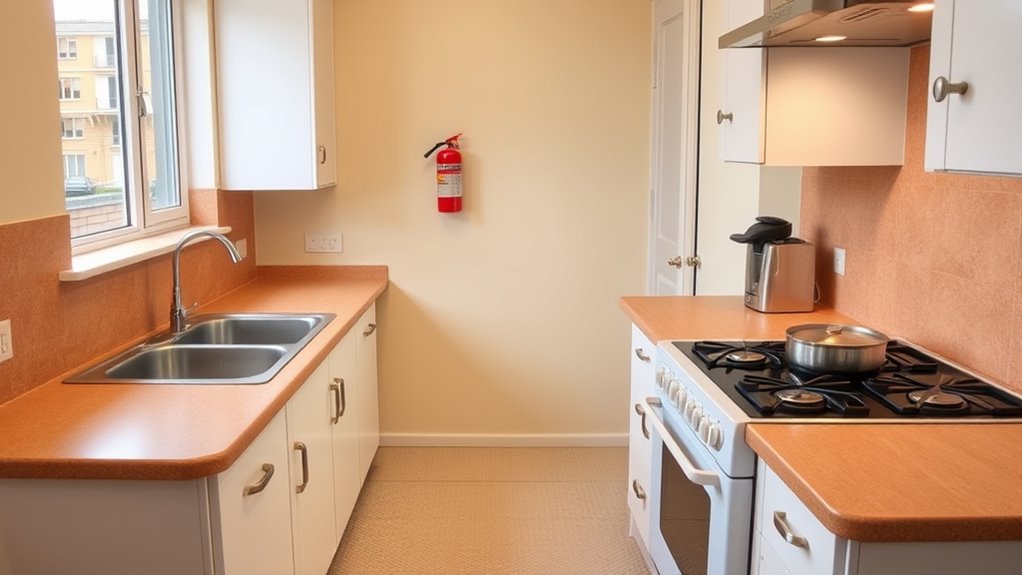
Implementing essential design changes in your kitchen can considerably enhance safety and accessibility. Start by lowering upper cabinets by about 3 inches to prevent the need for step stools. Install wall ovens and microwaves at counter height to reduce bending and reaching. Use pull-down shelves and lazy Susans in cabinets for easy access without overstretching. Opt for shallow sinks (6–8 inches deep) to protect your back and improve comfort. Replace round knobs with lever-style handles for easier gripping. These modifications minimize physical strain and reduce fall and injury risks, making cooking safer and more manageable. Additionally, understanding color accuracy can further improve safety and efficiency. Incorporating water filtration systems can ensure healthier drinking water, reducing the risk of contaminants and promoting overall safety in your kitchen. Considering backup power options can also help ensure safety during outages, keeping essential appliances running smoothly.
Tools and Equipment to Support Independence
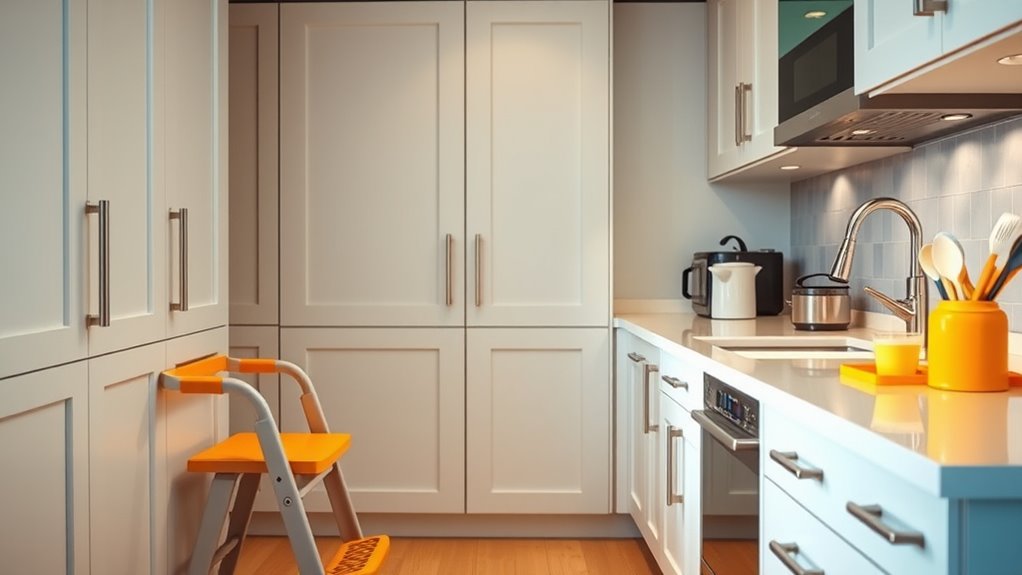
Using ergonomic kitchen tools can make cooking easier and safer by reducing strain on your hands and wrists. Safety equipment like easy-to-operate fire extinguishers and smoke detectors help prevent accidents and respond quickly if needed. These tools and safety devices support your independence while keeping your kitchen environment secure. Incorporating Free Floating design principles into your kitchen layout can also enhance accessibility and safety for seniors. Additionally, selecting high-quality appliances and accessories can further improve safety and ease of use in your kitchen. Exploring at-home safety technology, such as smart sensors and monitoring systems, can provide added peace of mind and help you maintain independence longer. Understanding home energy integration can also support the use of energy-efficient appliances and safety features. Integrating safety protocols into your routine ensures that safety remains a priority in your daily activities.
Ergonomic Kitchen Tools
Ergonomic kitchen tools are designed to make cooking safer and easier for seniors by reducing strain and improving grip. These tools often feature larger, cushioned handles that require less force to hold, which helps those with arthritis or weakened grip strength. Items like can openers, utensils, and peelers now come with non-slip grips, making handling safer and more comfortable. Lightweight cookware and tools decrease the effort needed to lift or maneuver, reducing fatigue and risk of dropping items. Easy-to-use measuring cups and mixing bowls with stabilizing bases improve stability, preventing spills. Additionally, adaptive features in some tools can further accommodate specific mobility needs, enhancing safety and independence. Incorporating auditory feedback mechanisms into kitchen devices can assist users with sensory processing challenges, promoting better safety awareness. Understanding ergonomic design principles can help in selecting the most suitable tools for individual needs. By choosing ergonomic tools, you support independence, minimize discomfort, and lower the chance of accidents in the kitchen. These adaptations make daily cooking tasks more manageable and safer for seniors, especially when combined with smart home technology that can monitor safety and assist with tasks.
Safety Equipment Essentials
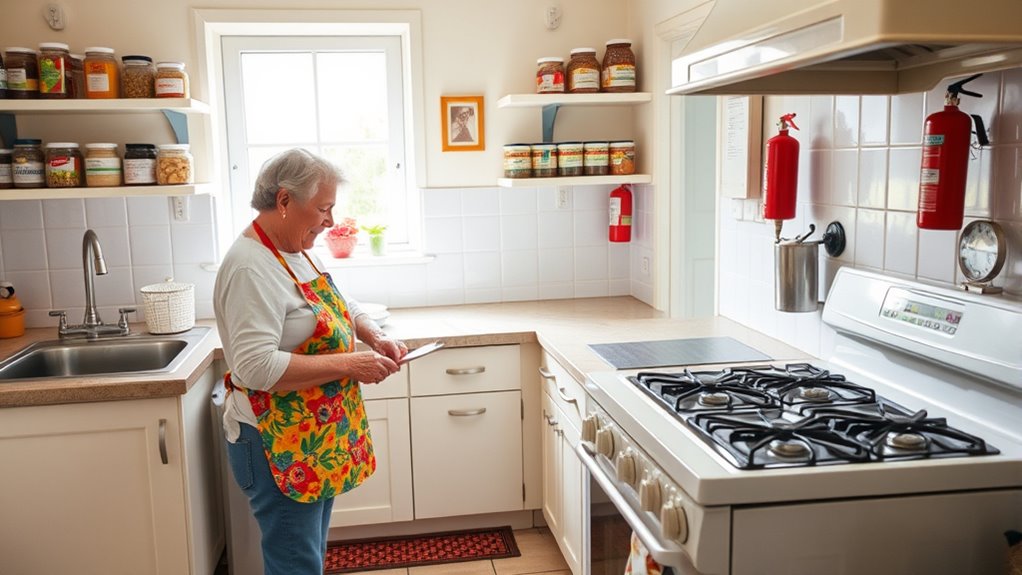
Safety equipment plays a crucial role in helping seniors maintain independence in the kitchen by providing reliable tools and devices that reduce risks and support safe cooking practices. Fire extinguishers designed for seniors are lightweight and easy to handle, making quick responses more manageable. Smoke detectors and automatic stove shutoff devices alert you to hazards or prevent fires altogether. Medical alert systems ensure help is just a push away if an accident occurs. Non-slip mats and grab bars around sinks and entrances improve stability and prevent falls. Ergonomic, easy-grip kitchen tools minimize hand strain and reduce dropping hazards. These essential safety tools not only protect your health but also give you confidence to cook safely and independently. Regularly check and maintain your safety equipment for maximum effectiveness. Understanding environment and safety equipment placement concepts from astronomy illustrate how understanding the environment helps optimize safety equipment placement and effectiveness in the kitchen. Incorporating safety technology can further enhance protection and peace of mind while cooking. Additionally, selecting appropriate safety devices tailored to individual needs can significantly improve overall kitchen safety, especially when considering personal risk factors and specific mobility requirements.
Practical Safety Practices for Everyday Cooking
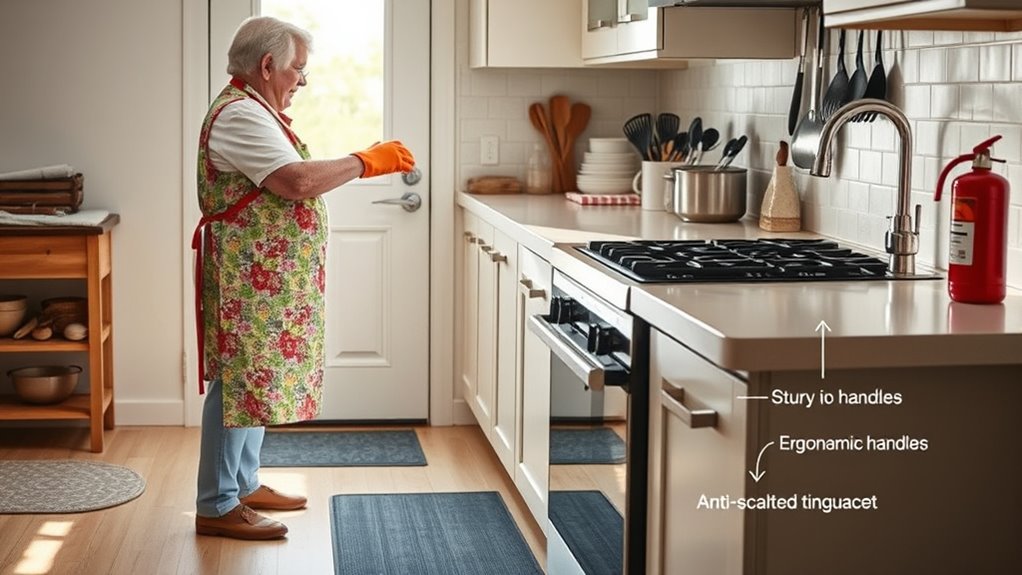
Practicing mindful habits while cooking can considerably reduce the risk of accidents for seniors. Focus on keeping your workspace organized, clearing clutter, and promptly cleaning spills to prevent slips. Use good lighting to improve visibility and avoid mishaps. Keep frequently used items within easy reach to minimize bending or stretching, reducing fall risk. Stay attentive and avoid distractions, such as talking on the phone or multitasking, to prevent forgetting about pots or burners. Wear fitted, non-loose clothing to avoid catching fire or tripping. Turn off appliances immediately after use and never leave cooking unattended. Additionally, be aware of kitchen safety guidelines to further minimize hazards. Remember that electrical safety practices are crucial, especially when plugging in or unplugging appliances in a kitchen environment. Incorporating sound awareness into your routine can help detect unusual noises that might indicate a problem with appliances or safety hazards. It’s also beneficial to understand proper fire safety procedures to respond effectively in emergencies. Regularly performing seasonal maintenance checks on appliances and smoke detectors can further enhance your kitchen safety. By adopting these simple practices, you can enjoy cooking safely while maintaining independence and reducing hazards in your kitchen.
Recognizing and Preventing Fall Risks in the Kitchen
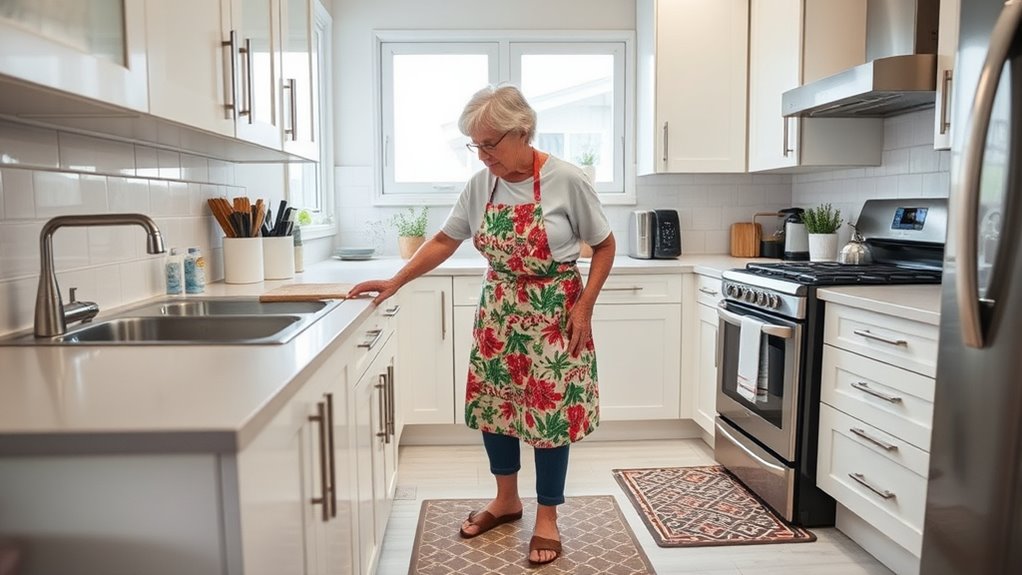
Falls are a common hazard in the kitchen that can lead to serious injuries, especially for seniors. To recognize fall risks, look out for slippery floors from water spills, oil, or food. Keep walkways clear of clutter, cords, and loose rugs that can cause trips. Check that lighting is bright enough to see hazards clearly and replace burned-out bulbs immediately. Use non-slip mats in areas prone to spills, like near sinks and stoves. Ensure grab bars and handrails are securely installed near entry points and around work areas. Avoid reaching or stretching for items on high shelves or bending down awkwardly. Regularly inspect your kitchen for hazards, and adopt safety measures to prevent falls before they happen.
Fire Prevention Strategies and Safety Devices
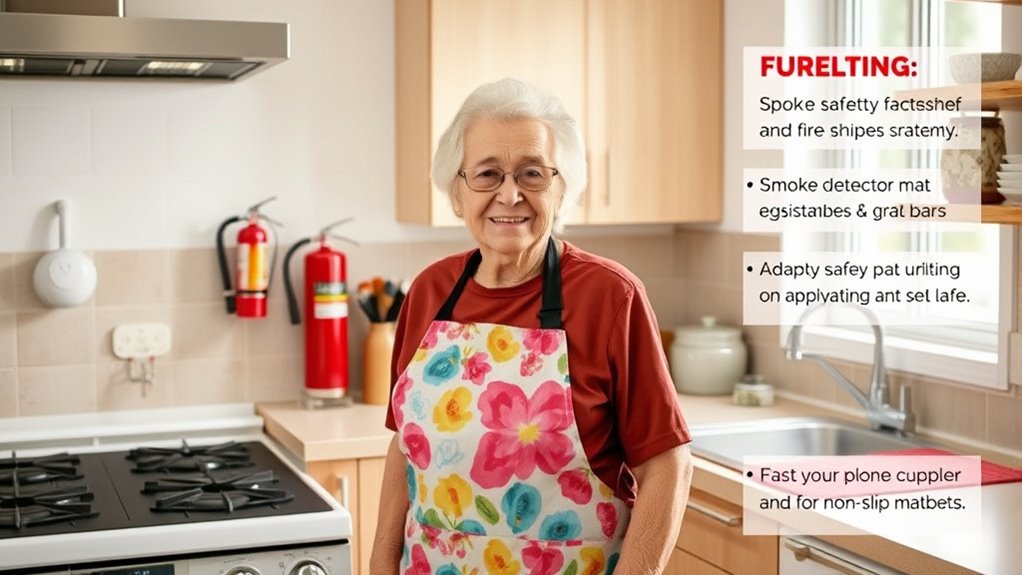
To effectively prevent kitchen fires, you should implement a combination of safety strategies and utilize specialized safety devices. First, stay attentive while cooking—never leave pots unattended, especially when boiling or frying. Second, keep flammable items like towels, potholders, and paper near your stove away from open flames. Third, install fire safety devices such as smoke detectors, automatic stove shutoff systems, and lightweight fire extinguishers that are easy to operate. Regularly test smoke alarms and replace batteries annually. Use stove knob covers to prevent accidental turning on, and consider a stove with built-in safety features. These measures help you react quickly to hazards, reduce fire risks, and create a safer kitchen environment for your independence and peace of mind.
Promoting Confidence and Well-Being Through Kitchen Modifications
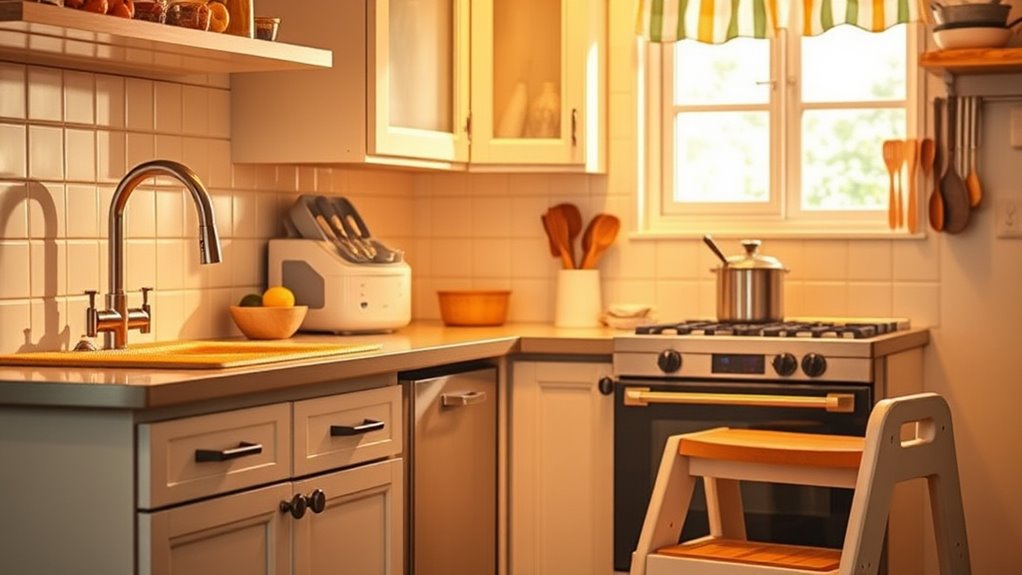
Making thoughtful kitchen modifications not only enhances safety but also boosts your confidence and sense of independence. When your kitchen is tailored to your needs, tasks become easier and less stressful. Lowering countertops and installing pull-down shelves mean you can reach everything comfortably without strain or risk of falling. Using lever handles and ergonomic tools reduces grip effort, making cooking less tiring. Clear organization and decluttering help you find items quickly, avoiding frustration. Adequate lighting and safety devices like stove shutoffs and smoke detectors create a secure environment, so you feel more in control. These adjustments encourage you to cook more confidently, maintain your independence, and enjoy your time in the kitchen without fear or hesitation.
Frequently Asked Questions
How Can Technology Improve Kitchen Safety for Seniors?
Technology can greatly improve your kitchen safety by providing automatic stove shutoff devices that alert you if something’s left unattended. Smoke detectors and smart alarms notify you instantly of fires or smoke, while medical alert systems ensure help is just a push away during emergencies. Additionally, motion-sensor lighting makes it easier to see, reducing falls, and easy-to-use appliances help you maintain independence while minimizing hazards.
What Are Cost-Effective Ways to Modify an Existing Kitchen?
To modify your kitchen cost-effectively, start by lowering upper cabinets and installing pull-down shelves for easier access. Use non-slip mats and grab bars in key areas to prevent falls. Switch to lever-style handles on cabinets and faucets for better grip. Keep frequently used items within arm’s reach to reduce bending. Simple organization, regular cleaning of spills, and good lighting make a big difference, all without breaking the bank.
How Often Should Safety Assessments Be Conducted in Senior Kitchens?
You should conduct safety assessments in senior kitchens at least every six months. Regular checks help identify new hazards, such as clutter or worn-out equipment, and guarantee existing adaptations remain effective. Stay alert for changes in mobility or health that might require additional modifications. Frequent assessments help prevent accidents, promote independence, and keep the kitchen a safe environment for seniors to cook and move confidently.
Are There Specific Training Programs for Seniors on Kitchen Safety?
Yes, there are specific training programs designed for seniors on kitchen safety. These programs typically focus on safe cooking practices, fall prevention, fire safety, and proper use of safety equipment. You can find workshops at community centers, senior centers, or through online resources. Participating in these trainings helps you stay aware of hazards, improve your skills, and maintain independence while ensuring your safety in the kitchen.
What Are the Best Foods for Seniors to Prepare Safely at Home?
You should prepare simple, nutritious foods that are easy to handle and require minimal cooking steps. Focus on fresh fruits, vegetables, pre-cooked grains, and lean proteins like fish or chicken. Use microwave or slow cooker recipes to reduce stove use and prevent burns. Avoid sharp knives and hot liquids whenever possible. Keep ingredients within reach, stay attentive, and prioritize foods that promote health while minimizing risks of accidents in your kitchen.
Conclusion
Creating a safer kitchen is like planting a sturdy tree—you’ll enjoy its shade for years to come. By making simple adaptations, you can turn your cooking space into a haven where independence thrives. Stay aware of hazards, use supportive tools, and practice safety tips daily. With these changes, you’ll keep your kitchen a place of comfort and confidence, ensuring your love for cooking continues to blossom, no matter your age.