

Planning for long-term care costs is key as expenses like nursing home care can exceed $111,000 annually and are rising due to inflation, demographic shifts, and new medical tech. Consider options like long-term care insurance, savings, and regional cost differences to prepare effectively. Starting early helps lock in lower premiums and better coverage. To uncover practical strategies and tips for securing your financial future, explore the detailed insights below.
Key Takeaways
- Start early by assessing potential future care needs and establishing a dedicated savings or investment plan.
- Compare long-term care insurance policies, considering features like inflation protection and coverage options.
- Understand regional cost variations to create realistic budgets and choose appropriate care settings.
- Utilize tax-advantaged accounts and deductions to reduce the overall financial burden of long-term care expenses.
- Incorporate technology and community resources into your planning to support independence and manage costs effectively.
Understanding the Rising Costs of Long-Term Care Services

The costs of long-term care services are increasing steadily, driven by a combination of rising healthcare expenses, demographic shifts, and higher demand for specialized care. Healthcare costs continue to grow faster than general inflation, impacting the price of services like nursing homes, assisted living, and home care. An aging population means more people need long-term care, putting pressure on facilities and caregivers, which drives prices higher. Additionally, advancements in medical technology and the need for specialized staff increase operational costs. For example, the median annual cost for a semi-private nursing home room rose to about $111,325 in 2024, up 7%. These ongoing trends make planning for long-term care expenses more critical than ever to ensure you’re financially prepared. Incorporating long-term care planning into your financial strategy can help mitigate the impact of these rising costs, especially as healthcare expenses continue their upward trajectory.
Exploring Long-Term Care Insurance Options and Expenses

Given the steady rise in long-term care costs, exploring insurance options can be a smart move to protect your finances. Long-term care insurance premiums vary based on age, health, and coverage features. At age 60, premiums average around $1,200 annually for level benefits, but they can rise to over $3,000 if benefits grow with inflation. Buying early usually results in lower premiums and better coverage. You can choose between traditional policies and hybrid plans that combine life insurance with long-term care benefits. Keep in mind that insurers have increased premiums and adjusted policies due to market losses, so it’s essential to compare options carefully. Understanding these costs helps you plan effectively and avoid unexpected financial strain later in life. Long-term care insurance plans are also evolving to include more flexible and customizable options to meet individual needs. Additionally, staying informed about cost trends can help you make better decisions when selecting a policy. Being aware of market fluctuations can also help you anticipate potential premium increases and policy adjustments over time. Moreover, understanding the insurance market can aid in identifying the most stable providers and coverage options.
Estimating Future Care Costs With Inflation and Demographic Factors

To plan effectively, you need to account for how costs will rise over time due to inflation. Demographic factors like age, health, and longevity also influence future care expenses. Understanding these elements helps you create a realistic estimate and develop a solid financial strategy. Additionally, emerging nanotechnology applications could potentially revolutionize long-term care solutions in the future. Staying informed about ongoing technological advancements can help you anticipate how innovations might impact costs and care options down the line. Incorporating investment strategies into your planning can help you grow your savings to cover these increasing expenses, especially considering the competitive Gold IRA markets that offer options for preserving wealth over the long term. Awareness of cost projection methods can further enhance your ability to prepare financially for future care needs.
Impact of Cost Inflation
Estimating future long-term care costs requires accounting for ongoing inflation and demographic shifts that influence demand and pricing. Over the past decade, costs have risen an average of 3.7% annually, with recent increases accelerating to nearly 5% from 2023 to 2024. Nursing home private room costs alone surged 9% last year, while assisted living prices jumped 10%. These inflation rates profoundly impact your planning, as even small annual increases compound over time. In-home care costs, rising more modestly at around 3%, still add up. If you don’t account for inflation, your savings may fall short of future needs. Using current inflation trends, you can better project future expenses, helping you develop a realistic strategy to cover long-term care costs. Additionally, understanding the cost variations of electric bikes can offer insights into managing expenses related to mobility and transportation as part of your long-term planning.
Demographic Influences on Planning
Your demographic profile substantially influences long-term care planning, especially when accounting for future costs inflated by ongoing trends. Factors like age, gender, and health status shape your potential care needs and costs. Women often face higher expenses due to longer life expectancy, while younger individuals might plan for delayed care. Regional differences also matter, as costs vary widely across states. Use this table to understand demographic influences:
| Factor | Impact on Costs | Planning Consideration |
|---|---|---|
| Age | Older adults need more care | Plan for increased future expenses |
| Gender | Women generally require more care | Address longer longevity risks |
| Location | Cost varies by region | Adjust savings based on local costs |
Understanding these factors helps you create a tailored, realistic long-term care strategy. Additionally, being aware of state-specific tax implications can help optimize your planning and preserve your retirement funds effectively.
Regional Variations and Their Impact on Long-Term Care Planning
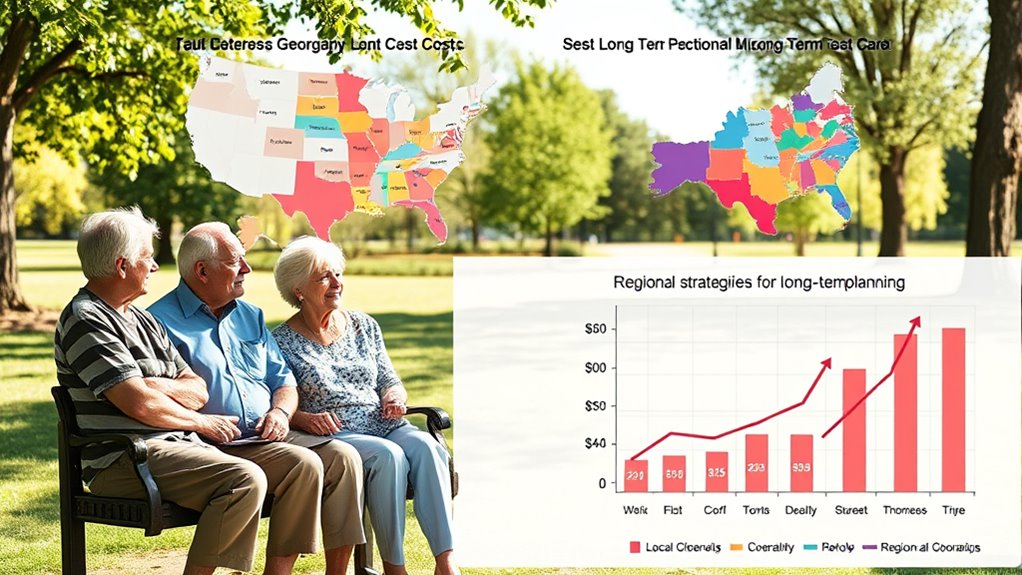
Regional differences substantially influence long-term care planning because costs can vary widely depending on local market conditions. For example, the national average monthly nursing home cost in 2025 is around $10,965, but this can be much higher or lower depending on where you live. States with higher demand or limited supply, such as California or New York, often have considerably elevated rates, impacting your ability to afford care. Additionally, some regions experience faster cost growth due to local economic factors, affecting long-term affordability. When planning, you need to take into account these regional variations and how they influence your potential expenses. Understanding local cost trends helps you develop a realistic budget and choose appropriate coverage options to ensure financial stability as you age. Moreover, analyzing regional variations can help identify areas where long-term care might be more affordable or where future costs could escalate rapidly. Being aware of cost growth trends enables better anticipation of future financial needs and planning for inflation in long-term care expenses. Considering local economic factors also allows for more accurate long-term planning aligned with regional market shifts. Staying informed about market fluctuations can further enhance your ability to adapt your plan as regional conditions change. Additionally, tracking regional healthcare policies can influence the availability and quality of care options in your area.
Comparing Different Types of Long-Term Care Services and Their Costs

Long-term care services vary widely in type and cost, each offering different levels of support and care environments. Nursing homes provide the highest level of assistance, with semi-private rooms costing around $111,325 annually in 2024, and private rooms reaching nearly $128,000. Assisted living offers a balance of independence and support, averaging about $70,800 per year or roughly $6,000 monthly. In-home care, such as home health aides, costs about $34 per hour, totaling approximately $78,000 annually for full-time care. Homemaker services, which include non-medical support like cleaning and meal prep, run about $33 an hour. Adult day care provides community-based support at approximately $100 daily. Incorporating connected home fitness technology can support ongoing wellness and independence, potentially complementing traditional care options. Understanding long-term care costs and planning accordingly is essential for making informed decisions. Additionally, considering financing options such as insurance or government assistance can help manage these expenses effectively. Some regions also offer community-based programs that provide additional support and resources for long-term care needs. Your choice depends on care needs, preferences, and budget considerations.
Strategies for Funding Long-Term Care Expenses

Planning for long-term care expenses requires a strategic approach to manage the high and often unpredictable costs. One key step is purchasing long-term care insurance, which can help cover significant expenses like nursing home or assisted living costs, especially as premiums are rising. Saving specifically for LTC through dedicated accounts or investments can also build a financial cushion. Hybrid insurance policies, combining life insurance with LTC benefits, offer added flexibility. Additionally, exploring Medicaid planning can help protect assets while qualifying for assistance. It’s vital to start planning early, as lower premiums and better coverage are available when you act sooner. Combining these strategies ensures you’re better prepared financially, reducing the burden on loved ones and safeguarding your future.
Tips for Early Planning and Securing Financial Security

To secure your financial future, start saving early to take advantage of compounding growth and reduce future stress. Evaluate different insurance options, including long-term care policies, to find coverage that fits your needs and budget. Don’t forget to maximize tax benefits, such as HSAs or deductions, to make your planning more effective and affordable.
Start Saving Early
Starting to save early for long-term care costs is one of the most effective ways to secure your financial future. The cost of care is rising steadily, with median expenses reaching over $111,000 annually for nursing home stays in 2024. By starting your savings now, you give your investments more time to grow, helping you keep pace with inflation, which averages around 4.9% annually. Even small, consistent contributions can compound considerably over decades. Consider setting up dedicated accounts or retirement plans that allow for flexible contributions. The earlier you begin, the less you’ll need to save each month later. Early planning reduces the financial strain and gives you peace of mind, knowing you’re better prepared for the potential costs ahead.
Evaluate Insurance Options
Evaluating insurance options is a key step in securing your financial future as long-term care costs continue to rise. Start by comparing different policies, such as traditional long-term care insurance and hybrid products that combine life insurance with care benefits. Consider your age, health, and family history to determine the best fit and affordability. Keep in mind that premiums increase with age, so buying early can save you money. Look for policies with inflation protection to ensure coverage keeps pace with rising costs. Review policy features closely, including benefit limits, payout options, and exclusions. Shopping around and consulting with a financial advisor can help you find the most suitable plan, giving you peace of mind and financial security as you plan for future care needs.
Maximize Tax Benefits
Maximizing tax benefits requires proactive planning to make the most of available incentives and deductions for long-term care expenses. By understanding tax laws, you can reduce your overall costs and protect your financial security. Consider these strategies:
- Use IRS deductions: Medical expenses, including LTC costs, are deductible if they exceed 7.5% of your adjusted gross income.
- Leverage Health Savings Accounts (HSAs): Contribute pre-tax dollars to cover qualifying LTC expenses tax-free.
- Explore tax-advantaged insurance: Some long-term care policies offer tax benefits or tax-free benefits when used properly.
- Keep detailed records: Track receipts and expenses to maximize deductions during tax season.
Early planning helps you stay organized and ensures you capitalize on available tax advantages, reducing your long-term care financial burden.
Frequently Asked Questions
How Can I Determine the Right Long-Term Care Coverage for My Needs?
You can determine the right long-term care coverage by evaluating your health, finances, and family history. Consider your preferred care settings, like nursing homes, assisted living, or in-home care, and compare costs. Evaluate insurance options, such as traditional LTC or hybrid policies, and factor in inflation. Consulting a financial planner or insurance expert helps tailor a plan that balances coverage with affordability, ensuring you’re protected when you need it most.
What Are the Tax Implications of Purchasing LTC Insurance?
Imagine sunlight filtering through your window, symbolizing clarity. When you buy LTC insurance, the premiums may be tax-deductible if they qualify as medical expenses, potentially lowering your taxable income. Benefits received usually aren’t taxed, but if you itemize deductions, you might deduct premiums. Keep records, and consult a tax professional to maximize benefits and verify compliance, helping you safeguard your future without unexpected tax surprises.
How Does Health Status Affect Long-Term Care Insurance Premiums?
Your health status considerably impacts long-term care insurance premiums. If you’re in good health, you’re more likely to qualify for lower rates because insurers see you as less risky. Conversely, if you have existing health issues or higher health risks, your premiums will likely be higher due to the increased probability of needing care. Staying healthy and managing medical conditions can help you secure more affordable coverage.
Are There Government Assistance Programs for Long-Term Care Costs?
Think of government programs as a safety net woven from threads of hope. Medicaid covers about 44% of long-term care costs, helping those with limited resources. Medicare offers some assistance, but mainly for short-term needs. You might also qualify for state programs or veteran benefits. While these help, it’s wise to plan ahead with private insurance or savings, ensuring you’re not caught in a storm without shelter.
What Factors Influence Regional Differences in Long-Term Care Expenses?
You should consider that regional differences in long-term care expenses are driven by local supply and demand, cost of living, and healthcare infrastructure. Higher occupancy rates and limited care providers in certain areas push prices up. State regulations, labor costs, and regional economic conditions also impact costs. Understanding these factors helps you better plan financially, as some regions may require more savings or insurance coverage to manage care expenses effectively.
Conclusion
As you navigate the landscape of long-term care costs, remember that early planning is your shield against unforeseen expenses. Think of your financial future as a garden you tend carefully—each smart decision planting seeds of security. By understanding costs, exploring options, and taking proactive steps, you’ll cultivate peace of mind and ensure that, when the time comes, your care needs are met without overwhelming your resources. Don’t wait—begin planting your safeguards today.