

Understanding your workplace rights under FMLA is vital for caregivers. If you work for a qualifying employer and meet certain hours, you may be eligible to take up to 12 weeks of unpaid leave to care for a family member with a serious condition or for other qualifying reasons. FMLA also covers military caregiver leave and offers job protection. To learn more about how to guarantee your rights are protected and what resources are available, keep exploring this guide.
Key Takeaways
- FMLA covers a broad range of caregiving situations, including caring for family members with serious health conditions and military injuries.
- Employees are eligible for up to 12 weeks of unpaid leave annually, with military caregiver leave extending to 26 weeks.
- Employers must maintain health benefits and cannot retaliate against employees for exercising FMLA rights.
- Certification from healthcare providers is required, and employees should notify employers promptly with proper documentation.
- Additional resources like state laws, EAPs, and community support can help caregivers manage responsibilities and protect their well-being.
Understanding Eligibility Requirements for FMLA
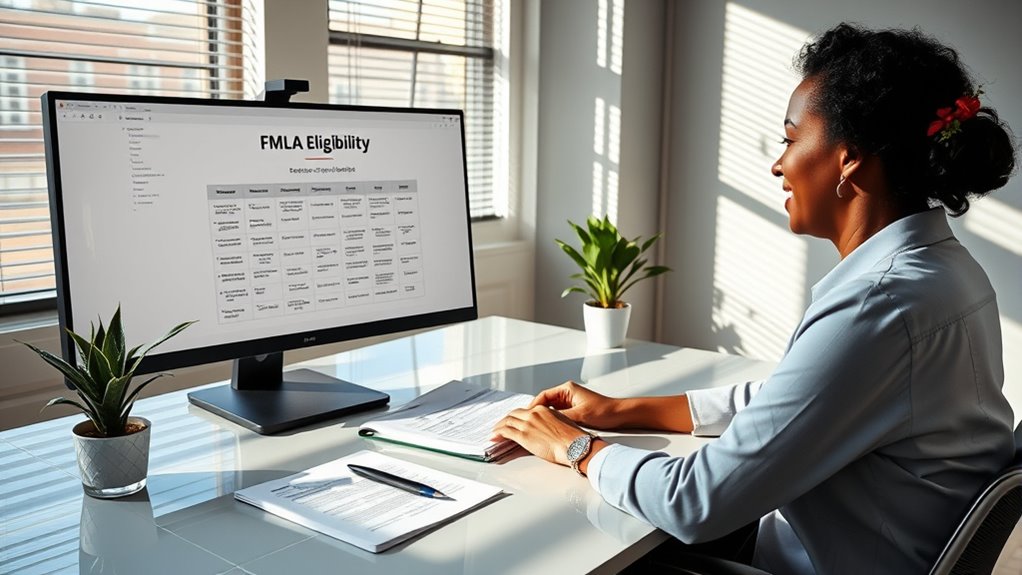
To be eligible for FMLA leave, you must work for an employer with at least 50 employees within a 75-mile radius. You also need to have worked at least 1,250 hours in the 12 months before your leave begins, which averages about 24 hours a week. These requirements guarantee your employer has enough staff to accommodate your absence. Additionally, understanding workplace rights can empower you to navigate your leave options confidently. Once you meet these criteria, you’re eligible to take leave for serious health conditions or to care for certain family members. Keep in mind, eligibility depends on your employment history and the employer’s size. If you qualify, you can request unpaid, job-protected leave under FMLA, giving you peace of mind during your caregiving responsibilities. Additionally, understanding projector technology can help you better assess the visual quality and suitability of equipment for your needs. Familiarity with workplace equipment maintenance procedures can also ensure you remain productive and compliant during your leave period. Being aware of support breakfast options can further enhance your well-being and energy levels during recovery or caregiving periods. Moreover, knowing how to maintain proper sanitation of your work environment can promote health and safety while you’re away.
Qualifying Family Members and Care Situations

When considering who qualifies as a family member for FMLA leave, it’s important to understand which relationships and situations are covered. You can take leave to care for your spouse, children under 18 (or older if unable to care for themselves), and parents. Some relationships, like in-laws or grandparents, typically aren’t covered unless your state law expands protections. Situations include caring for a newborn, adopted, foster children, or a family member with a serious health condition. Military caregiver leave applies to veterans and service members with serious injuries. Here’s a quick overview:
| Family Member | Care Situations |
|---|---|
| Spouse | Caring for their health or support during illness |
| Children | Illness, injury, or medical needs |
| Parents | Serious health conditions or caregiving needs |
Understanding federal regulations and how they define covered relationships can help clarify your rights under FMLA. Additionally, knowing which care situations qualify can assist in planning your leave accordingly. Recognizing the types of family members eligible under FMLA can help ensure you receive the protections you need during critical times. It’s also helpful to be aware of how state laws may expand these protections beyond federal guidelines. Being informed about self-sufficiency and community resources can further support caregivers during their leave.
Types and Duration of FMLA Leave

FMLA offers different leave options to accommodate varying caregiving needs and medical situations. The standard leave allows you to take up to 12 weeks of unpaid, job-protected leave within a 12-month period for personal health issues or caring for a family member. If you’re caring for a military service member with a serious injury or illness, you may qualify for up to 26 weeks of unpaid leave in a single 12-month period. You can take leave continuously, intermittently, or by reducing your work schedule when medically necessary. Certification from a healthcare provider is typically required to support your leave request, and periodic recertification may be needed. Regardless of the type, your job must be protected, and you’re entitled to return to the same or an equivalent position. Additionally, understanding the wave and wind conditions relevant to your environment can help ensure safety during outdoor or physical activities related to caregiving.
How to Notify Your Employer and Submit Certification

You should notify your employer as soon as you know you need FMLA leave to make certain your rights are protected. Prompt communication helps guarantee proper documentation and avoids delays. When notifying your employer, follow these steps:
- Provide written notice, including the reason for leave and your intended start date, ideally 30 days in advance.
- Complete any employer-specific forms promptly and accurately, attaching supporting medical certification.
- Keep copies of all submitted documents and maintain ongoing communication with your HR representative or supervisor.
- Be aware that affiliate relationships and privacy policies may influence the handling of your medical information and communication process.
- Additionally, understanding essential oils for health can support your well-being during stressful times related to leave or recovery.
- Remember that privacy considerations are vital when sharing sensitive health information to ensure compliance with data protection standards. Respond quickly to any requests for additional information to avoid disruptions in your leave approval.
- Being aware of recordkeeping requirements can help ensure that all documentation remains organized and accessible if needed for future reference or disputes.
- Familiarizing yourself with document retention policies can further ensure that your records are maintained appropriately over time.
Employer Responsibilities During FMLA Leave

Employers have a legal obligation to support employees taking leave under FMLA by maintaining their group health insurance coverage on the same terms as when you are actively working. During your FMLA leave, your employer must continue to pay their share of your health insurance premiums, and you must pay your share if applicable. They cannot cancel, modify, or reduce your coverage simply because you’re on leave. Additionally, your job must be protected, meaning you’ll return to the same or an equivalent position once your leave ends. Employers are also required to provide you with notice of your rights and responsibilities, including how your leave affects your benefits. They cannot retaliate against you for taking approved FMLA leave. Workplace Rights also include protections to ensure your leave does not negatively impact your employment status. It is important for employees to understand employee protections under FMLA to ensure their rights are fully upheld. Furthermore, understanding employer responsibilities can help you feel more confident in asserting your rights during your leave. Recognizing the importance of job restoration guarantees can help you feel more secure in your employment rights during FMLA leave. Knowledge of administrative procedures can assist employees in navigating the process efficiently and effectively.
Common Misconceptions About FMLA Coverage

Many people mistakenly believe that FMLA only applies to new parents or those taking time off for childbirth. In reality, FMLA covers a broader range of caregiving situations. For example:
- It includes caring for an immediate family member with a serious health condition, not just for childbirth or adoption.
- It provides up to 26 weeks of leave for military caregivers, which many don’t realize.
- It doesn’t require you to be the primary caregiver; simply having responsibilities for a covered family member qualifies you.
These misconceptions can lead to underestimating your rights. Remember, FMLA isn’t limited to parental leave; it supports a variety of caregiving needs, and understanding its scope helps you advocate for your workplace rights effectively.
Protections Against Discrimination and Retaliation

While FMLA provides essential protections for employees taking leave to care for family members, it also safeguards against discrimination and retaliation related to those absences. You cannot be fired, demoted, or disciplined simply because you took or plan to take FMLA leave. Employers are prohibited from retaliating against you for exercising your rights under the law. If you experience negative treatment, such as being passed over for opportunities or unfair discipline, it could be a violation. You have the right to file a complaint with the EEOC or your state agency if you believe you’re facing discrimination or retaliation. These protections ensure you can care for your loved ones without fearing job loss or unfair treatment, reinforcing your workplace rights as a caregiver. Workplace protections are a key aspect of the FMLA, designed to support employees in balancing work and family responsibilities. Additionally, understanding discrimination and retaliation laws can help you recognize when your rights are being violated and take appropriate action. Recognizing employment rights under the law can further empower you to defend yourself against unfair treatment. It is also important to be aware of employee protections, which include safeguards against harassment and unfair workplace policies.
Additional Rights and Resources for Caregivers
As a caregiver, you have access to a range of additional rights and resources beyond FMLA to support your needs. These include:
- State Family Leave Laws: Many states offer paid or unpaid leave benefits that expand on federal protections, covering more family members or providing paid leave options.
- Employee Assistance Programs (EAPs): Employers often provide EAPs that offer counseling, support, and resources for caregiving challenges, stress management, and mental health.
- Community Resources: Local organizations, support groups, and nonprofit agencies can offer respite care, financial assistance, and caregiving training to help you manage your responsibilities effectively.
Utilizing these resources can ease your caregiving journey and ensure you’re supported both at work and in your personal life.
Frequently Asked Questions
Can I Take FMLA Leave for Mental Health Issues?
Yes, you can take FMLA leave for mental health issues if your healthcare provider certifies that your condition qualifies as a serious health condition. This includes ongoing treatment, inpatient care, or incapacity that prevents you from working. You’ll need to provide certification from your healthcare provider, and your employer must honor your leave as job-protected and unpaid, just like with physical health conditions.
Is FMLA Leave Paid or Unpaid?
FMLA leave is unpaid, so you won’t receive wages during your time off. While the leave protects your job, it doesn’t provide pay, meaning you need to plan financially. Some employers offer paid leave or benefits that supplement FMLA, so check your company’s policies. Remember, you’re protected from retaliation, but you’ll need to arrange your finances before taking this family-friendly, flexible, and unpaid family leave.
Do I Need to Use My Paid Time off During FMLA?
You don’t have to use your paid time off during FMLA leave, but you can choose to do so if your employer allows it. Combining paid leave with FMLA can help you maintain income during your absence. Check your employer’s policies, as some companies require or encourage using paid leave concurrently. Remember, FMLA itself is unpaid, but your paid leave options can provide financial support while you care for a family member or recover.
Can I Extend My FMLA Leave Beyond 12 Weeks?
Think of your FMLA leave like a river flowing through a landscape. You can’t extend the 12-week federal limit directly, but if your situation qualifies, you might navigate around it with state laws or employer policies. Some employers offer additional leave options, and military caregiver leave extends up to 26 weeks. Check with your employer or state laws to explore these pathways, ensuring your caregiving needs are fully supported.
What Happens if I Can’t Return to Work After FMLA?
If you can’t return to work after FMLA, you should notify your employer as soon as possible and discuss your situation. Your job is protected during FMLA, but if you don’t return or fail to communicate, your employer may consider your absence unexcused, potentially leading to job loss. In some cases, you might access other leave options or accommodations, so staying in touch and understanding your rights is essential.
Conclusion
Knowing your rights under FMLA can be a game-changer for balancing work and caregiving. But what you might not realize is that many employers still overlook their responsibilities, or you could face unexpected hurdles. Staying informed and prepared is your best defense. The question is—are you truly ready to stand up for your rights when it matters most? Don’t wait until it’s too late; your well-being and your loved ones depend on it.