To create a safe home for a senior with Alzheimer’s, start with a thorough safety assessment to identify hazards, especially in high-risk areas like bathrooms and hallways. Install grab bars, improve lighting, and remove clutter to prevent falls. Use affordable safety devices such as nightlights and lockable cabinets for medications and cleaning supplies. Regular home maintenance and clear signage help with navigation. Continuing with these strategies can considerably reduce risks and promote a safer environment.
Key Takeaways
- Conduct regular home safety assessments to identify and address hazards in high-risk areas like bathrooms, stairways, and hallways.
- Install safety features such as handrails, grab bars, non-slip flooring, and proper lighting to prevent falls and injuries.
- Secure hazardous materials, medications, and sharp tools in locked cabinets out of reach and clearly label dangerous substances.
- Widen doorways, add clear signage, and arrange furniture to ensure accessible pathways and aid navigation.
- Implement emergency plans with accessible keys, remove interior locks, and maintain safety devices for quick and safe access.
Assessing High-Risk Areas in the Home

To create a safe environment for a senior with Alzheimer’s, you need to identify and appraise the home’s high-risk areas where falls and accidents are most likely to occur. Start by inspecting bedrooms, which account for over a quarter of falls, and living rooms or dens, where 17% of falls happen. Check hallways and entrance areas, as they contribute another 12%. Look for obstacles like steps inside and outside the home, especially if handrails are missing. Focus on areas with poor lighting or uneven flooring, which increase hazards. Evaluate bathroom safety, noting that bathrooms are common fall sites. Additionally, home safety modifications such as installing grab bars, non-slip mats, and adequate lighting can significantly reduce fall risks. Incorporating assistive technologies can further enhance safety and independence for seniors with Alzheimer’s. Using visual aids like high contrast contrast ratio projectors can be particularly helpful for seniors with visual impairments, improving their ability to navigate safely. Regularly assessing and maintaining home safety features ensures that potential hazards are identified and addressed promptly. By thoroughly assessing these spots, you can prioritize modifications that reduce risks and create a safer living space tailored to your loved one’s needs.
Bathroom Safety Enhancements and Modifications
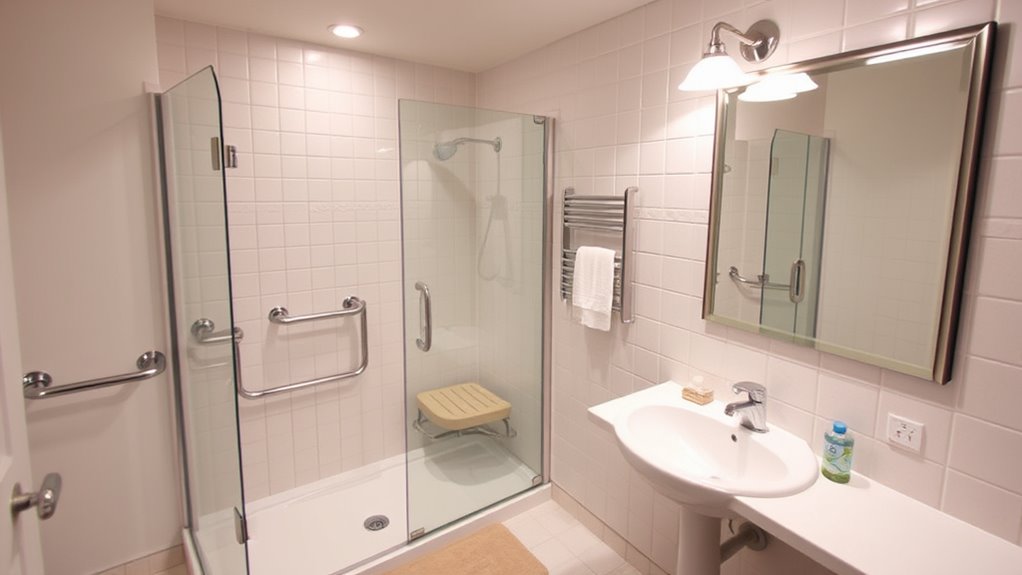
Bathroom safety is critical because it remains one of the most common fall sites for seniors with Alzheimer’s. To reduce risks, consider installing grab bars near the toilet, shower, and bathtub. These provide stability and support during transfers. Replace traditional showers with walk-in models, and add shower seats and handheld showerheads for convenience. Automatic water temperature controls prevent scalding by alerting or shutting off if water gets too hot. Keep floors dry and slip-resistant by using textured mats designed for safety. Regularly review and maintain modifications to ensure they remain effective. Consider specialized fixtures like accessible toilets or raised seats if mobility is limited. These enhancements make the bathroom safer, promote independence, and reduce fall risks for your loved one. Additionally, home safety assessments can help identify other hazards and ensure all modifications are appropriate and effective. Incorporating fall prevention strategies can further enhance bathroom safety and provide peace of mind. Implementing proper lighting can also significantly reduce the risk of accidents in the bathroom. Using non-slip flooring materials can further decrease the chances of slips and falls in wet areas. Moreover, adding sensor-activated lighting can improve visibility during nighttime bathroom visits, reducing the likelihood of missteps.
Cost-Effective Solutions for Fall Prevention
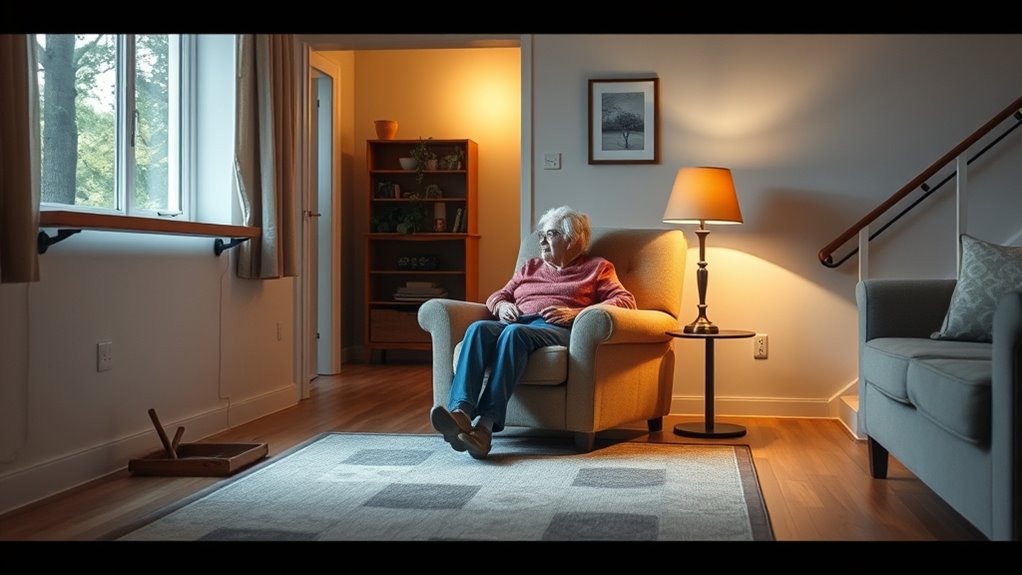
You can improve safety without breaking the bank by using affordable devices like grab bars, nightlights, and motion sensors. Simple home modifications, such as installing handrails or removing tripping hazards, also make a big difference. These practical steps help prevent falls while keeping costs reasonable. Incorporating smart home technology can further enhance monitoring and safety features cost-effectively. Additionally, choosing appropriate lighting can significantly reduce the risk of accidental trips and falls during nighttime hours. Regular review of safety measures and understanding common mistakes in statistics can aid in assessing the effectiveness of these modifications and ensuring ongoing safety. For example, selecting dog-friendly furniture and applying safety accessories designed for seniors can create an even more secure environment. Moreover, understanding gelato flavors and options can be a delightful way to incorporate comfort and joy into the home environment for seniors.
Affordable Safety Devices
Affordable safety devices offer an effective way to reduce fall risks without straining your budget. Items like grab bars, nightlights, stove-knob covers, and child-safety locks can be purchased for around $79, making them accessible and practical. Installing motion sensors on garage doors or adding stove safety measures are simple upgrades that improve safety at minimal cost. Using a home-safety toolkit helps caregivers manage risks and prevents accidents more effectively than relying on inanimate objects like furniture for support. You can also enhance lighting with automatic lights, which help prevent nighttime falls. These affordable solutions not only protect your loved one but also give you peace of mind, knowing that you’re taking proactive steps to create a safer environment without significant expense. Incorporating energy-efficient technology into safety devices can also help reduce overall household energy consumption while maintaining safety. Additionally, integrating home safety gadgets that utilize smart technology can further enhance security and monitoring. Recognizing the importance of personal traits influenced by celestial bodies can also guide the selection of safety features tailored to individual needs. Moreover, choosing safety devices made from durable materials ensures long-lasting protection and reduces the need for frequent replacements. Being aware of essential oils for safety and well-being, such as lavender or eucalyptus, can also promote a calming environment that supports overall health and comfort.
Practical Home Modifications
Implementing practical home modifications can substantially reduce fall risks for seniors with Alzheimer’s without breaking the bank. Simple adjustments make a big difference. For example, install handrails in hallways and staircases, and ensure pathways are clear of clutter. Use nightlights to improve visibility at night and replace patterned or dark carpets with solid-colored, non-slip options. Remove or secure throw rugs and extension cords to prevent tripping. Additionally, lock cabinets containing hazardous materials and store medications safely. Consider adding grab bars in bathrooms and installing motion sensors on doors or stairs for added safety. Incorporating home safety assessments can help identify potential hazards and customize safety measures effectively. Regularly updating safety features aligns with preventive safety strategies to maintain a secure environment. For example, consulting with professionals can help identify hazardous areas that might otherwise be overlooked. These cost-effective solutions promote independence and reduce fall hazards without significant expense or disruption to your home environment.
Improving Lighting and Floor Safety Measures

Have you considered how improving lighting and floor safety can considerably reduce fall risks for seniors with Alzheimer’s? Ensuring your home is well-lit, especially in hallways, stairways, and bathrooms, helps seniors see obstacles clearly. Installing automatic lights that turn on when they enter a room can prevent trips during nighttime wandering. Keep walkways free of clutter and repair uneven flooring to minimize tripping hazards. Use solid-colored carpets or remove patterned rugs, as busy patterns can confuse or disguise uneven surfaces. Avoid shiny floors and mirrors that reflect light and cause disorientation. Adding handrails along stairs and in bathrooms provides extra support. Incorporating home safety measures such as motion-activated lighting or safety devices can further enhance safety. These simple, cost-effective changes create a safer environment and promote confidence in mobility for your loved one.
Managing Medications and Hazardous Materials
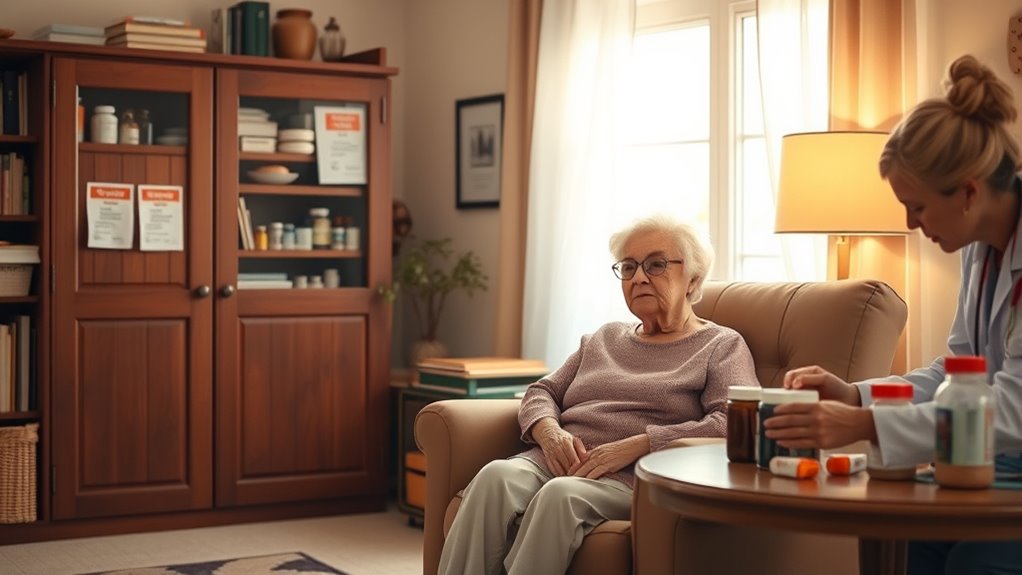
You need to store medications in locked cabinets or drawers to prevent accidental ingestion. Hazardous materials like cleaning supplies and chemicals should be kept out of reach and clearly labeled. Planning for quick emergency access, such as having keys nearby and removing interior locks, guarantees safety when needed.
Secure Medication Storage
Since medications and hazardous materials can pose serious safety risks if not stored properly, ensuring secure storage is essential in a home with a senior who has Alzheimer’s. You should keep medicines in locked cabinets or drawers out of reach and sight. Use pill organizers and daily checklists to prevent accidental overdoses or missed doses. Store chemicals, cleaning supplies, and sharp tools in high, locked cabinets, away from everyday areas. Regularly review and dispose of expired medications safely. Consider these safety measures:
- Install childproof locks on cabinets containing medications and chemicals
- Keep keys hidden or stored separately from the items they secure
- Label all medications clearly to prevent confusion
- Use tamper-proof containers for prescriptions
- Avoid storing hazardous materials in accessible, common areas
Hazardous Material Safety
Managing medications and hazardous materials is essential to guaranteeing a safe home environment for seniors with Alzheimer’s. Store all medications in locked cabinets or drawers out of reach, using pill organizers or checkoff lists to track doses. Be especially careful with chemicals in garages, workrooms, and basements—keep paints, cleaning supplies, gasoline, and pesticides securely stored and away from children or visitors. Large equipment like lawnmowers or snow blowers should also be kept out of reach, with keys hidden nearby for emergency access. Remove or lock interior doors to prevent accidental entry into unsafe areas. Regularly review storage areas to ensure hazardous items remain secure and out of reach. Proper management minimizes risks and protects your loved one from accidental poisoning or injury.
Emergency Access Planning
Effective emergency access planning guarantees that hazardous materials and medications are secure yet accessible when needed. You should store medications in locked cabinets or drawers, using pill organizers or checklists to keep track. For hazardous materials, like cleaning supplies or chemicals, ensure they’re out of reach and stored in locked, labeled containers. Keys should be kept nearby but hidden, so emergency responders can access them quickly. Consider installing deadbolts or latches above or below eye level. Remove interior locks to prevent your loved one from locking themselves in rooms. Regularly review storage areas to confirm they’re secure and accessible.
- Use lockable storage for medications and chemicals
- Keep keys hidden but accessible for emergencies
- Remove locks that could trap your loved one inside
- Label hazardous materials clearly
- Periodically check that access points are functional
Designing an Accessible and Navigable Environment
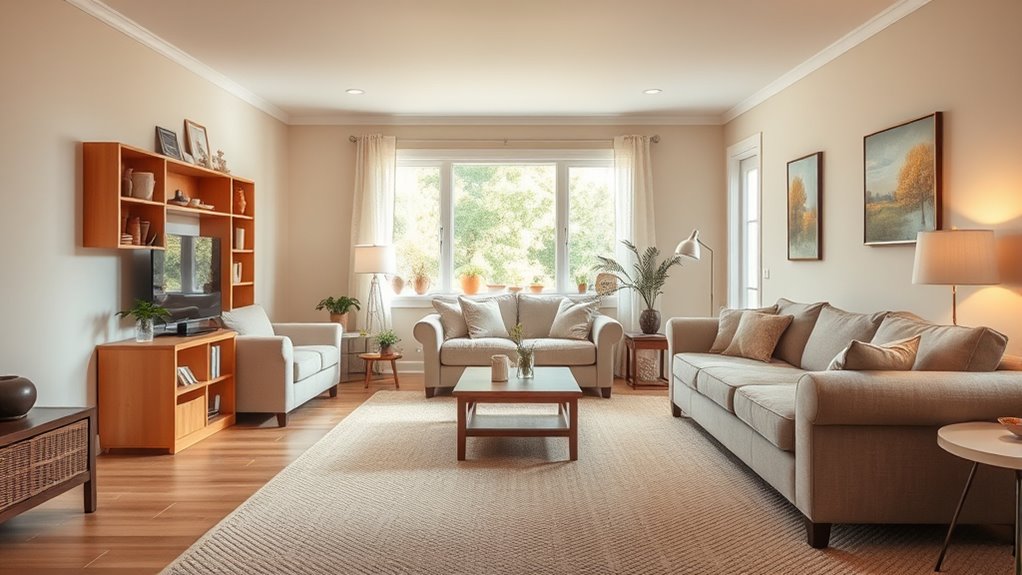
Creating an accessible and navigable environment starts with thoughtful modifications that support independence and safety. You want your home to be easy to move through, reducing confusion and fall risks. Clear signage on doors and cupboards helps with orientation, while rearranging furniture ensures pathways are open and accessible. Wide doorways accommodate wheelchairs, and clutter-free surfaces prevent trips. Consider adding contrasting colors to floors and walls to enhance visibility. Here’s a quick guide:
| Safety Feature | Purpose | Example |
|---|---|---|
| Clear Signage | Improve wayfinding | Door labels with large print |
| Wide Doorways | Facilitate mobility | Installing 36-inch doors |
| Clutter-Free Surfaces | Reduce trip hazards | Removing excess furniture |
Tips for Ongoing Safety and Home Maintenance
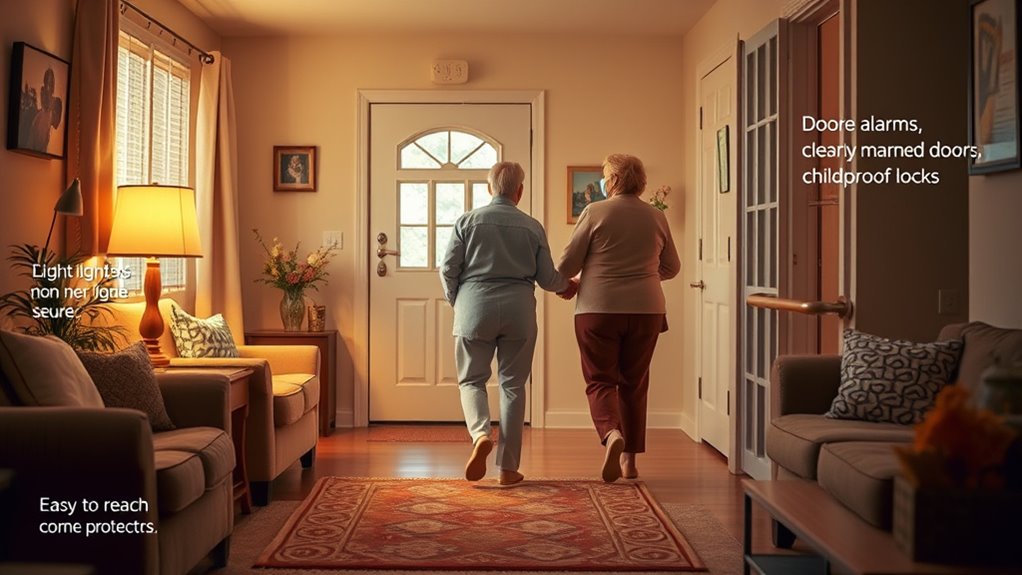
To guarantee your home remains safe for a senior with Alzheimer’s, ongoing safety checks and maintenance are essential. Regularly inspect high-risk areas like bathrooms, hallways, and entrances for hazards. Keep pathways clear and well-lit to prevent falls. Check that grab bars, handrails, and stairways are secure and in good condition. Update safety devices such as motion sensors and automatic lighting to adapt to changing needs. Test water temperature controls and ensure medications and chemicals are stored safely, out of reach. Periodically review and adjust environmental modifications, like signage and furniture placement, to support independence. Consider these steps:
- Tighten or replace loose handrails and grab bars
- Replace patterned or shiny flooring with solid, non-slip surfaces
- Remove or secure loose rugs and clutter
- Maintain proper lighting throughout the home
- Regularly check safety devices for proper function
Frequently Asked Questions
How Often Should Safety Assessments Be Updated for a Senior With Alzheimer’s?
You should update safety assessments regularly, ideally every three to six months, or whenever there’s a change in your senior’s condition or environment. Frequent reviews help catch new hazards, ensure modifications remain effective, and adapt to evolving needs. Stay vigilant, especially after hospital stays or changes in mobility, to keep your loved one safe and prevent falls or injuries. Regular assessments sustain a secure, supportive living space.
What Are the Best Ways to Involve the Senior in Safety Modifications?
You can involve your loved one in safety modifications by first evaluating their preferences and abilities. Use visual cues like labels on cabinets and doors to promote independence. Include them in simple choices, such as selecting grab bar styles or lighting options. Encourage them to participate in organizing their space, making safety features familiar and comfortable. This approach boosts their confidence and ensures modifications suit their needs effectively.
How Can I Balance Safety With Maintaining a Homely Environment?
You can balance safety and a homely feel by choosing unobtrusive modifications like installing handrails, improved lighting, and clear signage that blend with your decor. Use soft rugs, familiar furniture arrangements, and warm colors to keep the space inviting. Regularly review safety features to avoid clutter or hazards. Involving your loved one in small decisions helps maintain their independence and comfort while ensuring their environment stays secure and cozy.
Are There Specific Safety Products Recommended for Outdoor Areas?
You should install motion-activated lighting and sturdy handrails along walkways to prevent falls, providing safety without sacrificing aesthetics. Use non-slip outdoor mats at entrances to avoid slips, and keep pathways clear of debris or clutter. Fencing or gate locks can restrict unsafe areas, offering peace of mind. These safety products protect your loved one while preserving the warmth and familiarity of their outdoor environment.
What Community Resources Assist With Home Safety Modifications?
Community resources like local Area Agency on Aging, senior centers, and non-profit organizations can help with home safety modifications. They often offer assessments, financial assistance, and guidance on implementing safety features such as grab bars and improved lighting. You can also find volunteer programs that assist with home repairs and modifications. Reach out to these resources to get personalized support, ensuring your loved one’s environment is safe and adapted to their needs.
Conclusion
Creating a safe home for your loved one with Alzheimer’s isn’t a one-time task—it’s an ongoing process. Regularly evaluate the environment, make necessary adjustments, and stay proactive. Remember, safety measures are the foundation of peace of mind, but neglecting them can lead to trouble down the road. Keep vigilant and flexible, because a secure home is truly the cornerstone of their well-being and your peace of mind.