
To help your elderly parent use the bathroom with dignity and safety, start by evaluating and modifying the space—add grab bars, non-slip mats, and ensure good lighting. Support safe transfers, guide movements gently, and consider equipment like raised seats or shower chairs that promote independence. Keep essentials within reach and establish routines that reduce urgency. Creating a comfortable environment and promoting respectful habits will boost their confidence and comfort—more tips can make this easier for both of you.
Key Takeaways
- Ensure the bathroom is safe with non-slip mats, good lighting, grab bars, and clutter-free pathways.
- Support your parent gently during transfers, guiding movements slowly and helping them sit or stand securely.
- Choose comfortable, accessible equipment like raised toilet seats and sturdy grab bars to promote independence.
- Keep essentials within reach, maintain privacy, and create a clean, dignified environment for bathroom visits.
- Encourage routine toileting schedules and assist with dressing to foster comfort, safety, and respect.
Assessing Bathroom Safety and Making Modifications

Evaluating bathroom safety is a crucial first step in preventing falls and ensuring dignity for older adults. Begin by inspecting the bathroom for hazards like loose rugs, clutter, or uneven flooring. Check that the lighting is bright and evenly distributed, especially for nighttime use. Assure the toilet is at a comfortable height or consider installing a raised seat with arms for easier sitting and standing. Non-slip mats and matte-finish flooring help improve traction. Install grab bars near the toilet, shower, and tub to support stability. Keep the area dry and free of water spills, and consider replacing glass shower doors with shatterproof alternatives. Making these adjustments creates a safer environment, reducing fall risks and promoting independence during toileting. Incorporating ventilation considerations can also help prevent mold and moisture buildup, further enhancing bathroom safety. Proper lighting can significantly improve visibility and reduce the likelihood of accidents. Additionally, selecting non-slip surfaces and maintaining a clutter-free space are vital steps in creating a secure bathroom environment. Regularly checking for moisture buildup can help identify potential issues early and maintain a safe, healthy bathroom space.
Supporting Safe Transfers and Movements
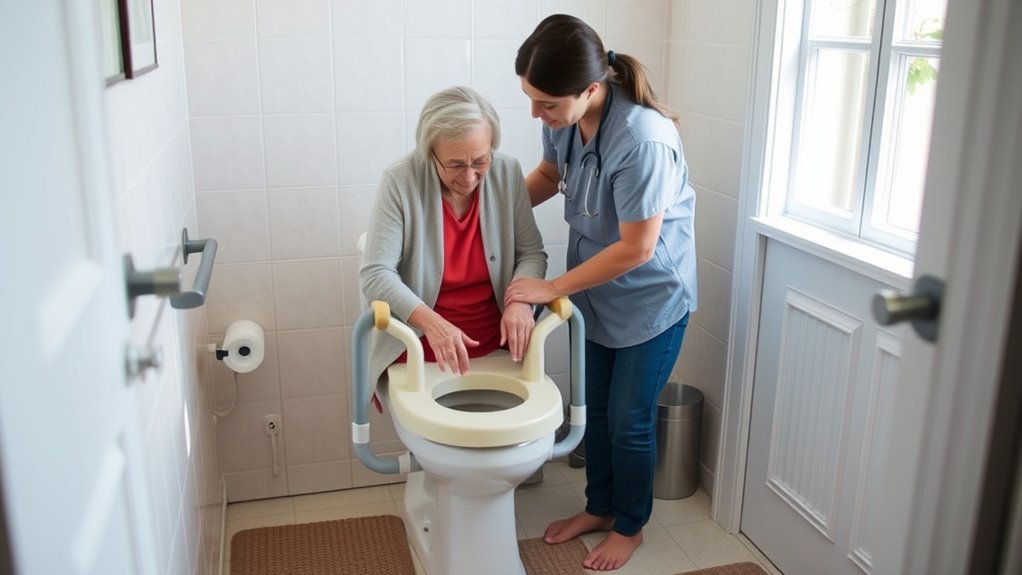
Supporting safe transfers and movements during toileting is essential to prevent falls and promote independence. You can do this by guiding your parent slowly and supporting their balance at key points. Encourage them to sit down carefully and use their hands on grab bars or sturdy surfaces to lower themselves safely. When standing, help them rise gradually to avoid dizziness. Ensuring their feet are flat on the floor provides stability. Use the table below to understand common challenges and solutions:
| Challenge | Solution |
|---|---|
| Loss of balance during transfer | Use grab bars and assist with slow movements |
| Difficulty standing up | Provide arm support and stable surface |
| Dizziness after standing | Encourage slow postures and sit down if needed |
Additionally, understanding safe installation practices of grab bars and bathroom fixtures can further reduce risks and promote confidence during transfers. Properly installed fixtures can support secure and safe transfers, reducing fall hazards and increasing trust in the bathroom environment. Investing in quality grab bars and ensuring they are correctly anchored can make a significant difference in safety. Being aware of emerging safety standards can also help ensure that fixtures meet the latest safety guidelines. Regular inspections and proper maintenance can further enhance safety during bathroom transfers.
Choosing the Right Equipment for Independence

Choosing the right equipment can considerably enhance safety and independence during toileting. Start by selecting a raised toilet seat with armrests; it makes sitting down and standing up easier and safer. Non-slip mats and textured flooring help prevent slips, especially when surfaces are wet. Consider grab bars installed near the toilet; they provide stability during transfers. A portable commode can be useful if bathroom access is limited or if additional support is needed. For those with mobility issues, a shower chair or bench can make bathing safer, indirectly supporting toileting routines. Properly choosing assistive devices and ensuring the equipment fits well and is easy to use reduce frustration and the risk of falls. Building confidence in using equipment can encourage greater independence and safety. Guarantee the equipment fits well and is easy to use, reducing frustration and the risk of falls. Properly chosen aids empower your parent to maintain dignity and independence safely. Incorporating proper equipment selection and understanding home safety principles ensures safety and enhances overall toileting comfort and independence.
Creating a Comfortable and Dignified Environment
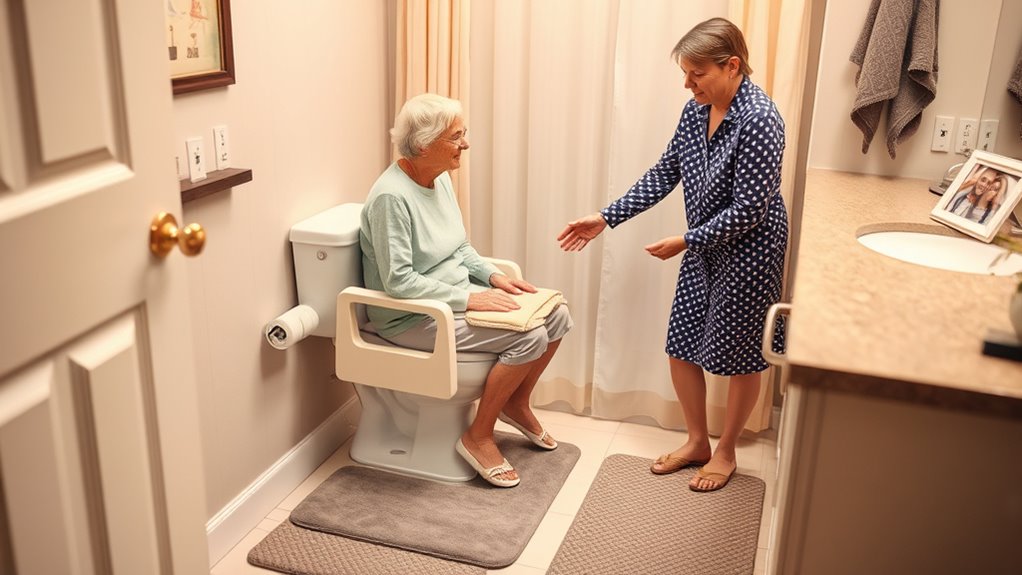
Creating a comfortable and dignified bathroom environment begins with thoughtful design that prioritizes safety and respect. Focus on clear pathways, good lighting, and accessible fixtures. Use non-slip mats and matte finishes to prevent slips. Keep essentials within easy reach to minimize stretching or balancing. Install sturdy grab bars near the toilet and shower. Keep the space uncluttered to reduce tripping hazards. Consider the following modifications:
| Feature | Purpose | Tips |
|---|---|---|
| Raised Toilet Seat | Easier to sit and stand safely | Add arms for extra support |
| Walk-in Shower | Reduce fall risk during bathing | Use a bench and grab bars |
| Good Lighting | Improve visibility, especially at night | Install bright, glare-free fixtures |
| Non-slip Mats | Prevent slipping on wet floors | Use textured, water-resistant mats |
| Clear Pathways | Minimize obstacles | Remove rugs and clutter |
This environment fosters dignity and reduces fall hazards. Incorporating accessible design principles can further enhance safety and independence. For example, choosing fixtures with easy-to-use controls can make a significant difference for those with limited dexterity. Additionally, selecting proper lighting is essential for preventing accidents and ensuring clear visibility at all times.
Encouraging Good Habits and Routine Practices
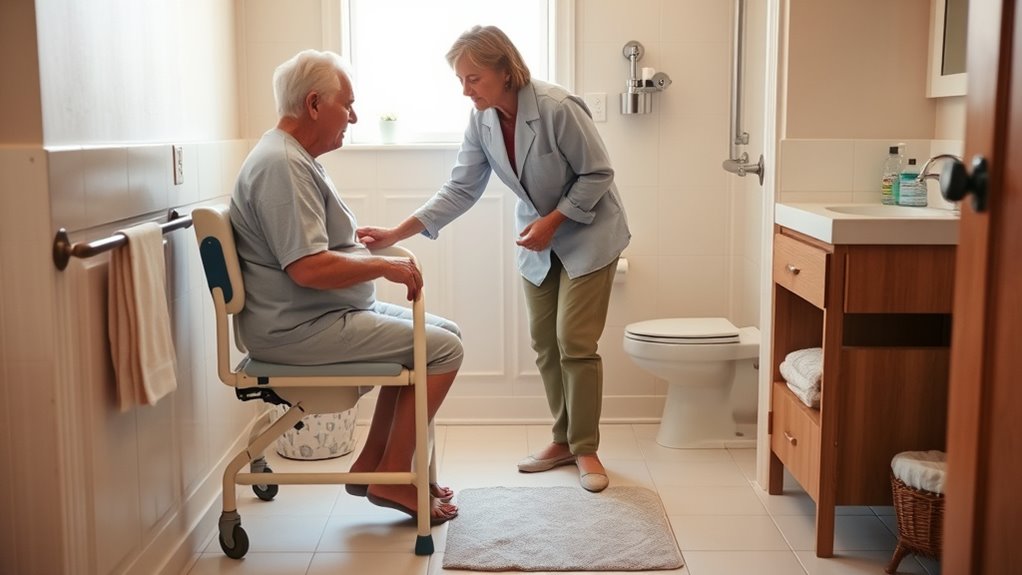
Establishing consistent habits around toileting can substantially reduce fall risks and promote dignity for older adults. When routines are predictable, your parent gains confidence and minimizes confusion or urgency that could lead to accidents. Encourage regular bathroom times, ideally every 2-4 hours, to prevent urgency and incontinence issues. Remind your parent to:
- Use the bathroom before leaving the house or engaging in activities
- Sit for a few moments to relax and allow full bladder emptying
- Keep a clear path to the bathroom, free of obstacles
- Wear clothes that are easy to manage and fasten
- Ask for assistance if feeling dizzy or unsteady
Implementing these routines helps foster safety, independence, and respect, making bathroom use a comfortable part of daily life.
Frequently Asked Questions
How Can I Communicate Effectively With My Parent About Toileting Concerns?
You should talk openly and kindly, emphasizing your concern for their safety and comfort. Use a gentle tone, listen actively, and avoid blame. Share specific observations about toileting challenges, like difficulty balancing or frequent accidents. Offer solutions, such as installing grab bars or using raised toilet seats, and involve them in decisions. Respect their feelings and privacy, fostering trust so they feel comfortable discussing concerns honestly.
What Signs Indicate My Parent Needs Professional Bathroom Safety Assessment?
Think of your parent’s bathroom safety like a lighthouse warning of danger ahead. If you notice frequent slips, unsteady gait, or difficulty transferring to the toilet, it’s time for a professional assessment. Other signs include poor lighting, clutter, or lack of grab bars. Over 14% of toileting falls cause injuries, so seeking expert advice can prevent accidents, ensuring your parent stays safe and confident at home.
How Do I Handle Resistance From My Parent Regarding Bathroom Modifications?
When your parent resists bathroom modifications, start by listening to their concerns without judgment. Explain how these changes increase safety and independence, emphasizing their dignity and well-being. Involve them in choosing equipment or adjustments, giving them a sense of control. Offer reassurance and patience, and consider consulting a healthcare professional or occupational therapist to support the importance of safety upgrades. Gradually, they may feel more comfortable accepting the modifications.
Are There Specific Exercises to Improve My Parent’s Balance for Toileting Safety?
Did you know that regular strength and balance exercises can considerably reduce fall risk in seniors? To improve your parent’s balance for toileting safety, encourage simple activities like heel-to-toe walking, sit-to-stand repetitions, and leg lifts. These exercises strengthen muscles and enhance stability. Make it a daily routine, and always supervise to guarantee safety. Consistent practice helps your parent gain confidence and reduces the chance of dangerous falls during bathroom trips.
How Can I Ensure My Parent Maintains Dignity During Toileting Assistance?
To guarantee your parent maintains dignity during toileting assistance, speak with kindness and privacy in mind. Offer help discreetly, using gentle language, and respect their independence when possible. Use a bedside or raised toilet seat with arms for comfort and safety. Allow them to do as much as they can independently, and always involve them in decisions. Keep the bathroom private, well-lit, and clutter-free to foster a respectful environment.
Conclusion
Remember, helping your parent maintain dignity in toileting doesn’t mean just safety—it’s about respect and compassion. While safety modifications protect their physical well-being, fostering independence and dignity nurtures their emotional health. Balancing these might seem challenging, but it’s essential. By creating a safe, comfortable environment and encouraging routine, you show love and respect. Ultimately, supporting their independence preserves their dignity, proving that safety and compassion go hand in hand in caregiving.