

To set up a foolproof system for multiple medications, first evaluate your schedule and choose the right organizer—consider smart devices with alarms or larger compartments for easy access. Group medications by timing and label compartments clearly, using color-coding or symbols for quick identification. Leverage tech like reminders and smart pillboxes to prevent missed doses, and regularly update and check your system. Keep these tips in mind to improve adherence and safety—discover more ways to streamline your medication management.
Key Takeaways
- Group medications by time of day using labeled compartments or color coding for easy identification.
- Use pre-sorted pill packets or daily blister packs to prevent mix-ups and streamline administration.
- Incorporate reminder alarms or smart devices with alerts to ensure timely doses.
- Regularly review and update your organizer to accommodate medication changes and prevent expiration issues.
- Set monthly system audits and replacements to maintain safety, freshness, and adherence reliability.
Assessing Your Medication Schedule and Choosing the Right Organizer
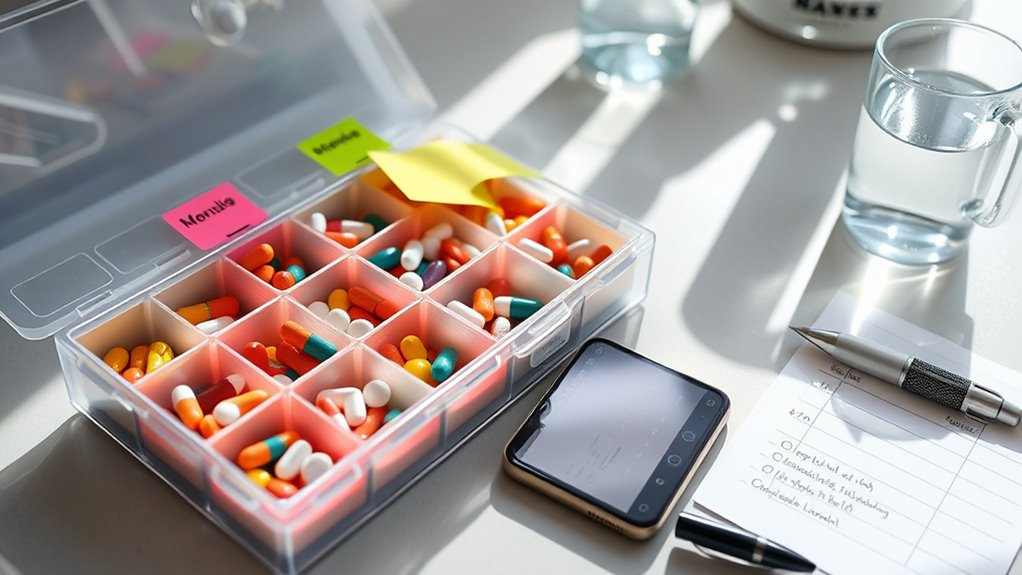
To choose the right pill organizer, you first need to assess your medication schedule carefully. Look at how many medications you take daily and note any specific timing requirements, such as morning, noon, evening, or bedtime doses. Consider whether you need a simple box with separate compartments or a more advanced device that offers alarms and reminders. If your schedule includes multiple medications at different times, a larger or smart organizer with connectivity might be best. For medications that require strict adherence, invest in features like dose tracking or alerts. Also, think about your physical abilities—if you have limited dexterity or memory issues, a device with clear labels, alarms, or remote monitoring can make a big difference. This assessment lays the foundation for choosing an organizer that fits your lifestyle. Additionally, understanding the contrast ratio of visual displays can aid in selecting devices with easy-to-read screens, especially for those with visual impairments. Incorporating ergonomic design features can further enhance usability for individuals with limited hand strength or coordination. Considering water-resistant options may also be beneficial if you need to carry or store your organizer in humid environments or while traveling.
Organizing Medications for Maximum Adherence and Clarity
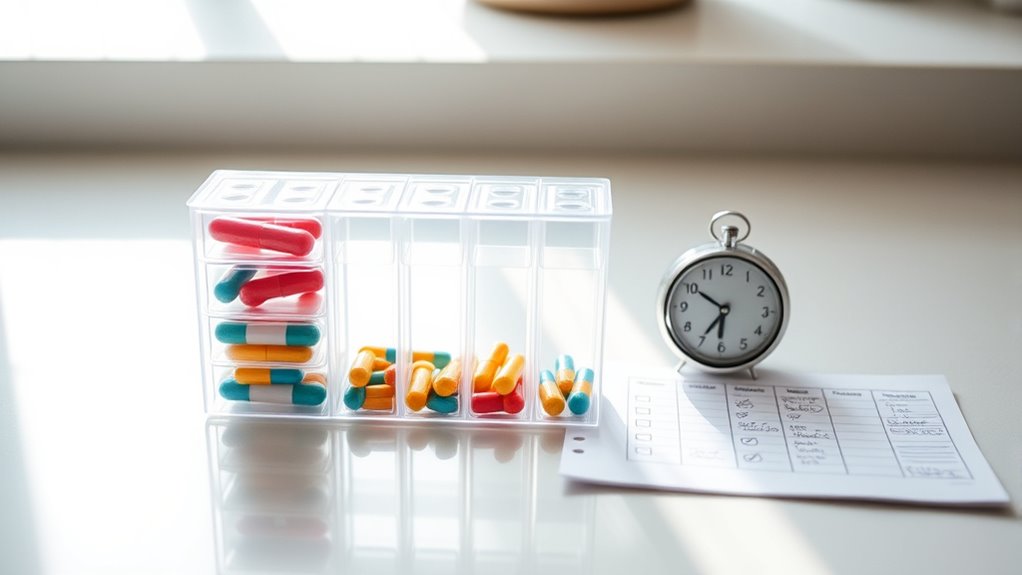
Effective medication organization is essential for maximizing adherence and reducing errors. To achieve this, group your medications by timing—morning, noon, evening, or night—to establish a clear routine. Use labeled compartments or pre-sorted packets to prevent mix-ups and missed doses. Keep similar medications together but separate different prescriptions to avoid confusion. Make sure your organizer’s layout is intuitive and easy to understand at a glance. Incorporate visual cues like color-coding or symbols for each dose time or medication to enhance clarity. Regularly review your system to ensure it aligns with any medication changes. Additionally, consider incorporating pill organizer hacks that adapt to your daily routine. Utilizing innovative cloud solutions can help you set reminders and track medication schedules remotely. By simplifying your setup and maintaining consistency, you reduce the risk of errors and improve your overall adherence, helping you stay on top of your health.
Leveraging Technology for Automated Reminders and Monitoring
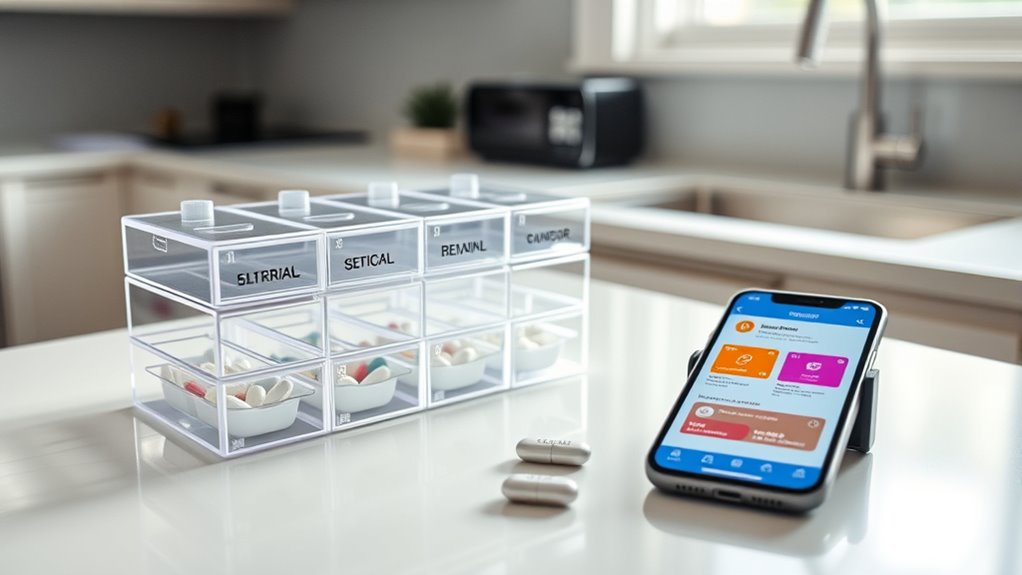
Technology has revolutionized medication management by providing automated reminders and real-time monitoring. Smart pill boxes and apps alert you when it’s time to take your medication, reducing forgetfulness considerably. Devices like MedaCube or MedCenter send notifications for missed doses and track adherence patterns, giving you and your healthcare providers valuable insights. Cellular connectivity enables remote monitoring, allowing caregivers to stay informed about your medication routine, even from afar. These tools can automatically log doses, eliminate manual record-keeping, and sync with your health records for thorough oversight. Additionally, understanding medication adherence can help tailor medication schedules to suit individual needs more effectively. Incorporating wearable devices with comfortable clothing can enhance patient comfort during long-term medication routines. Connecting data sharing features can further improve the overall management system. By leveraging such technology, you decrease the chance of missed doses, improve adherence, and support better health outcomes. Automated reminders and monitoring make managing multiple medications more straightforward, giving you confidence and peace of mind.
Tips for Maintaining and Updating Your Pill Management System
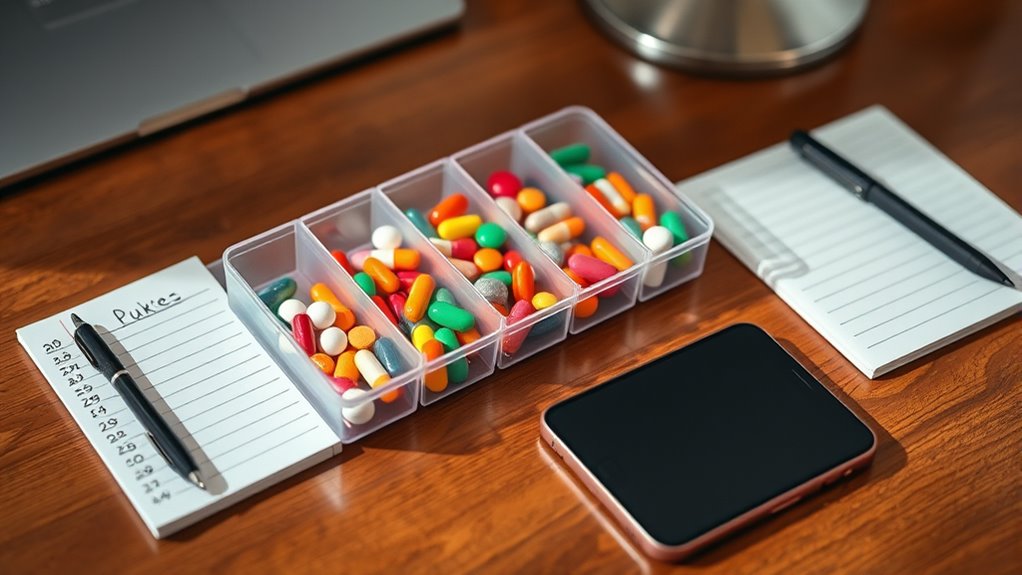
Regularly reviewing and updating your pill management system guarantees it continues to meet your changing medication needs. Set a monthly reminder to check your organizer’s contents and verify all doses are accounted for. Replace expired or empty compartments and adjust for new prescriptions or dosage changes. Keep an updated list of medications and cross-reference it with your organizer to catch discrepancies. If you notice frequent missed doses, consider switching to a different organizer or adding reminders. Stay alert for any physical limitations or cognitive changes that might affect your system’s effectiveness. Incorporate new technologies or features, like alarms or remote monitoring, as needed. Conducting a medication audit periodically can help identify potential issues before they become problematic. Maintaining an organized medication routine helps ensure adherence and safety. Regularly assessing your system’s efficiency and making necessary adjustments ensures it remains reliable and tailored to your current needs. Consistent maintenance keeps your medication routine reliable, reduces errors, and promotes your health and safety over time. Additionally, being aware of odor changes in medications or related items can help detect issues such as spoilage or contamination early on.
Frequently Asked Questions
How Often Should I Review and Adjust My Pill Organizer Setup?
You should review and adjust your pill organizer setup weekly or whenever your medication schedule changes. Check for expired pills, refill needs, or any confusion about dosing. If you notice missed doses or new medications, update your system accordingly. Regularly reassessing guarantees your setup stays effective, reduces mistakes, and keeps your adherence on track. Staying proactive helps prevent missed doses and supports your overall health management.
Can Pill Organizers Be Safely Used During Travel or While Commuting?
Yes, pill organizers can safely accompany you on travels and commutes. Just make certain you select a sturdy, secure container that’s compact and clearly labeled. Double-check the compartments before leaving to prevent misplaced pills. Keep your organizer in a safe, accessible spot, and consider using smart organizers with alarms for added assurance. By being mindful and methodical, you can maintain medication management seamlessly while on the move.
What Should I Do if I Miss a Dose Despite Using an Organizer?
If you miss a dose despite using an organizer, take it as soon as you remember unless it’s close to your next scheduled dose. Don’t double up to make up for missed medication unless your healthcare provider advises it. Check your medication instructions or contact your doctor or pharmacist for guidance. Setting reminders or alarms can help prevent future missed doses, ensuring you stay on track with your treatment plan.
Are There Specific Organizers Recommended for Individuals With Cognitive Decline?
Think of your organizer as a gentle lighthouse guiding you through medication routines. For cognitive decline, opt for smart pill boxes like MedaCube or MedCenter, which act as vigilant guardians with alarms, color-coding, and remote alerts. These devices reduce confusion, signal when to take pills, and help caregivers stay in sync. Their simple, visual cues turn chaos into clarity, making medication management safer and more reliable for you.
How Do I Choose a Smart Pill Box Compatible With My Healthcare Provider’s System?
To select a smart pill box compatible with your healthcare provider’s system, start by confirming the device’s connectivity options, like Bluetooth or cellular data. Make certain it can sync with your provider’s preferred health app or electronic health record system. Check for features like real-time adherence tracking, remote monitoring, and alerts. Finally, verify compatibility with your smartphone or tablet and consult your provider for recommendations to guarantee seamless integration.
Conclusion
By implementing these pill organizer hacks, you transform chaos into clarity—making medication management second nature. Think of your system as a trusted compass, guiding you effortlessly through your daily routine. With a little setup and regular updates, you’ll stay on top of your medications with confidence. Remember, a well-organized system isn’t just a tool; it’s your steadfast ally in maintaining health and peace of mind amid life’s many demands.