To give an elderly loved one a sponge bath, start by preparing the room with warm water and gathering clean, soft cloths, ensuring safety with non-slip mats and privacy with curtains. Test water temperature to avoid burns and use gentle, no-rinse cleansers. Support their head and cover unwashed areas with towels for dignity. Focus on each body part carefully, protect their eyes, and finish with skin-care and comfort tips. Keep going as you learn more about a smooth, respectful bathing process.
Key Takeaways
- Prepare a warm, private environment with necessary supplies and safety measures, including non-slip mats and gentle cleansers.
- Test water temperature regularly to ensure it’s warm but not hot, maintaining safety and comfort throughout the bath.
- Use soft, separate washcloths for different areas, supporting the head and body gently to promote relaxation and safety.
- Protect eyes with a bath visor or damp cloth, controlling water flow to prevent splashes and discomfort.
- Finish with skin moisturizing, organize supplies, and ensure the individual is comfortable and dignity is maintained.
Preparing the Room and Gathering Supplies
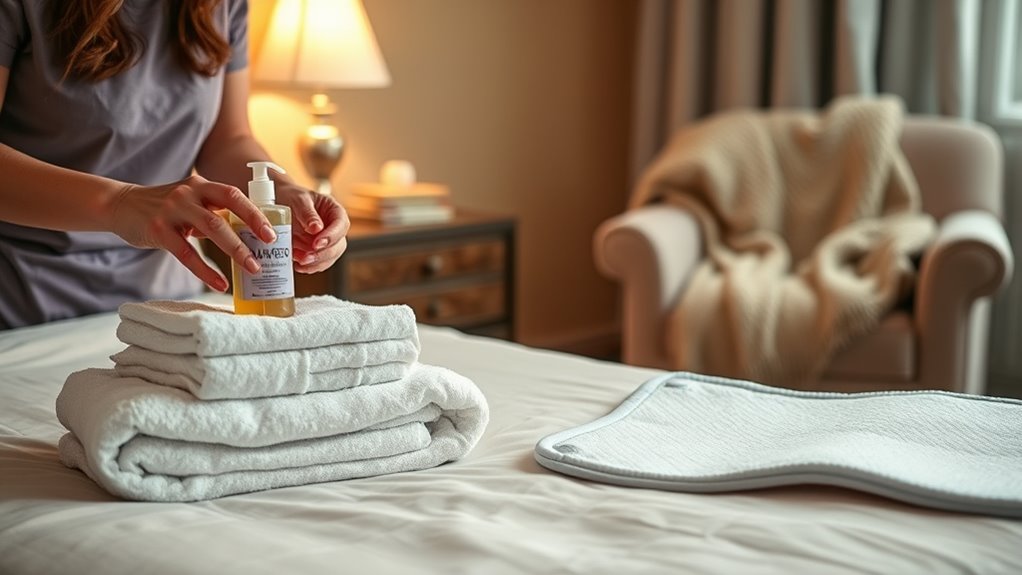
Before starting the sponge bath, you should prepare the room and gather all necessary supplies to guarantee a smooth process. Set the room temperature between 75°F and 80°F to keep your loved one comfortable and prevent chills. Close windows and adjust the heater as needed to maintain warmth. Gather two basins filled with warm water—one for soapy water and one for rinsing—and ensure they’re easily accessible. Prepare about 7-10 washcloths or no-rinse cloths, separating them for the face, private areas, and feet to maintain hygiene. Place non-slip mats or a shower bench to prevent slips and ensure stability. Having everything ready before starting minimizes interruptions, making the bath safer, more efficient, and more comfortable for your loved one. Proper room setup can significantly enhance the safety and comfort of the bathing process. Additionally, ensuring appropriate hygiene practices helps prevent infections and promotes overall well-being. Incorporating knowledge about home safety features can further reduce risks during bathing. Being aware of infection control measures is essential to maintain a sanitary environment. Proper preparation and understanding of infection prevention strategies can help protect your loved one from potential health issues.
Ensuring Proper Water Temperature and Safety Measures

To guarantee safety and comfort during a sponge bath, always test the water temperature before applying it to the skin. Use the back of your hand, as it’s most sensitive to temperature. The water should feel warm, not hot or cold. The ideal water temperature is crucial for a soothing experience. Consistent water temperature prevents burns and discomfort, making the experience more relaxing. Keep a thermometer nearby if needed. To visualize, consider this example:
| Temperature Range | Feel on Skin | Notes |
|---|---|---|
| 90°F – 100°F | Warm, soothing | Ideal for bathing |
| Below 90°F | Slightly cool, invigorating | Use for rinsing, if needed |
| Above 100°F | Hot, uncomfortable | Avoid to prevent burns |
| 110°F and above | Very hot, dangerous | Never use |
| 80°F – 90°F | Lukewarm, acceptable | For sensitive skin |
Always check water regularly to confirm it remains at a safe, comfortable temperature. Additionally, being aware of water temperature safety guidelines helps prevent accidents and ensures a comfortable experience. Proper water temperature maintenance is also essential for preventing skin irritation and ensuring the safety of elderly loved ones. Regularly monitoring water temperature control can help maintain safety standards during bathing. Maintaining awareness of proper bathing techniques can further enhance safety during the process.
Selecting and Using Appropriate Cleaning Materials
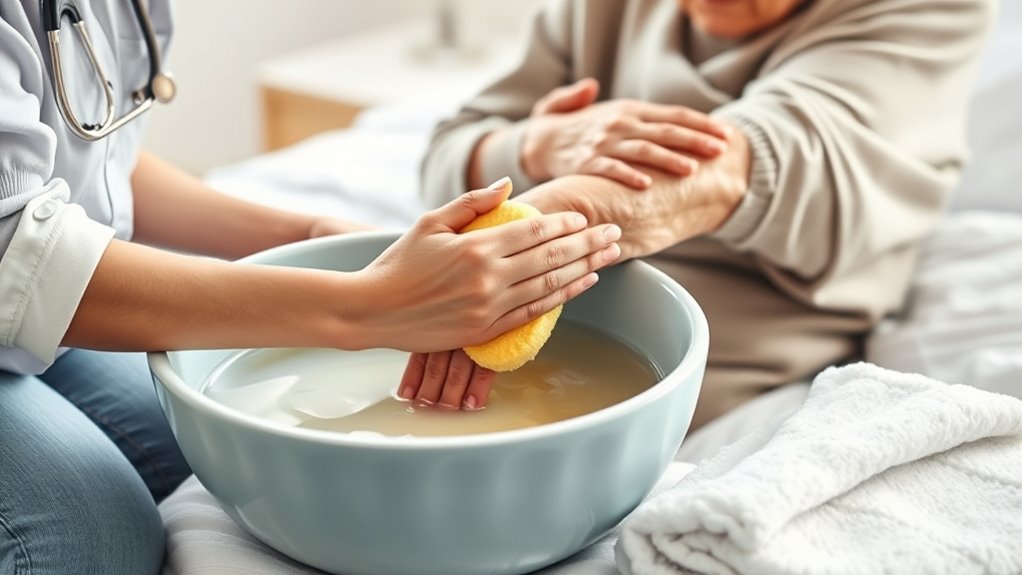
Choosing the right cleaning materials is essential to guarantee a safe, hygienic, and comfortable sponge bath. Use soft, gentle washcloths—about 7 to 10 per session—to prevent skin irritation. Separate cloths for the face, private areas, and feet help maintain hygiene and prevent cross-contamination. Opt for no-rinse, moisturizing cleansers instead of traditional soap, which can dry out the skin. Ensure you have a disposable basin filled with sterilized, filtered water for rinsing, especially if no-rinse cloths aren’t available. Use no-tears shampoo and an inflatable basin for hair washing to keep the process easy and comfortable. Always check that supplies are clean and in good condition before starting, and keep everything within reach to avoid unnecessary movement. Considering electric bathing aids can also make the process safer and more comfortable for the elderly loved one. Additionally, choosing appropriate cleaning tools designed for sensitive skin can further enhance comfort and safety during the bath. Incorporating proper water temperature is also crucial to prevent discomfort or burns.
Step-by-Step Guide to Washing Different Body Areas

Start washing with the face, using a clean, damp washcloth and gentle, no-rinse cleanser. Gently wipe from the center outward, paying attention to the corners of the eyes and around the nose. Rinse the cloth frequently to remove dirt and soap residue. Incorporating connected appliances can facilitate more efficient and thorough cleaning, especially for hard-to-reach areas. Using appropriate techniques helps ensure the skin is cleaned gently but effectively, reducing discomfort. Additionally, understanding skin sensitivity can guide you in selecting suitable cleansing products for the elderly. Recognizing the importance of hydration in maintaining healthy skin can further improve the comfort and effectiveness of the bath. Being aware of net worth and other personal details about the individual can help tailor the care approach to their preferences and history. Finish with the legs, feet, and between toes, using separate cloths for each area.
Maintaining Privacy, Dignity, and Comfort During the Bath
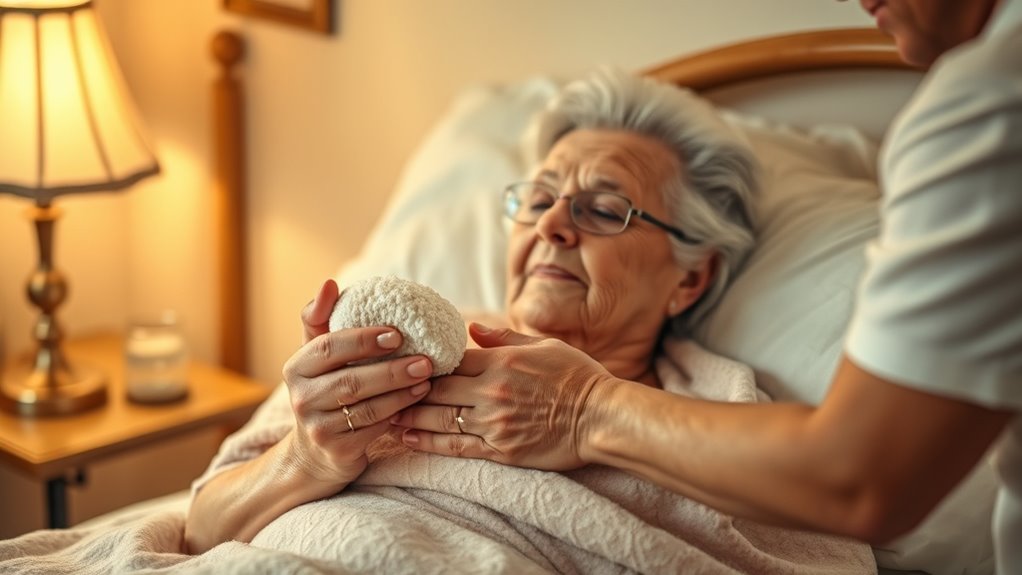
Maintaining privacy, dignity, and comfort during a sponge bath is essential for respecting the individual’s autonomy and emotional well-being. Start by explaining each step before you begin, so they know what to expect. Use a towel or sheet to cover parts of the body not being washed, uncovering only the area you’re working on. Speak softly and reassure them throughout, asking for their preferences when possible. Keep communication open to ensure they feel involved and respected. Use a bath visor to prevent soap from getting in their eyes, and encourage independence when safe. Adjust the environment—close blinds or curtains and maintain warm room temperature—to create a calming atmosphere. Incorporating cultural content techniques can help reduce physical discomfort and promote relaxation during the process. These steps help preserve their dignity, reduce discomfort, and foster trust during the process.
Techniques for Hair Washing and Special Considerations

When washing hair, use gentle shampoo techniques to prevent discomfort or scalp irritation. Support the person’s head properly to keep them comfortable and prevent strain. Be sure to protect their eyes from soap to avoid irritation and guarantee a safe, soothing experience. Consider using moisture-wicking materials for hair towels to help absorb water effectively and keep the person comfortable afterward. Incorporating gentle hair care products can also reduce the risk of scalp irritation and promote a more comfortable bathing experience. Additionally, selecting appropriate bathing supplies can make the process easier and more comfortable for both caregiver and loved one. To further enhance comfort, you can also implement safe installation practices when setting up bathing areas, ensuring a secure and accessible environment. Using ergonomic tools designed for caregiving can further reduce strain and improve safety during the process.
Use Gentle Shampoo Techniques
Gently washing the hair is essential to guarantee comfort and minimize stress for the individual. Use no-rinse, gentle shampoo designed for sensitive skin, and avoid harsh chemicals. Keep the water warm, testing it on the back of your hand before applying. When washing, use slow, gentle motions, focusing on the scalp rather than scrubbing. Support the head securely with your hand or an inflatable basin to prevent strain. Remember these key points:
- Use no-tears shampoo to reduce irritation and discomfort
- Avoid getting soap in the eyes by using a bath visor or gentle rinsing
- Keep the hair moist throughout to prevent tangling and dryness
Maintaining a calm, gentle approach ensures a positive hair-washing experience for your loved one.
Support the Head Properly
Supporting the head properly during hair washing helps prevent discomfort and injury. To do this, gently cradle the person’s head with one hand, keeping it steady and aligned with their body. Use your other hand to guide the inflatable shampoo basin or washcloth as you apply water and shampoo. Keep their head slightly tilted back to avoid soap and water running into their eyes and mouth. Be mindful of neck support; avoid twisting or bending the neck unnaturally. Communicate throughout to ensure they feel secure and comfortable. If the person is frail or has limited mobility, support the head and neck with pillows or towels. Proper support minimizes the risk of strain, slips, or falls, ensuring a safe and comfortable hair washing experience.
Protect Eyes From Soap
Do you know how to keep soap out of the eyes during hair washing? To prevent discomfort or irritation, you should take simple precautions. First, position the person’s head so their face is turned away from the water stream. Using a bath visor or a damp washcloth over the forehead creates a barrier against soap and water splashes. Additionally, consider these techniques:
- Keep the soap solution away from the hairline and forehead during application
- Use a gentle, no-rinse shampoo to reduce the need for rinsing near the face
- Constantly monitor water flow to avoid sudden splashes or drips into the eyes
Applying Skin Care and Post-Bath Comfort Tips

After completing the sponge bath, it’s important to apply skin care products promptly to lock in moisture and protect the skin. Use a gentle, hypoallergenic lotion to prevent dryness and irritation. Focus on dry or bony areas, applying protective cream if needed. Warm towels from the dryer can be wrapped around your loved one for comfort. To emphasize skin care priorities, consider this table:
| Area | Product Type | Purpose |
|---|---|---|
| Dry or bony spots | Moisturizer or cream | Prevent skin breakdown |
| Face and neck | No-rinse lotion | Keep skin hydrated |
| Between toes and feet | Moisturizing cream | Avoid fungal infections |
Proper skin care reduces discomfort, prevents pressure sores, and enhances overall well-being.
Handling Medical Devices and Final Steps

When handling medical devices during a sponge bath, it is essential to approach with care to prevent dislodging or damaging equipment. Always support tubing, wires, or catheters gently, avoiding tension or pulling. Before cleaning, verify devices are secured and functioning properly. Check insertion sites for signs of irritation or infection, and clean around them carefully using appropriate techniques.
Handle medical devices gently during sponge baths to prevent damage and ensure safety.
- Keep all tubing and wires organized to prevent accidental disconnection
- Use gentle motions when cleaning around insertion sites to avoid injury
- Ensure devices are properly secured after cleaning, avoiding discomfort or movement
Finally, confirm the device’s operation, and document any issues or concerns. Once finished, assist the individual into comfortable clothing, verifying all medical equipment remains intact and functional.
Frequently Asked Questions
How Often Should I Give a Sponge Bath to My Elderly Loved One?
You should give your elderly loved one a sponge bath 2 to 3 times a week, or more often if they’re unable to bathe independently or if they get very dirty or sweaty. Daily sponge baths can help with hygiene, especially in hot weather or if they’re limited in mobility. Always monitor their skin’s condition, and adjust the frequency based on their comfort and medical advice.
Can I Use Regular Soap Instead of No-Rinse Cleansers?
Using regular soap instead of no-rinse cleansers is a mistake that could turn your loved one’s bath into a skin nightmare. Regular soap can strip away natural oils, causing dryness and irritation, especially on delicate elderly skin. No-rinse cleansers are gentle, moisturizing, and specially formulated for sensitive skin. Stick with them to keep your loved one comfortable, hydrated, and free from unnecessary skin issues during their bath.
What Signs Indicate the Water Is Too Hot or Cold for Bathing?
You can tell if the water is too hot or cold by testing it with the back of your hand. If it feels uncomfortable or causes a burning or chilling sensation, modify the temperature. The water should feel warm but not hot, similar to body temperature. Always check frequently during the bath to ensure it stays at a comfortable, safe temperature, preventing discomfort or burns for your loved one.
How Do I Prevent Skin Irritation During and After Bathing?
You can prevent skin irritation by using gentle, no-rinse cleansers and warm, not hot, water tested on the back of your hand. Imagine the skin as delicate fabric that needs soft handling. After the bath, gently pat dry and apply hypoallergenic lotion or moisturizer to lock in moisture. Keep areas dry and avoid harsh soaps, ensuring your loved one’s skin stays smooth, healthy, and irritation-free long after the bath.
What Should I Do if My Loved One Resists or Feels Anxious During the Bath?
If your loved one resists or feels anxious during the bath, stay calm and speak softly to reassure them. Respect their feelings and give them control whenever possible, such as allowing them to decide which part to wash first. Use gentle touches, maintain eye contact, and explain each step. Taking breaks or offering distractions like music can help ease their anxiety and make the experience more comfortable.
Conclusion
Think of giving a bed bath as tending a delicate garden—you’re nurturing and caring for each blossom with patience and respect. By creating a safe, soothing environment, you help your loved one feel valued and comfortable. With gentle hands and attentive care, you’re not just cleaning; you’re cultivating trust and dignity. Remember, your kindness is the sunshine that makes their day brighter, turning a simple bath into a moment of connection and comfort.