

To change an adult diaper smoothly and with respect, start by creating a private, comfortable environment that respects their dignity. Gently position them on their side, ensuring safety and comfort. Carefully remove the soiled diaper using gentle handling, then clean the area thoroughly with wipes or a damp cloth. Apply a fresh diaper securely, making sure it fits well without being too tight. Paying attention to comfort and respect will make the process easier—continue to find helpful tips as you explore further.
Key Takeaways
- Communicate calmly and respectfully throughout the process to reassure and reduce embarrassment.
- Use gentle handling and proper positioning techniques to minimize discomfort and maintain dignity.
- Ensure privacy by dimming lights, closing curtains, and keeping the environment discreet.
- Prepare supplies in advance to streamline the change and avoid unnecessary delays.
- Check the fit and comfort of the diaper carefully to prevent leaks and skin irritation.
Preparing a Comfortable and Private Environment

Creating a comfortable and private environment is essential to maintaining the individual’s dignity and reducing anxiety during a diaper change. Start by choosing a quiet, secluded space where interruptions are unlikely. Dim the lights if possible to create a calming atmosphere. Gather all supplies—clean diapers, wipes, gloves—before beginning, so you’re not searching during the process. Guarantee the area is warm enough, especially if the person might feel exposed. Use a privacy screen or close curtains to block views from others. Place a disposable underpad beneath the individual to protect bedding and furniture. Wash your hands thoroughly and put on fresh gloves to maintain hygiene. A well-prepared, private setting helps the person feel respected and secure throughout the change. Incorporating proper hygiene and safety practices ensures both comfort and health are prioritized during the process. Additionally, ensuring good air quality in the environment can help reduce odors and provide a more comfortable experience. Maintaining ventilation is also important to promote fresh air circulation and reduce the buildup of moisture or odors. Being mindful of environmental factors can further enhance the comfort and safety of the entire process.
Ensuring Proper Positioning for Safety and Comfort

To guarantee safety and comfort, you need to position the individual carefully before changing the diaper. Use gentle rolling techniques to turn them onto their side without causing discomfort or injury. Always make sure side rails are raised on the far side to prevent falls and provide added security during the move. Additionally, ensure the person’s positioning is maintained correctly to minimize pressure points and promote circulation. Proper home organization can also help create a safer environment by reducing hazards during such maneuvers. Being aware of electric bike features can encourage the use of supportive equipment like padded mattresses or specialized cushions to further enhance comfort. Incorporating style guidance principles can help in selecting the right supportive devices to ensure both safety and comfort. Considering ergonomic design can further optimize support and reduce strain for both caregiver and individual.
Gentle Rolling Techniques
Gently rolling a person onto their side is essential for both safety and comfort during a diaper change. To do this smoothly, follow these steps:
- Support the individual’s hip and shoulder with one hand on each side, maintaining contact to prevent sudden movements.
- Use your body weight to guide them slowly, avoiding jerks or quick motions.
- Keep the person’s head aligned with the spine, and ensure side rails are raised for added safety.
- Be mindful of proper positioning to promote comfort and prevent skin irritation during the process.
Communicate throughout, encouraging cooperation. If needed, have someone assist by holding the person securely. Take your time during each roll, applying gentle pressure and maintaining good body mechanics. This approach minimizes discomfort and reduces the risk of injury or falls.
Secure Side Rail Use
Using side rails correctly helps prevent falls and enhances safety during a diaper change. Always raise the side rails on the far side of the bed before moving or repositioning the individual. This creates a barrier that reduces the risk of accidental falls while changing the diaper. Make certain the rails are securely locked in place, so they don’t shift unexpectedly. If possible, have an additional person hold the individual steady, especially if they’re mobile or unsteady. When finished, gently lower the rails while maintaining support until you’re confident the person is stable. Proper use of side rails promotes safety without causing discomfort, giving both you and the individual peace of mind throughout the process. Always check that rails are fully secured before and after the change. Additionally, regularly inspecting bed safety features helps ensure ongoing protection and proper functioning of the side rails.
Removing the Soiled Diaper With Respect and Hygiene
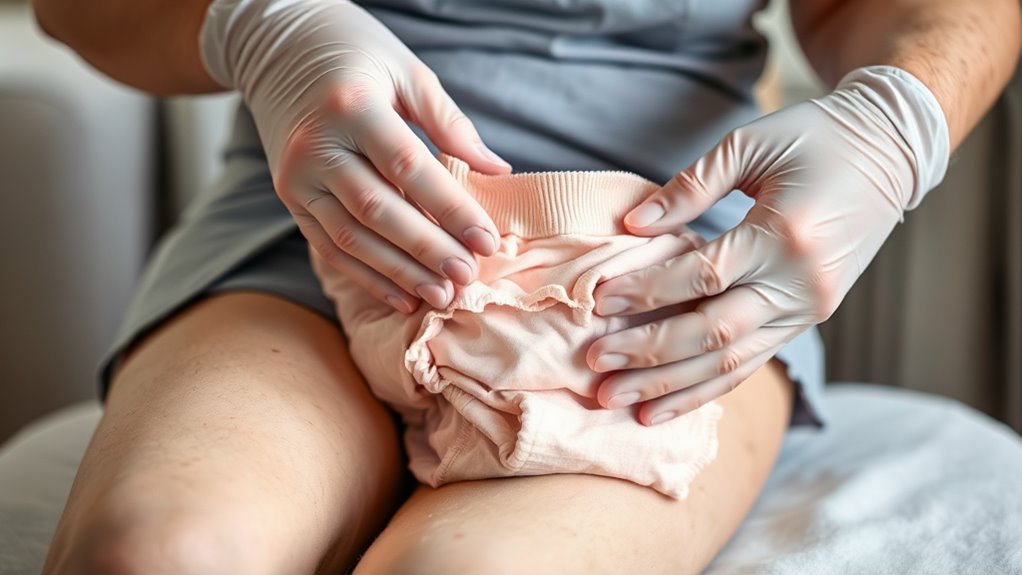
Removing a soiled diaper requires careful attention to respect and hygiene. First, unfasten the tabs gently from the front to avoid sudden exposure. Next, fold the front of the diaper down carefully, keeping it folded to contain mess and prevent contact. Then, tuck the far side of the diaper under the individual’s hip to stabilize it during removal. To prevent irritation, ensure that you use gentle handling and appropriate diaper hygiene techniques throughout the process. Maintaining a clean environment is essential to reduce the risk of infections and ensure comfort. Here’s what to do: 1. Unfasten tabs slowly, maintaining dignity. 2. Fold the soiled diaper inward to contain waste. 3. Tuck the far side under the hip for stability. Additionally, being mindful of key traits of successful SQA engineers such as attention to detail can help ensure that every step is performed carefully and thoroughly. Incorporating proper hygiene practices can further minimize the risk of skin irritation and infections. Throughout the process, handle the diaper gently and avoid unnecessary exposure. Dispose of it immediately in a designated bag to prevent odors and contamination. Always maintain respect and hygiene to ensure comfort and dignity.
Cleaning and Caring for Sensitive Skin Areas
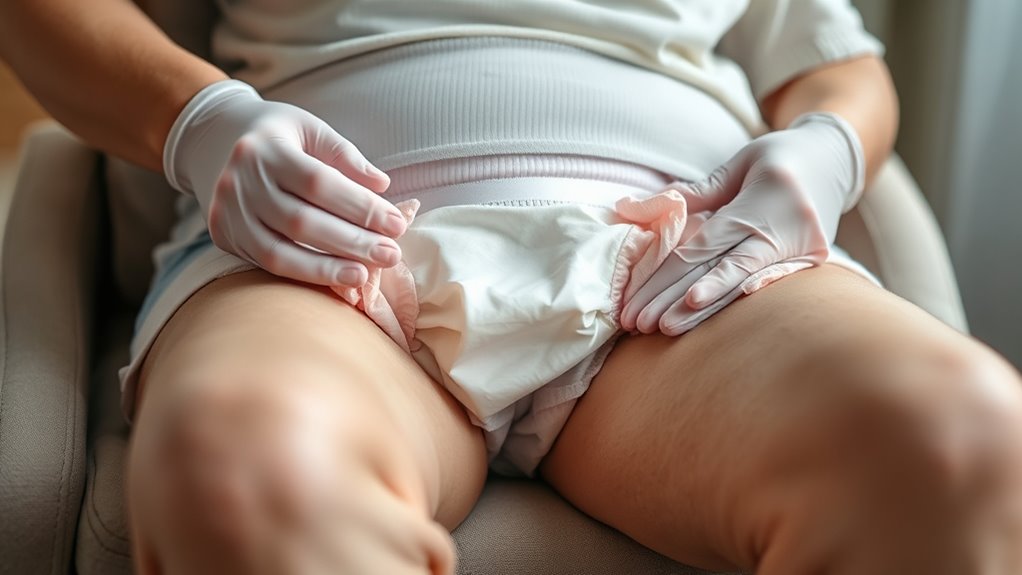
After disposing of the soiled diaper, focus on thoroughly cleaning the skin in the genital and surrounding areas. Use gentle wipes or a damp cloth, wiping front to back to prevent bacteria transfer. Pay close attention to skin folds and creases, where moisture can cause irritation or infection. Be gentle to avoid skin trauma, especially if the skin is sensitive or damaged. Allow the area to dry completely before applying any barrier cream or a new diaper to prevent moisture buildup. Using proper cleaning techniques can also help reduce irritation and promote skin health. Incorporating visual and auditory cues can enhance caregiver understanding and ensure thorough cleaning. If irritation or redness persists, consider applying a thin layer of barrier ointment to protect the skin. Always dispose of used wipes immediately, and wash your hands thoroughly afterward. Proper cleaning helps prevent infections and keeps the skin healthy and comfortable. Regular use of airless paint sprayers can also make the cleaning process more efficient and thorough. Being attentive to skin sensitivity and adjusting cleaning methods accordingly can further improve comfort and skin integrity.
Applying a Clean Diaper Correctly and Securely

To apply a clean diaper correctly, start by folding it lengthwise to guarantee easy placement between the legs. Slide it in with the tabbed side at the back, then gently roll the person onto the diaper, allowing it to sit smoothly against their body. For added security, ensure the diaper fit is snug but not too tight to prevent leaks and irritation. Proper positioning of the diaper can also help in maintaining comfort for the wearer, which is essential for their well-being. Ensuring the AI-powered virtual reality in e-learning tools are used appropriately can enhance the learning experience. Additionally, understanding market dynamics can aid caregivers in choosing the right diaper size and style for optimal comfort. Finally, fasten the tabs securely, making sure the fit is snug but comfortable to prevent leaks and irritation. Using the best fit ensures maximum comfort and protection for the wearer.
Proper Folding Technique
Proper folding of the clean diaper is essential for an efficient and secure application. First, fold the diaper lengthwise so the inner lining faces outward, creating a narrow, manageable shape. Next, verify the folded edges are smooth, removing any creases that could cause discomfort. Finally, position the folded diaper so the front panel is ready to slide between the legs, with the back panel aligned for easy fastening. To do this effectively:
- Fold the diaper lengthwise, smoothing out wrinkles.
- Keep the tabs tucked inward to prevent snagging.
- Align the back panel for easy placement under the individual’s hips.
- Ensure the proper fit by adjusting the diaper as needed for comfort and security.
This technique ensures the diaper is easy to slide into position, fits snugly, and stays secure without causing discomfort. Proper folding streamlines the application process and enhances comfort and leak prevention.
Securing the Diaper Snugly
How do you guarantee the diaper fits securely without causing discomfort? First, ensure the diaper is properly positioned, with the back panel aligned just above the hips. Fasten the bottom tabs straight across the waist, avoiding over-tightening, which can cause skin irritation. Then, angle the top tabs downward for a snug but comfortable fit, preventing shifting or leaks. Smooth out any wrinkles to avoid chafing and ensure even distribution of the diaper’s padding. Check that the waistband isn’t too tight by inserting your finger between the diaper and the waist. A secure fit provides protection against leaks while allowing freedom of movement. Remember, comfort is key—adjust the fastening as needed, maintaining a balance between snugness and comfort to keep the individual comfortable throughout the day.
Final Checks and Comfort Enhancements After the Change

Once you’ve finished securing the new diaper, it’s important to perform final checks to guarantee the individual’s comfort and safety. First, gently run your hands over the diaper to ensure there are no wrinkles or gaps that could cause leaks or chafing. Second, ask the person if they feel comfortable and check for any signs of discomfort or skin irritation. Third, verify that the diaper fits snugly without being too tight, allowing free movement. Additionally, make sure the individual’s clothing is properly adjusted and comfortable. Finally, lower the bed to a safe height, raise the head if needed, and clean up your workspace. These steps help ensure the individual feels secure, comfortable, and dignified after the change.
Frequently Asked Questions
How Can I Help Someone Feel Less Embarrassed During the Diaper Change?
You can help someone feel less embarrassed by maintaining their dignity throughout the process. Speak kindly, explain each step, and reassure them they’re doing fine. Use a private, comfortable space and keep the conversation respectful. Cover them with a towel or blanket when possible, and avoid unnecessary exposure. Show patience and understanding, and focus on making the experience as normal and reassuring as possible.
What Signs Indicate Skin Irritation That Needs Extra Attention?
You’ll notice signs like redness, swelling, or rash on the skin, especially in folds or creases. If the skin feels warm or tender to touch, that indicates irritation. You might see blistering or open sores, which require extra care. Persistent moisture or a foul odor also suggest skin needs attention. Address these issues promptly by cleaning thoroughly, drying completely, and applying barrier cream to protect the skin.
How Can I Ensure the Individual Remains Comfortable Throughout the Process?
Think of yourself as a gentle river, flowing seamlessly to keep the individual comfortable. You stay calm, speak softly, and move slowly, avoiding sudden movements. Keep the environment warm and private, ensuring their dignity stays intact. Use soft wipes, support their body, and listen for any discomfort cues. By maintaining patience and kindness, you create a soothing atmosphere, making the process as comfortable and stress-free as a calming current.
What Should I Do if the Individual Resists or Becomes Anxious?
If the individual resists or becomes anxious, stay calm and speak softly to reassure them. Gently explain what you’re doing and offer comfort, like holding their hand or making eye contact. Take slow, deliberate movements to prevent startling them. If they continue to resist, pause and try again later, respecting their feelings. Patience and understanding help ease their anxiety and build trust during the process.
Are There Specific Products to Prevent Diaper Rash Effectively?
You should use products like barrier creams or ointments containing zinc oxide to prevent diaper rash effectively. These create a protective layer over the skin, reducing moisture and irritation. Look for hypoallergenic options if the person has sensitive skin. Applying these products after cleaning and drying the area helps maintain healthy skin, minimizes redness, and prevents rashes, keeping the individual comfortable and protected throughout diaper changes.
Conclusion
Remember, changing an adult diaper is like tending a delicate garden—you nurture with respect and patience. Creating a private, comfortable space helps the process flow smoothly, turning a potentially awkward task into a moment of care. With gentle hands and a caring heart, you transform a routine chore into an act of kindness that leaves your loved one feeling valued and dignified. Your compassion turns this small act into a powerful gesture of love.