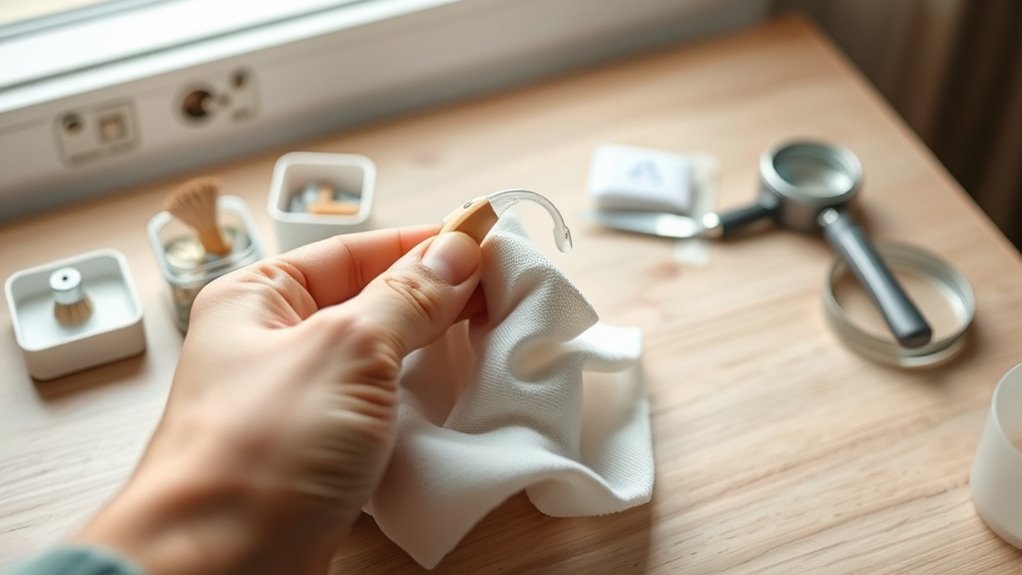

To keep your loved one’s hearing aids working well, clean them daily with a soft, dry cloth and use a small brush or wax pick to remove wax from sound outlets. Make certain the batteries are fresh, properly seated, and stored in a cool, dry place. Insert the device gently into the ear, making sure it fits comfortably and securely. For detailed tips and troubleshooting, continue exploring helpful steps to maintain ideal hearing aid performance.
Key Takeaways
- Clean hearing aids daily with a soft, dry cloth and use a small brush or wax pick to remove wax from sound outlets and microphones.
- Open the battery compartment at night to let moisture escape and check batteries for proper placement and power.
- Use fresh, properly seated batteries and store spares in a cool, dry place; replace batteries if sound quality declines.
- Wash hands before handling, gently insert the hearing aid into the ear canal, and ensure tips or domes are secure and free of debris.
- Regularly inspect and clean the device, removing wax or debris to prevent malfunctions and prolong device lifespan.
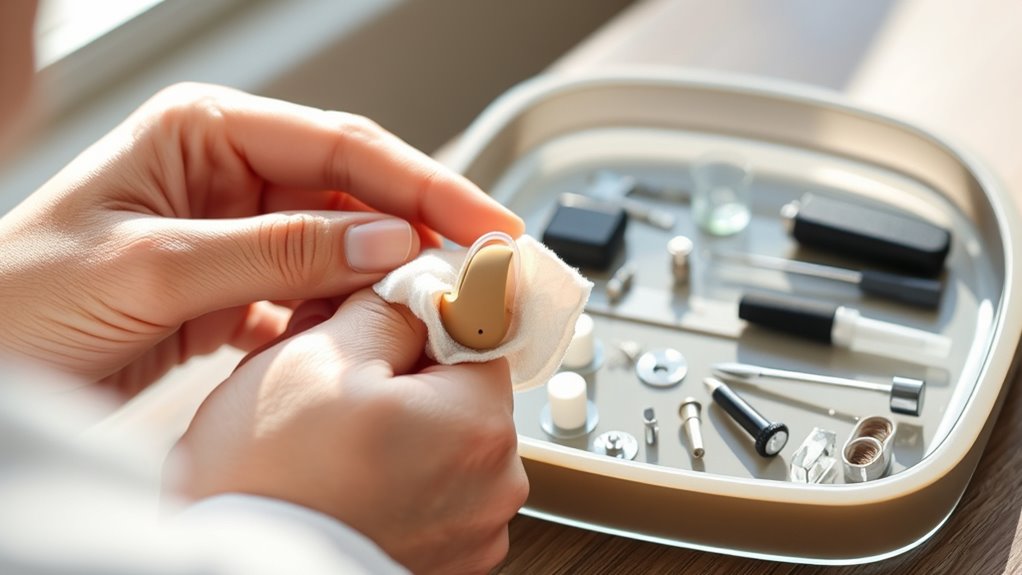
Proper cleaning, maintenance, and insertion are vital to guarantee your hearing aids function effectively and last longer. By taking good care of them, you ensure consistent performance and help maximize battery life. When it comes to battery life, you want to be proactive. Make sure to open the battery compartment at night to allow moisture to escape, which can drain batteries faster. Keep spare batteries handy so you’re never caught off guard, and always store them in a cool, dry place. Using fresh batteries is essential because old or weak ones can cause the device to malfunction or produce poor sound quality. If your hearing aids seem to be losing power prematurely, it might be time to troubleshoot. Check if the batteries are properly seated, as a loose connection can cause issues. Also, inspect the device for any wax buildup or debris that might be blocking the sound outlet, which can impair performance and drain batteries more quickly. If you notice static, crackling, or intermittent sound, replacing the batteries is the first step, but also clean the device thoroughly using a soft cloth and a small brush to remove dirt or earwax. Regularly inspecting and cleaning your hearing aids helps prevent problems and extends their lifespan. Maintaining your devices properly can also help prevent the accumulation of debris that can lead to malfunctions. When it’s time to insert your hearing aids, do so gently and correctly. Hold the device with your fingers, and carefully insert the tip into your ear canal, making sure it’s snug but not forcing it. Proper insertion minimizes discomfort and guarantees ideal sound delivery. Before inserting, wash your hands to avoid transferring dirt or oils that can damage the device or introduce bacteria. If your hearing aids have domes or tips, check that they’re secure and free of wax or debris. If the device feels uncomfortable or doesn’t fit properly, don’t force it—recheck the placement or consult your audiologist for proper fitting. Regularly cleaning your hearing aids is equally important; use a soft, dry cloth to wipe down the device, and avoid using water or harsh chemicals. For deeper cleaning, use a small brush or wax pick to clear out any earwax from the sound outlet or microphone openings. Be cautious not to damage the delicate components. Proper maintenance and insertion not only improve sound quality but also reduce the likelihood of repairs and prolong your device’s life. Remember, a little effort daily can make a significant difference in your hearing health and device performance.
Frequently Asked Questions
How Often Should Hearing Aids Be Professionally Checked?
You should have your loved one’s hearing aids professionally checked at least once every six months. Regular check-ups ensure the latest hearing aid technology functions properly and that hearing aid accessories, like batteries and domes, are working smoothly. Frequent professional visits help catch issues early, maintaining ideal sound quality and comfort. Staying consistent with these appointments keeps hearing aids performing their best and enhances your loved one’s hearing experience.
Can I Wear Hearing Aids While Exercising?
They say “safety first,” so yes, you can wear hearing aids while exercising, but consider exercise safety and sweat management. Opt for a secure fit and avoid high-impact activities that might jar or dislodge them. Use sweat guards or keep your hearing aids dry with sweat-resistant covers. Remember, staying active is great, but protecting your hearing aids guarantees they last longer and work effectively during your workouts.
Are There Specific Cleaning Products to Avoid?
You should avoid cleaning solutions with harsh chemicals, as they can damage your loved one’s hearing aids. Stick to manufacturer-recommended cleaning products or gentle, alcohol-free wipes. Harsh chemicals, like bleach or strong solvents, can harm the delicate electronics and materials. Always read labels carefully and consult the audiologist if you’re unsure about a cleaning product, ensuring the hearing aids stay in good condition and function properly.
What Should I Do if My Hearing Aid Stops Working?
Imagine your hearing aid suddenly stops, like a silent movie scene. First, check the battery—try replacing it with a fresh one, as dead batteries are common. Then, use troubleshooting tips like cleaning the device and inspecting for earwax blockages. If it still doesn’t work, consult your audiologist. Regular maintenance and timely battery replacements keep your hearing aid functioning smoothly, ensuring you don’t miss a moment.
How Can I Prevent Ear Infections From Hearing Aids?
To prevent ear infections from hearing aids, focus on good hearing aid hygiene and ear infection prevention. Always clean your loved one’s hearing aids daily with a soft, dry cloth and avoid exposing them to moisture. Keep ears dry and avoid inserting them with dirty hands. Regularly check and clean the ear canal, and schedule routine audiologist visits to guarantee both hearing aid hygiene and ear health are maintained.
Conclusion
Now that you know how to clean, maintain, and insert your loved one’s hearing aids, you’re well-equipped to keep them in tip-top shape. Think of it as your personal quest, much like a noble knight tending to their trusty steed. With a little care, those tiny devices will serve your loved one faithfully, helping them stay connected and sound minds sharp. Remember, a bit of effort today guarantees clear hearing for many tomorrows.