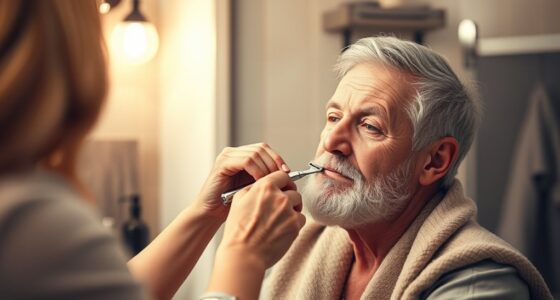
To soothe your senior’s sore muscles and aching joints safely, focus on gentle, deliberate strokes using your fingertips or palms. Target key pressure points and avoid deep pressure, especially on sensitive skin. Incorporate slow, rhythmic movements and circular motions around joints like knees and wrists to promote circulation and reduce stiffness. Always prioritize their comfort and adjust techniques as needed. Continue exploring these safe methods to provide them gentle relief and relaxation.
Key Takeaways
- Use gentle, deliberate strokes along shoulders, neck, and back to ease muscle tension safely.
- Target specific pressure points with light pressure to activate natural pain relief mechanisms.
- Incorporate slow, rhythmic movements and circular strokes around joints to promote relaxation and reduce stiffness.
- Focus on areas prone to swelling with gentle kneading and feather-light strokes to improve circulation.
- Always prioritize comfort, adjust pressure as needed, and communicate to ensure a safe, soothing massage experience.
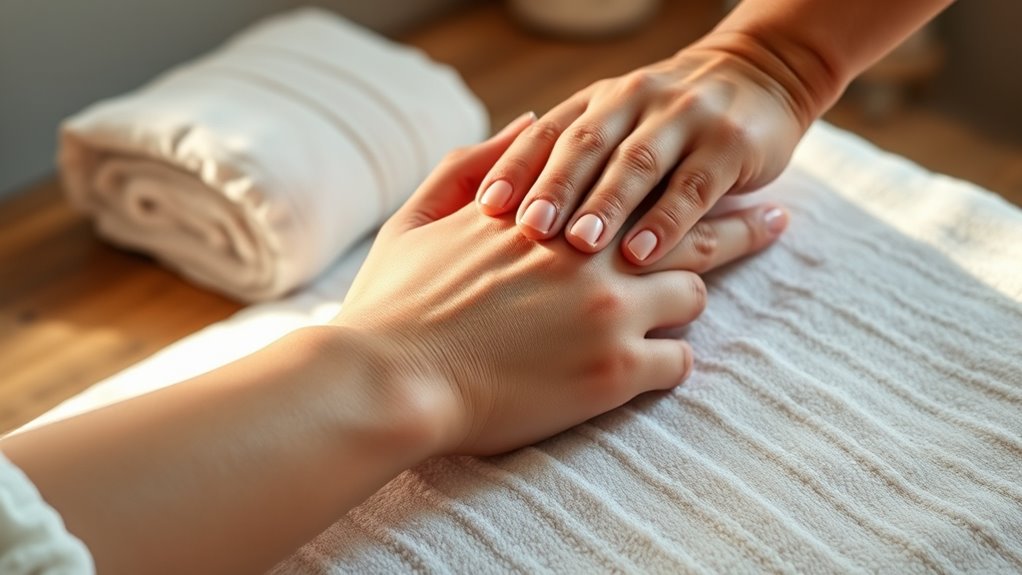
Massage techniques tailored for seniors can substantially improve their comfort, mobility, and overall well-being. When you focus on gentle touch and precise pressure points, you create a soothing experience that eases muscle tension and alleviates joint pain. Seniors often have fragile skin and sensitive areas, so using a gentle touch is essential. Applying soft, deliberate strokes helps prevent discomfort while still delivering effective relief. By targeting specific pressure points, you can activate the body’s natural pain relief mechanisms, reducing stiffness and promoting relaxation.
Start by encouraging your senior loved one to sit or lie in a comfortable position. Use your fingertips or palms to apply light pressure along key areas such as the shoulders, neck, and back. These zones are rich in nerve endings and tend to hold tension. As you gently press along these pressure points, focus on areas where muscles feel tight or sore. For example, pressing gently on the base of the skull or along the shoulders can help release built-up tension. Remember, the goal isn’t to force or deepen pressure but to find a comfortable, soothing pressure that encourages relaxation and blood flow.
Incorporate slow, rhythmic movements to enhance the calming effect. Circular motions around joints like the knees or wrists can reduce stiffness and improve flexibility. When working on the legs, use your thumbs to apply gentle pressure along the calves and thighs, paying attention to areas that feel particularly tender. Be mindful of the senior’s responses—if they wince or show discomfort, ease up and adjust your technique. Communication is key; ask if the pressure feels comfortable and remember that less is often more when it comes to seniors.
You can also utilize techniques like finger kneading or feather-light strokes to promote circulation and reduce swelling. These methods help lymphatic flow, which can be especially beneficial for seniors with swelling or edema. Incorporate gentle stretches if appropriate, but avoid forcing any movement that causes pain. Always prioritize their comfort and adapt your pressure and techniques accordingly.
Frequently Asked Questions
Are There Any Massage Techniques Unsuitable for Seniors?
Yes, some massage techniques aren’t suitable for seniors, especially deep tissue massages that apply too much pressure on delicate areas or pressure points. You should avoid vigorous or aggressive strokes, as they can cause discomfort or harm. Instead, focus on gentle, relaxing techniques that respect your senior’s comfort level. Always consult a healthcare professional before trying new methods, ensuring safety and effectiveness for their specific needs.
How Often Should Seniors Receive Massages?
You should schedule massages for your senior about once every 1-2 weeks, balancing massage benefits with potential massage risks. Regular sessions can help ease sore muscles and improve joint flexibility, but overdoing it might cause discomfort or fatigue. By sticking to this frequency, you give your loved one ongoing relaxation and pain relief while minimizing risks, ensuring they enjoy the full benefits of massage safely.
Can Seniors With Chronic Illnesses Safely Get Massages?
Yes, seniors with chronic illnesses can safely get massages if they consult their healthcare provider first. It’s a valuable alternative therapy that can help ease pain and improve mobility. Be aware of massage contraindications, like areas of inflammation or blood clots. Always choose a qualified massage therapist experienced with seniors, and communicate openly about health conditions to guarantee safe, effective treatment tailored to their needs.
What Should Seniors Do Before a Massage Session?
Think of pre-massage preparation as setting the stage for a soothing symphony. You should arrive well-hydrated, wear comfortable clothing, and communicate any aches or concerns. Practice relaxation techniques like deep breathing or gentle stretching beforehand to calm your mind and muscles. This helps your body relax fully, allowing the massage to work its magic more effectively. Preparing with care guarantees your session feels like a peaceful escape rather than a rushed appointment.
How Can Family Members Assist With Massage Treatments?
You can assist with massage treatments by maintaining open family communication, ensuring your senior feels comfortable and informed. Offer emotional support before, during, and after the session to boost their confidence and relaxation. Help set up the space, gather supplies, and gently encourage them to communicate their preferences. Your involvement shows care, making the massage a positive, soothing experience that promotes better muscle relief and emotional well-being.
Conclusion
By embracing gentle massage techniques, you become a guiding hand through your senior’s comfort journey, turning their aches into whispers of relief. Like a soothing balm on a weary soul, your touch can transform pain into tranquility, nurturing their body and spirit alike. Remember, your caring touch is a delicate symphony of compassion and skill, opening a haven of serenity where soreness dissolves like mist at dawn. With each gentle stroke, you craft a sanctuary of healing and warmth.