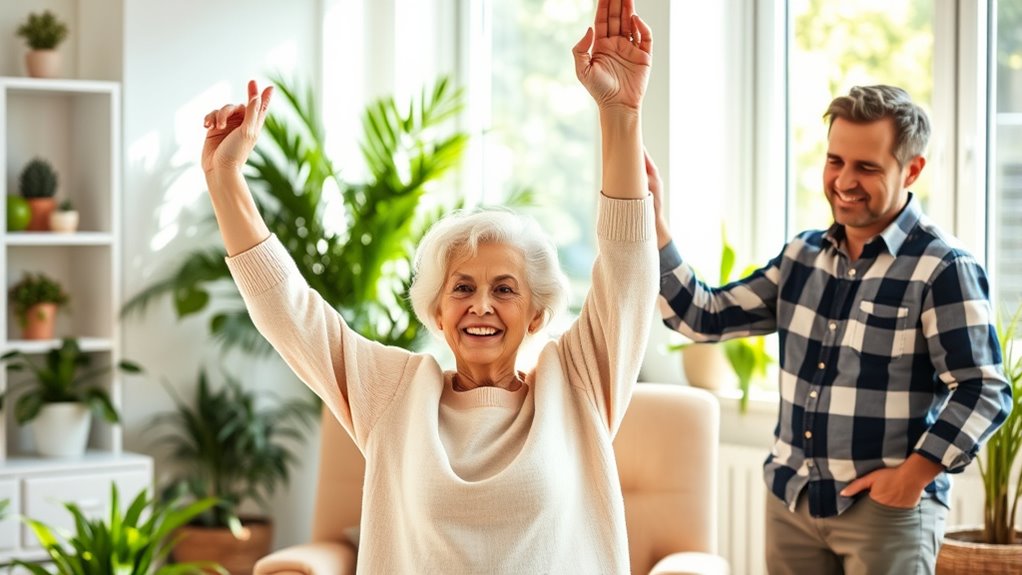

To keep your elderly parent active at home, try gentle exercises like wall snow angels for flexibility and balance, slow head turns to improve neck mobility, standing on one foot for stability, and slow walking for cardiovascular health. You can also include hand stretches for dexterity and chair sits to strengthen legs and core. Incorporating these simple activities into daily routines helps boost overall well-being—exploring each step further can make a real difference.
Key Takeaways
- Incorporate simple chair-based exercises like sit-to-stand and leg lifts to improve strength and mobility safely at home.
- Use wall snow angels and gentle neck turns to enhance flexibility and balance with minimal risk.
- Practice balance activities such as single foot stands to reduce fall risk and boost stability.
- Include hand stretching and controlled movements to maintain dexterity and reduce stiffness.
- Establish a regular routine and create a safe, obstacle-free environment to encourage consistent, enjoyable activity.
Wall Snow Angels to Boost Flexibility and Balance
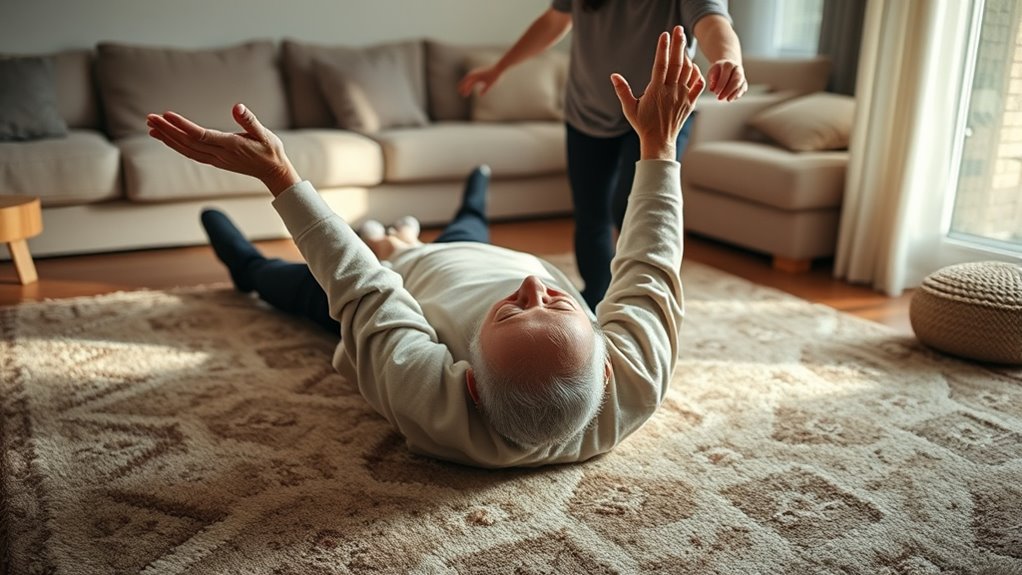
Have you ever thought about how simple movements can improve your flexibility and balance? Wall Snow Angels are a gentle exercise that helps achieve this. Stand about three inches from a wall, with your head and lower back pressed gently against it. Keep your hands at your sides with palms facing outward. Slowly raise your arms above your head, mimicking a snow angel motion, then lower them back down. This movement stretches your shoulders and chest while engaging your arms. Doing 5 to 10 repetitions can boost both flexibility and arm strength. It’s safe for seniors with limited mobility and easy to incorporate into daily routines. Incorporating correct exercise techniques can enhance safety and effectiveness. This exercise also promotes better posture and balance, making daily activities easier and safer. Additionally, understanding water chemistry principles can help maintain a safe environment if you have a pool at home. Regularly monitoring water quality ensures the water remains healthy and inviting. Paying attention to proper hydration during exercise can prevent dehydration and support overall health. Being mindful of exercise safety tips can further reduce the risk of injury during gentle workouts.
Gentle Head Turns for Neck Mobility
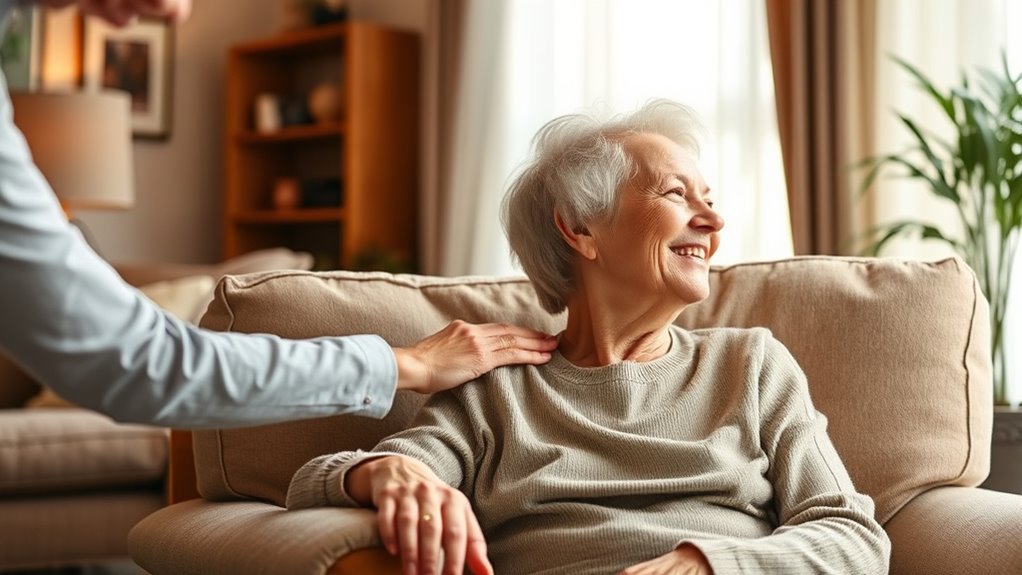
Gentle head turns are a simple way to improve neck flexibility safely. Using slow, controlled rotation techniques helps prevent strain and discomfort. Remember to keep movements smooth and stop if any pain or light discomfort occurs. Incorporating proper technique ensures the exercises are both effective and safe for your elderly parent. Additionally, consistent practice can contribute to better neck mobility over time. Staying mindful of joint health can also enhance overall benefits from these gentle exercises. To further support your efforts, maintaining a methodical approach can help you track progress and adjust activities as needed. Being aware of age-related changes can guide you in tailoring exercises to suit your parent’s comfort level.
Gentle Rotation Techniques
Neck mobility is essential for daily comfort and safety, especially as you age. Gentle rotation techniques help maintain this mobility and reduce stiffness. Sit comfortably with your back straight, and gently turn your head to one side until you feel a light stretch. Hold the position for a few seconds, then slowly return to the center. Repeat on the other side. Keep movements slow and controlled to avoid strain. You can also combine head turns with slight chin tucks to stretch the neck muscles further. This exercise can be done multiple times a day, promoting flexibility and easing discomfort. Remember, never force the movement—only turn as far as feels comfortable. These gentle rotations help keep the neck limber and improve overall mobility. Incorporating regular gentle exercises like these can also support joint health, making daily movement easier and reducing stiffness. Additionally, staying consistent with these exercises can enhance muscle strength and prevent further stiffness over time. For added benefit, consider incorporating stretching techniques to improve overall neck flexibility and comfort.
Benefits for Neck Flexibility
Regular head turns can considerably enhance neck flexibility, helping you move more comfortably and safely throughout the day. This simple exercise gently stretches neck muscles, reducing stiffness and improving range of motion. As your neck becomes more flexible, you’ll notice easier turning and less discomfort when turning your head to check your surroundings. Increased mobility also helps prevent common issues like tension headaches and neck pain caused by stiffness or poor posture. Performing these gentle turns regularly keeps your neck muscles active and resilient, promoting better posture and reducing the risk of strain. Incorporating proper stretching techniques into your routine can further optimize neck health. Additionally, using essential oils such as lavender oil may help relax tense muscles during your stretching routine. Regular practice supports neck muscle flexibility, which is essential for maintaining overall head and shoulder mobility, making daily tasks easier and enhancing your quality of life.
Safety Tips for Practice
To practice head turns safely, start by sitting or standing in a stable position where you feel balanced and secure. Make certain your back is straight and your feet are flat on the ground. Move slowly and gently, avoiding any quick or jerky motions. If your parent feels discomfort or pain, stop immediately. Use a mirror or provide gentle guidance to help maintain proper form. Keep the movements smooth and controlled, holding each position for a few seconds without forcing the stretch. Verify the environment is free of obstacles to prevent falls. Encourage your parent to communicate any discomfort throughout the exercise. Always start with a few repetitions and gradually increase as comfort and mobility improve. Safety comes first to prevent injuries. Additionally, being aware of water quality can support overall health and well-being during exercise routines. Incorporating proper exercise techniques can further enhance safety and effectiveness. Paying attention to fabric decorating markers can also help in creating a comfortable and motivating environment for your parent during exercises. Being mindful of precious metal investments can also help in planning a secure retirement, just as careful exercise ensures safety. Moreover, understanding proper hydration is essential to maintain energy levels and prevent dehydration during physical activity.
Single Foot Stand to Enhance Stability
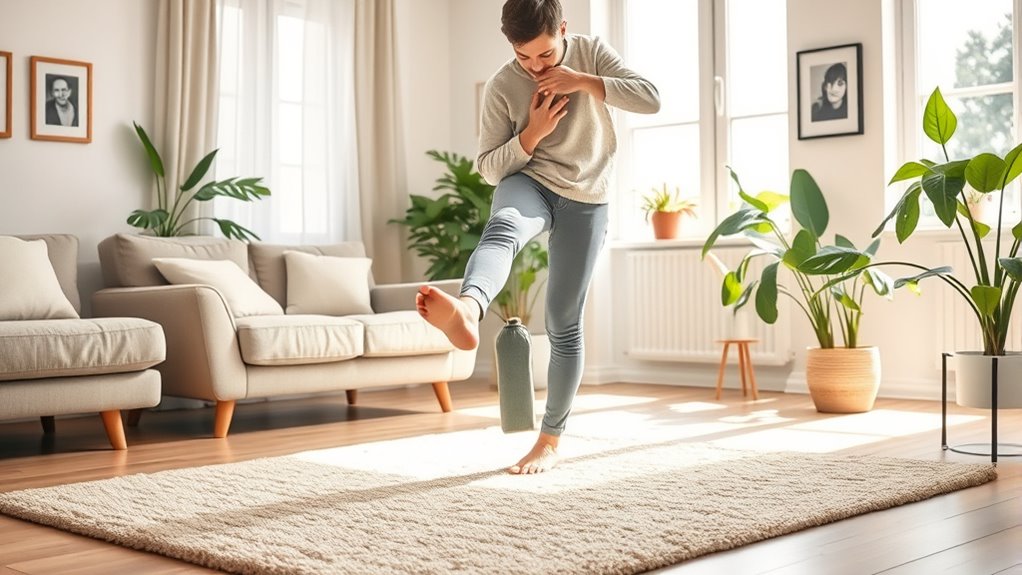
Standing on one foot is a simple yet effective exercise to boost your balance and stability. To get started, find a sturdy chair and hold onto the back for support. Lift one foot behind you, keeping your other foot flat on the ground. Hold this position for up to 15 seconds, then switch sides. Focus on maintaining steady breathing and engaging your core muscles to stay balanced. This exercise helps improve your stability, reduces fall risk, and strengthens your leg muscles. If lifting the foot is challenging, try swaying gently or lightly touching a wall for extra support. Incorporating sustainability practices into your routine can also encourage safe and enjoyable activity options for your elderly parent. Aim for 3 to 5 repetitions per foot. Remember to perform this exercise in a safe space, and stop if you feel dizzy or unsteady.
Slow Walking for Cardiovascular and Leg Strength
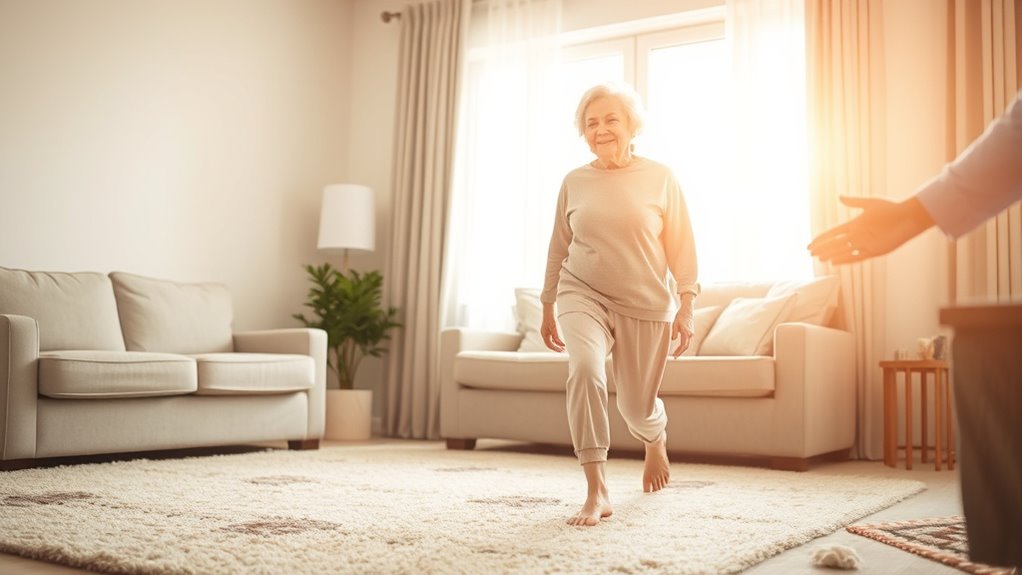
Taking a few slow walks each day can do wonders for your heart health and leg strength. It’s a gentle way to boost endurance without overexerting yourself. Plus, it can lift your mood and clear your mind, making it a simple yet powerful exercise.
Enhances Heart Health
Engaging in slow walking regularly can considerably boost your heart health and strengthen your legs. This gentle activity gets the blood pumping, improving circulation and reducing the risk of cardiovascular issues. As you walk at a comfortable pace, your heart becomes more efficient, and your overall stamina increases. Slow walking also helps lower blood pressure and cholesterol levels, supporting long-term heart health. Plus, it strengthens leg muscles, which enhances mobility and balance. You can easily incorporate this exercise into your daily routine by setting aside 10 minutes. Whether walking around the house, in the yard, or along a safe path, your elderly parent benefits from improved heart function and greater leg strength. Consistency is key to seeing lasting health benefits from this simple, accessible activity.
Boosts Leg Endurance
Slow walking is an effective way to boost your elderly parent’s leg endurance and overall cardiovascular health. By incorporating a 10-minute walk into their daily routine, they strengthen leg muscles and improve circulation. Walking at a comfortable pace helps build stamina without overexertion, making it suitable for most seniors. To keep it engaging, listen to music, chat, or watch TV while walking. Repeating this activity two to three times a day maximizes benefits. Make sure the walking area is safe and free of obstacles. As their endurance improves, you can gradually increase the duration or pace. This simple exercise not only enhances leg strength but also promotes heart health and boosts energy levels, supporting their independence and mobility.
Promotes Mental Wellbeing
Walking at a gentle pace not only strengthens your elderly parent’s legs but also enhances their mental wellbeing. Regular slow walks boost circulation, delivering oxygen and nutrients to the brain, which can improve mood and reduce feelings of depression. The rhythm of walking, especially when done outdoors or with music, can serve as a calming activity, easing stress and anxiety. It also provides a chance for your parent to engage with their environment, sparking memories and encouraging mindfulness. Sharing walking sessions together can foster social connection, further supporting emotional health. Even brief daily walks help establish a routine, giving your parent a sense of accomplishment. Overall, gentle walking is a simple yet effective way to uplift their mental state while maintaining physical health.
Hand Stretching to Improve Dexterity

Hand stretching exercises are simple yet effective ways to enhance dexterity and maintain hand function as you age. To start, spread your fingers as wide as possible, then make a fist. Repeat this stretching and squeezing motion 10–15 times to boost joint mobility and blood flow. These exercises help reduce stiffness and ease hand pain, especially for those with arthritis. You can do them while seated or standing, making them easy to incorporate into daily routines. Focus on slow, controlled movements to maximize benefits. Regular practice keeps your hands flexible, improves grip strength, and supports everyday tasks like writing, buttoning, or holding objects. Consistency is key to maintaining hand dexterity and preventing decline over time.
Chair Sits for Leg and Core Strengthening
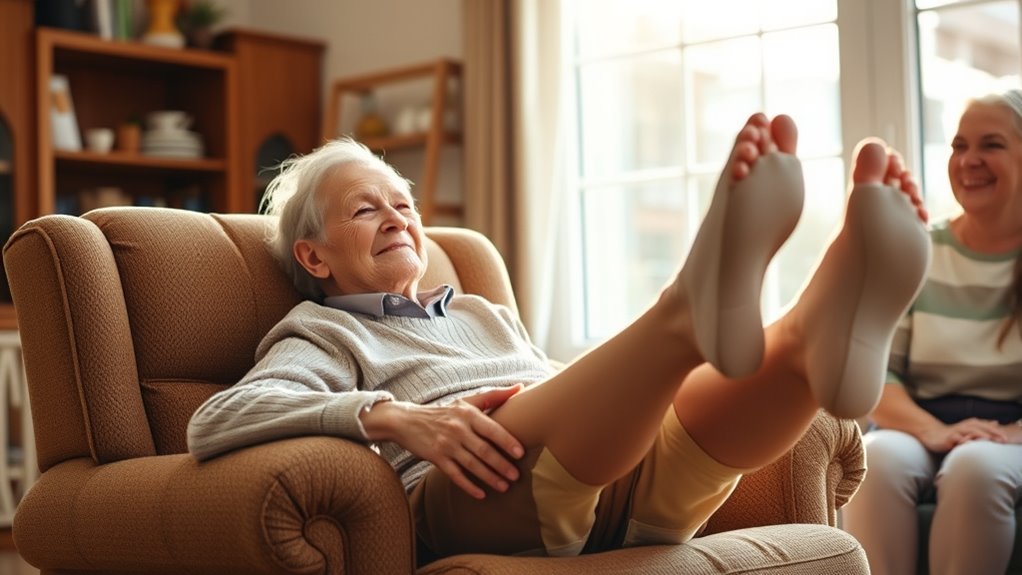
Chair sits are an effective way to strengthen your legs and core while providing stability and safety. To start, have your parent sit upright in a sturdy chair with armrests. Encourage them to stand up slowly by pushing through their heels, engaging their leg muscles and core. Then, have them sit back down deliberately, controlling the movement. Repeat this process 5–7 times, gradually increasing to 10–12 repetitions as strength improves. Doing this three times daily helps build muscle, improve mobility, and boost confidence in daily activities. Make sure the chair is stable and positioned on a flat surface. This simple exercise is safe, effective, and easily adaptable to your parent’s ability level, promoting independence and strength over time.
Incorporating These Exercises Into Daily Routine
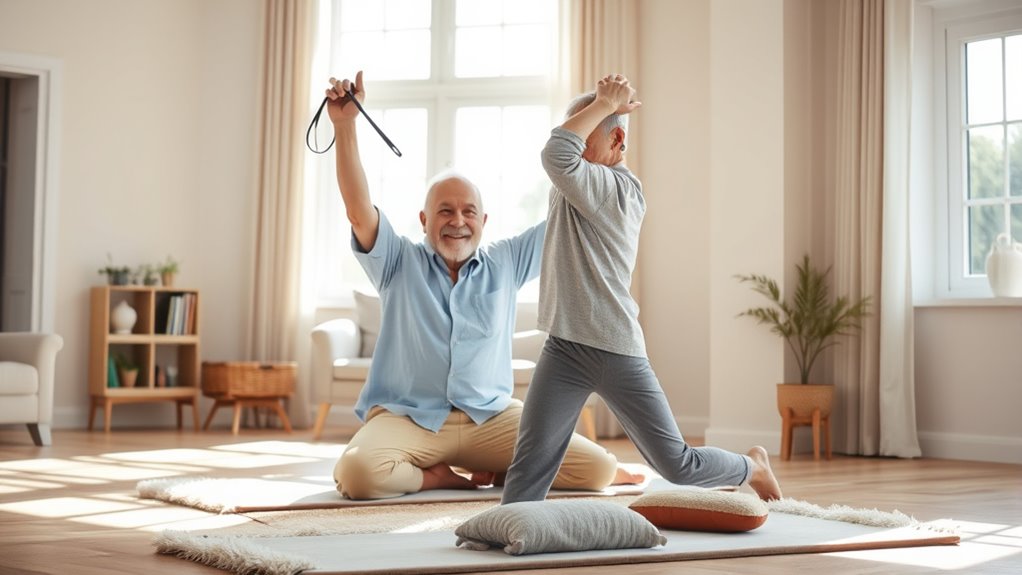
Integrating these gentle exercises into your parent’s daily routine can make consistency easier and more natural. Start by setting specific times, like morning or evening, to encourage regular practice. Incorporate exercises into everyday activities—doing wall snow angels while watching TV or hand stretches during a break. Use reminders or a simple calendar to track progress and keep motivation high. Keep sessions short—about 10 minutes—so they’re manageable and don’t feel overwhelming. Make it a family activity, encouraging your parent and involving others in the household. Consistency is key, so gradually increase repetitions or duration as strength improves. By embedding these exercises into daily habits, you help your parent build strength, flexibility, and confidence seamlessly.
Frequently Asked Questions
Can These Exercises Be Safely Done if My Parent Has Arthritis?
Yes, these exercises can be safe for your parent with arthritis if you modify them to match their comfort level. Focus on gentle movements, avoid pain, and encourage slow, controlled motions. For example, reduce the range of head turns or arm lifts, and use sturdy support during balance exercises. Always consult their healthcare provider beforehand, and watch for signs of discomfort to prevent overexertion or injury.
How Do I Modify Exercises for Seniors With Limited Mobility?
Think of exercise as a gentle dance, not a sprint. To modify for limited mobility, slow down movements, support joints with cushions, or use a chair for stability. Reduce range of motion and repetitions, focusing on comfort. Incorporate seated options like hand stretches or slow walks around the house. Always listen to your parent’s cues, and consult a healthcare professional for personalized adjustments. This way, exercise becomes a safe, nurturing rhythm.
Are There Any Signs to Stop Exercising Immediately?
If you notice sudden chest pain, severe dizziness, shortness of breath, or persistent pain during exercise, stop immediately. Also, if your parent experiences weakness, nausea, or palpitations, it’s time to pause. These signs indicate that exercise might be causing harm. Always prioritize safety, and consult a healthcare professional if you’re unsure or if symptoms persist. Never push through severe discomfort or warning signs.
How Often Should These Exercises Be Incorporated Weekly?
You should aim to weave these exercises into your weekly routine like a steady, comforting rhythm—about 3 to 5 times a week. Think of it as planting seeds for stronger muscles and better balance, nurturing them with gentle consistency. Keep sessions short and enjoyable, listening to your parent’s cues. This steady dance of movement helps build resilience and keeps aging at bay, one gentle step at a time.
Can These Exercises Help Prevent Falls in Seniors?
Yes, these exercises can help prevent falls in seniors by improving balance, strength, and flexibility. Wall snow angels and head turns boost mobility, while single foot stands and chair sits enhance stability and leg strength. Slow walks promote cardiovascular health and coordination. Regular practice reduces fall risks by strengthening muscles and increasing awareness of movement, making your parent safer and more confident in daily activities.
Conclusion
By gently guiding your parent through these exercises, you become the steady anchor in their daily journey. Each movement is a brick, building a foundation of strength and confidence. Just like a lighthouse standing firm against the waves, your support helps them navigate life’s changes with grace. Keep these simple routines close, and watch as their independence shines brightly—proof that small steps can light the way to a healthier, more vibrant tomorrow.