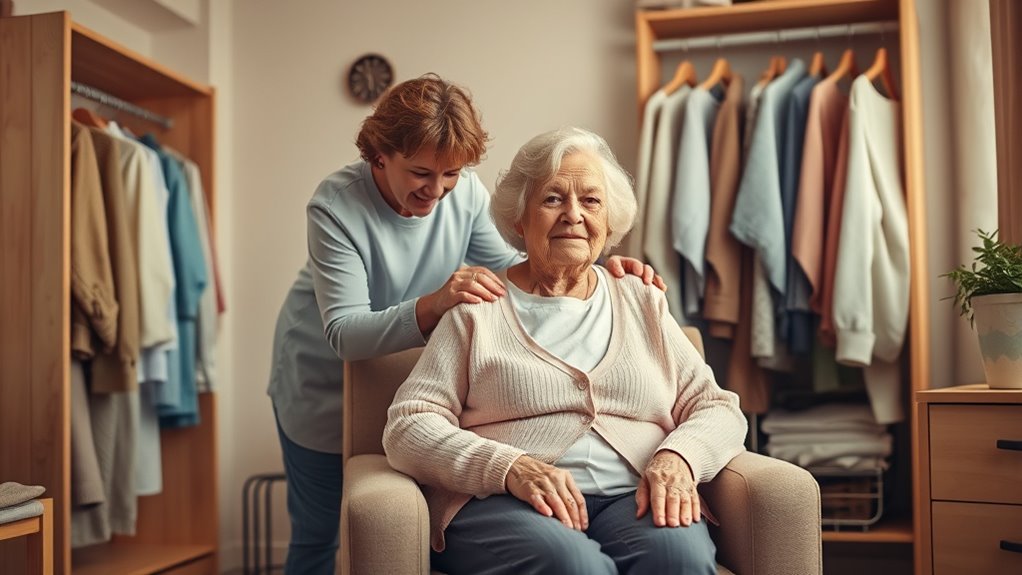

Helping your senior loved one get dressed without stress involves creating a safe, organized environment, choosing adaptive clothing with simple fasteners, and using assistive devices like sock aids and dressing sticks. Support their hand strength and mobility through gentle exercises and daily activities. Foster patience and positivity, ensuring good lighting and clutter-free spaces to prevent falls. By implementing these strategies, you’ll make dressing easier and more confident—learn more tips to simplify routines and promote independence.
Key Takeaways
- Use adaptive clothing with simple fasteners like Velcro, magnetic closures, or elastic waistbands to ease dressing.
- Create a safe, clutter-free environment with good lighting and safety aids to prevent falls and confusion.
- Incorporate assistive devices such as sock aids, dressing sticks, and shoe horns to support independence.
- Support hand strength and mobility through daily exercises and activities like gardening and folding laundry.
- Practice patience, positive reinforcement, and utilize visual cues to boost confidence and reduce stress during dressing.
Understanding Common Dressing Challenges for Seniors

Understanding the common dressing challenges faced by seniors is essential for providing effective support. As you help your loved one, you’ll notice physical issues like reduced hand strength, arthritis, and limited mobility that make dressing difficult. Cognitive decline can also interfere with remembering the sequence of steps, causing frustration. Frailty may cause balance problems, making bending or reaching unsafe. Without proper assistance or adaptive techniques, dressing can become a stressful experience. Many seniors struggle with fastening buttons, zippers, or managing complicated clothing designs. Incorporating adaptive clothing designed specifically for seniors can significantly ease dressing difficulties by simplifying fasteners and closures. These specially designed garments often feature easy-to-use fasteners that reduce the need for fine motor skills. Recognizing these challenges helps you find suitable solutions, from using assistive devices to offering gentle guidance. Addressing these common issues ensures dressing becomes a safer, less stressful routine, promoting independence and dignity for your loved one.
Creating a Comfortable and Supportive Dressing Environment

Creating a comfortable and supportive dressing environment can make a significant difference in reducing stress and increasing independence for seniors. Start by organizing clothes in a consistent, easy-to-access spot, reducing confusion and frustration. Make certain the space is well-lit, so visibility is clear and accidents are less likely. Remove clutter and obstacles that could cause falls or make dressing difficult. Use grab bars, stable chairs, and non-slip mats to enhance safety. Keep necessary clothing within easy reach, avoiding long-reaching or bending. Maintain a calm, quiet atmosphere to help your loved one feel relaxed. Offering gentle encouragement and patience creates a positive experience. A thoughtfully arranged environment minimizes physical and cognitive challenges, making dressing a more manageable and less stressful routine. Additionally, proper organization can help streamline the dressing process, further reducing frustration and promoting independence. Incorporating adaptive dressing aids can also support seniors in dressing more independently and comfortably. Understanding the horsepower of electric dirt bikes can inspire creative ways to keep seniors active and engaged in outdoor activities, promoting overall well-being. Being mindful of ear wax odor and other health-related odors may also help in creating a healthier environment that can contribute to your loved one’s comfort.
Choosing Adaptive Clothing and Easy-Fastening Options

Choosing adaptive clothing and easy-fastening options can considerably simplify dressing routines for seniors with mobility or dexterity challenges. Look for garments with Velcro, magnetic closures, or large, easy-to-grasp buttons to reduce the effort needed to dress. Elastic waistbands and pull-on styles eliminate the need for complicated fasteners or bending. Avoid stiff fabrics that can be hard to manipulate; instead, opt for soft, stretchy materials. Consider clothing designed specifically for ease of dressing, like slip-on shoes and adaptive shirts. These options help seniors dress more independently, reduce frustration, and save time. When selecting clothing, prioritize comfort, accessibility, and durability to ensure your loved one feels confident and supported during dressing. Additionally, clothing design that emphasizes simplicity and ease of use can further enhance independence and comfort. Incorporating adaptive features into clothing can further support seniors’ needs and foster greater confidence in dressing routines.
Incorporating Assistive Devices to Simplify Dressing
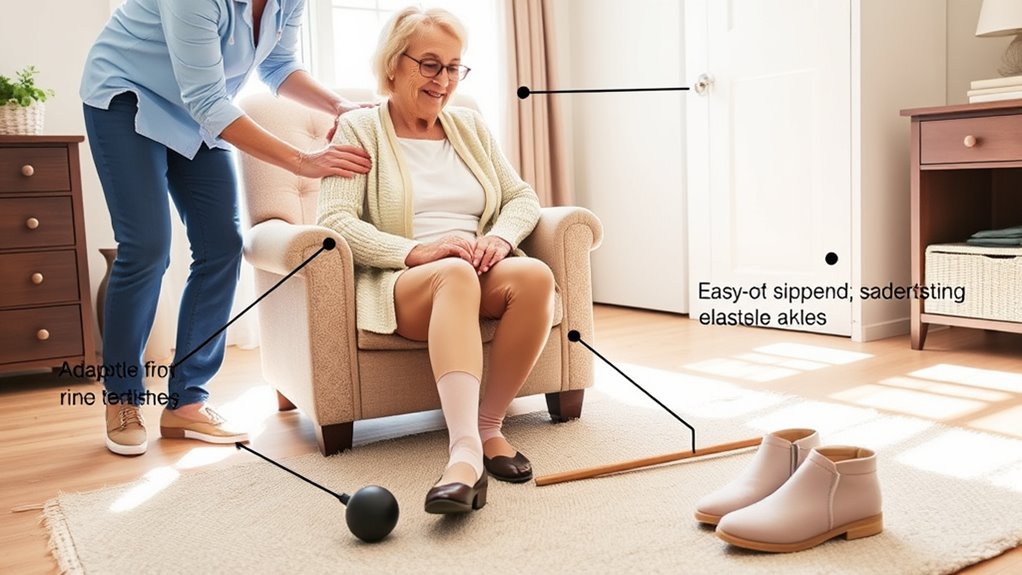
Incorporating assistive devices into dressing routines can considerably reduce the effort and frustration for seniors with limited mobility or dexterity. Using tools like sock aids makes putting on socks easier by holding them open, eliminating the need to bend or reach. Dressing sticks with hooks help pull shirts or pants over the head or legs, streamlining the process. Reachers assist in grasping clothing or buttons out of reach, reducing strain. Shoe horns help slide feet into shoes without bending over, decreasing balance risks. Adaptive clothing with Velcro closures or elastic waistbands simplifies fastenings. Additionally, projector technology offers insights into ergonomic and accessible design, which can be applied to creating more inclusive clothing options. Research in auditory processing underscores the importance of tailored interventions that can also support seniors in managing sensory sensitivities related to dressing environments. Incorporating ergonomic design principles can further enhance clothing options for easier dressing. Using assistive devices properly not only promotes independence but also ensures safety during dressing routines. By selecting and properly using these devices, you help your loved one dress more independently, boost their confidence, and make daily routines less stressful for everyone involved.
Strategies for Supporting Hand Strength and Mobility
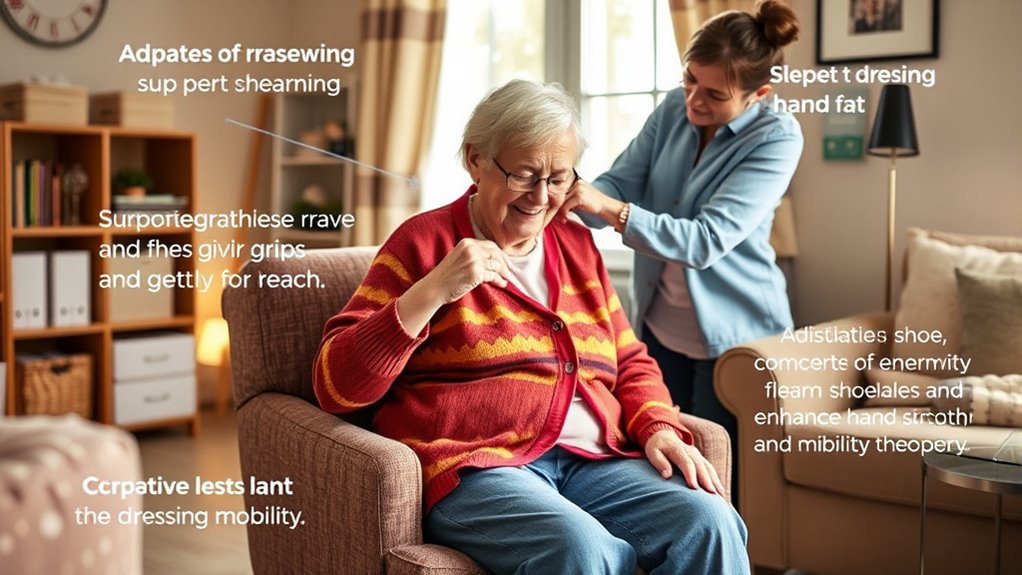
To support hand strength and mobility in seniors, engaging in targeted exercises and daily activities can make a significant difference. Encourage your loved one to do gentle hand stretches, like squeezing a soft ball or using grip-strengthening tools. Simple activities such as gardening, cooking, or folding laundry also promote dexterity and coordination. Incorporate finger-tapping exercises or finger-to-thumb movements to improve fine motor skills. Regular movement helps maintain joint flexibility and reduces stiffness, making dressing easier. Remind them to take breaks during activities to prevent fatigue. Using assistive devices, like grip aids or textured tools, can enhance their ability to grasp and manipulate clothing. Supporting these habits helps preserve hand function and boosts confidence during dressing routines.
Using Visual Cues and Routine to Reduce Confusion

Using visual cues and routines can help you or your loved one stay organized and reduce confusion during dressing. Consistent daily reminders and clear, step-by-step guides make it easier to follow each task without frustration. These strategies support independence and build confidence over time. Incorporating socialization techniques and familiar cues can further enhance comfort and ease during the dressing process.
Consistent Daily Reminders
Consistent daily routines and visual cues can substantially reduce confusion for seniors, making dressing easier and safer. By sticking to the same schedule each day, you help your loved one anticipate what comes next, reducing anxiety and indecision. Use simple visual prompts, like placing clothes in the same order or setting out outfits the night before. Label drawers and shelves with clear pictures or words to guide them. Reinforcing routines with familiar cues minimizes cognitive load and promotes independence. When routines become predictable, seniors feel more confident and less frustrated during dressing. Implementing simple systems can further enhance organization and ease daily transitions. Additionally, incorporating consistent routines can help maintain a sense of normalcy and stability, especially for those experiencing memory challenges.
Visual Step-by-Step Guides
Visual step-by-step guides can considerably reduce confusion during dressing by providing clear and simple cues. You can create these guides using pictures or diagrams that illustrate each step of the dressing process. For example, show a picture of putting on a shirt, then another of buttoning it up. Place these visuals in a consistent order on a visual chart or label clothing with simple images. This helps your loved one follow routines without needing to remember every step mentally. Using visual cues makes dressing feel less overwhelming and boosts confidence. Keep the guides straightforward, with large images and minimal text. Regularly reviewing these visuals can reinforce routines, making dressing smoother and less stressful for your senior loved one. Incorporating smart appliances or connected tools can further support independence by automating or simplifying certain dressing tasks. Additionally, employing visual memory aids tailored to their needs can enhance recognition and recall during dressing routines.
Engaging Family and Caregivers in Dressing Assistance
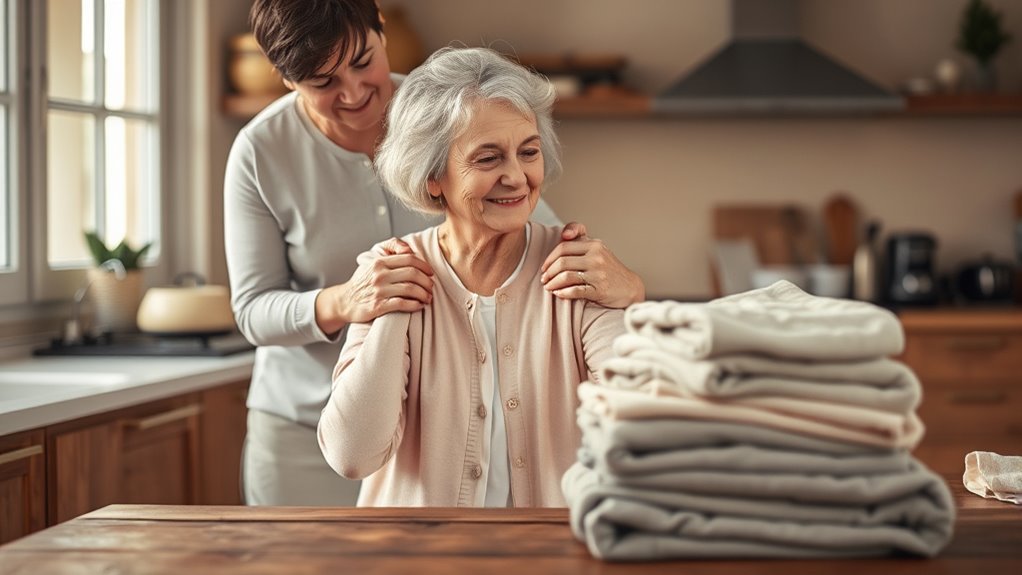
Getting family involved can make dressing routines smoother and less stressful for your loved one. You can provide caregivers with training to make sure they offer effective and respectful assistance. When everyone knows what to do, dressing becomes safer and more comfortable for seniors. Incorporating Rhythm Failure techniques can also help caregivers develop a more relaxed and confident approach to assisting with dressing. Understanding water quality and its impact can also improve the overall comfort and safety during dressing routines, especially if your loved one has skin sensitivities or allergies. Being aware of skin sensitivities can help tailor the approach to dressing, making the process more comfortable. Additionally, considering electrical safety in the home can further ensure that any assistive devices or electrical equipment used in dressing routines are safe and reliable. Recognizing potential issues related to vetted wave and wind can also influence the selection of appropriate assistive devices and environmental adjustments for your loved one’s safety.
Encouraging Family Participation
Engaging family members and caregivers in dressing assistance can considerably enhance an elderly person’s independence and emotional well-being. When family participates, seniors feel supported and less isolated, which boosts confidence. To foster participation, set clear roles and encourage open communication. Offer gentle guidance, respecting their preferences, and involve them in choosing clothing and routines. Here’s a visual to illustrate how family involvement can look:
| Role | Responsibilities | Benefits |
|---|---|---|
| Family Member | Assist with selecting outfits | Builds trust and independence |
| Caregiver | Provide physical support | Ensures safety |
| Elderly Person | Make choices, express preferences | Maintains dignity |
| Supportive Environment | Create a calm, organized space | Reduces stress |
This teamwork creates a positive dressing experience, empowering your loved one. Additionally, understanding the importance of emotional well-being can further improve the overall experience for seniors. Recognizing how emotional health impacts physical activities like dressing can help caregivers offer more compassionate support.
Providing Caregiver Training
Providing caregiver training is a vital step in supporting seniors’ dressing independence. When you learn proper techniques, you can help reduce frustration and make dressing safer and more comfortable. Start by understanding your loved one’s specific challenges, such as limited mobility or cognitive issues. Practice using assistive devices like sock aids or dressing sticks together, and encourage patience and gentle guidance. Demonstrate each step clearly, and consider written or visual instructions for reinforcement. Involve your loved one in the process to promote independence when possible. Regular training ensures you’re confident in adapting techniques as their needs change. With proper education, you’ll create a supportive environment that fosters dignity, reduces stress, and helps your loved one maintain their personal care routines.
Incorporating Technology to Promote Independence

Incorporating technology into daily routines can markedly enhance seniors’ independence, especially during dressing tasks. Devices like sock aids, dressing sticks, and adaptive clothing simplify dressing, reducing frustration. Wearable health monitors provide real-time feedback, encouraging autonomy and safety. Smart home systems with voice activation or automated lights make the environment more accessible, easing movement and decision-making. These technologies promote confidence and reduce dependence on caregivers.
| Technology Type | Function | Benefit |
|---|---|---|
| Assistive Devices | Socks aids, dressing sticks, adaptive clothes | Simplify dressing, reduce effort |
| Wearable Monitors | Track health metrics in real-time | Promote safety and independence |
| Smart Home Systems | Voice commands, automated lighting | Increase accessibility |
| Reminder Apps | Timers for dressing routines | Improve consistency |
| Video Tutorials | Step-by-step dressing guidance | Enhance learning and confidence |
Safety Tips to Prevent Falls During Dressing
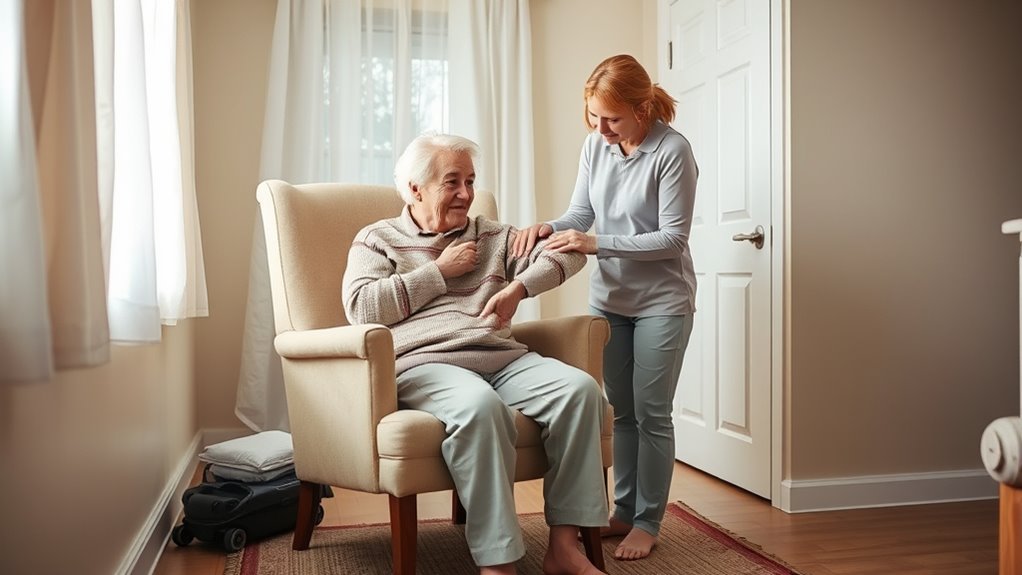
To prevent falls during dressing, make sure your walking path is clear of clutter and obstacles. Use non-slip mats on the floor and inside your shoes to increase stability. Supporting yourself with assistive devices like grab bars or walking aids can also provide extra safety.
Clear Walking Pathways
Ensuring a clear walking path is essential for preventing falls during dressing routines. Remove clutter like rugs, shoes, and cords that can cause trips. Keep walkways free of furniture or move items to the side if space is tight. Make sure the floor is dry and well-lit to prevent slips and missteps. Use nightlights or motion-activated lighting if needed, especially in bedrooms and bathrooms. Encourage your loved one to wear comfortable, non-slip footwear when moving around. Regularly check that pathways remain unobstructed, especially after activities or visitors. A tidy, well-lit, and obstacle-free environment minimizes risks, helping your loved one dress safely and confidently without fear of falling.
Use Non-Slip Mats
Using non-slip mats is a simple yet effective way to prevent falls during dressing. Place them in areas where your senior loved one stands or sits frequently, such as near the sink, dressing area, or on the bathroom floor. These mats provide extra grip, reducing the risk of slipping on wet or smooth surfaces. Make sure the mats have rubber backing or textured surfaces to stay securely in place. Regularly check for wear and tear, replacing them as needed to maintain safety. Encourage your loved one to wear slippers with non-slip soles or shoes with good traction. Creating a safer environment with non-slip mats helps your loved one dress independently and confidently, minimizing fall hazards during this vulnerable activity.
Support With Assistive Devices
Support with assistive devices can considerably reduce fall risks during dressing by enhancing stability and safety. Using tools like sock aids, dressing sticks, and reachers helps your loved one maintain balance and avoid bending or stretching awkwardly. Shoe horns make slipping into shoes easier without bending over, while adaptive clothing with Velcro or elastic waistbands simplifies dressing steps. Confirm devices are within easy reach and properly maintained to prevent accidents. Encourage your loved one to use these tools consistently for safer dressing routines. Additionally, provide guidance on how to properly handle each device to maximize its benefits. Creating a clutter-free environment and ensuring good lighting further supports safe device use. These strategies help your loved one dress more confidently and reduce the risk of falls.
Encouraging Positive Attitudes and Patience Throughout the Process
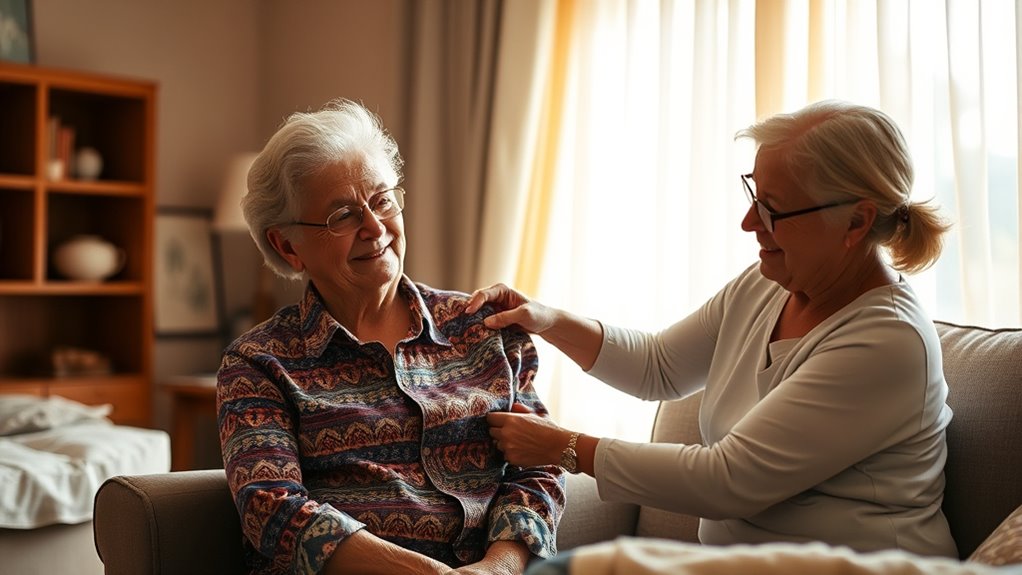
Maintaining a positive attitude and practicing patience during dressing routines can considerably boost a senior’s confidence and cooperation. When you stay calm and encouraging, it helps reduce frustration and makes the process smoother for both of you. Here are some ways to foster that positive environment:
- Speak gently and praise small successes to build confidence.
- Give clear, simple instructions to avoid confusion.
- Allow extra time, and don’t rush—patience encourages cooperation and reduces stress.
Your attitude sets the tone. When you stay patient and optimistic, your senior feels more secure and willing to participate. Remember, your calm presence can turn dressing from a stressful chore into a positive experience.
Frequently Asked Questions
How Can I Best Support My Senior Loved One’s Emotional Well-Being During Dressing?
You can support your senior loved one’s emotional well-being by being patient, encouraging independence, and offering gentle reassurance. Speak positively and avoid rushing, making dressing a calming activity rather than a frustrating chore. Celebrate small successes and listen to their feelings, showing understanding and respect. Creating a comfortable environment, maintaining routines, and involving them in decisions helps boost their confidence and makes the process less stressful.
Are There Specific Exercises to Improve Seniors’ Hand Strength for Dressing Tasks?
A stitch in time saves nine, so strengthening seniors’ hands is essential. You can encourage simple exercises like squeezing a soft ball, using hand grippers, or practicing finger stretches daily. These activities help build grip strength and dexterity, making dressing easier. Consistency is key—start slow and gradually increase repetitions. Always consult a healthcare professional for personalized exercises tailored to your loved one’s needs and abilities.
What Are Effective Ways to Adapt Dressing Routines for Seniors With Cognitive Impairments?
You can adapt dressing routines by simplifying steps, using visual cues, and establishing consistent sequences. Break tasks into small, manageable parts, and use clear, step-by-step instructions or pictures. Offer plenty of time and patience, and create a calm environment. Use adaptive clothing with Velcro or elastic features, and consider assistive devices like dressing sticks or sock aids to make dressing easier and reduce confusion or frustration.
How Do I Choose the Right Assistive Device Tailored to My Loved One’s Needs?
Think of choosing an assistive device as selecting a key to open independence. First, assess your loved one’s specific challenges—are they struggling with reaching, gripping, or fastening? Then, match their needs to tools like sock aids, dressing sticks, or adaptive clothing. Test different options together, noting what feels comfortable and easy to use. With patience, you’ll find the perfect device that turns dressing into a smoother, less stressful routine.
What Resources Are Available for Training Caregivers in Safe Dressing Assistance?
You can access training resources through local occupational therapy clinics, which often offer hands-on demonstrations and personalized guidance. Many organizations, like the Alzheimer’s Association or Area Agencies on Aging, provide caregiver workshops, online tutorials, and printed guides on safe dressing assistance. Additionally, some hospitals and community centers host classes specifically designed to teach proper techniques. These resources help you learn how to support your loved one safely and confidently.
Conclusion
By embracing patience and the right tools, you can turn dressing from a stressful chore into a moment of connection. Think of it as guiding your loved one through a dance—step by step, with care and understanding. With these tips, you’ll help your senior feel confident and safe, transforming daily dressing into a smooth, supportive routine. Together, you’ll create a comforting rhythm that makes every morning a fresh start.