To senior-proof your home and prevent falls, ensure proper lighting in all areas, including nightlights and exterior lights. Remove or secure trip hazards like loose rugs and cords, and keep walkways clear of clutter. Install safety features like grab bars in the bathroom and non-slip strips on stairs. Make sure smoke and carbon monoxide detectors work, and set your water heater to a safe temperature. Keeping emergency equipment accessible is also vital. Explore these steps further to create a safer living space.
Listen free for 30 days with Audible
Thousands of audiobooks and originals — cancel anytime.
As an affiliate, we earn on qualifying purchases.
Key Takeaways
- Improve lighting throughout the home, especially in stairways, hallways, and outdoor pathways, to enhance visibility and prevent trips.
- Secure or remove trip hazards like loose rugs, cords, and clutter to create safe walking surfaces.
- Install grab bars, non-slip mats, and handrails in bathrooms and stairways for added stability.
- Ensure emergency devices such as smoke and carbon monoxide detectors are functioning and accessible.
- Keep pathways clear, add ramps if needed, and maintain exterior lighting to facilitate safe entry and outdoor navigation.
Ensure Proper Lighting Throughout Your Home
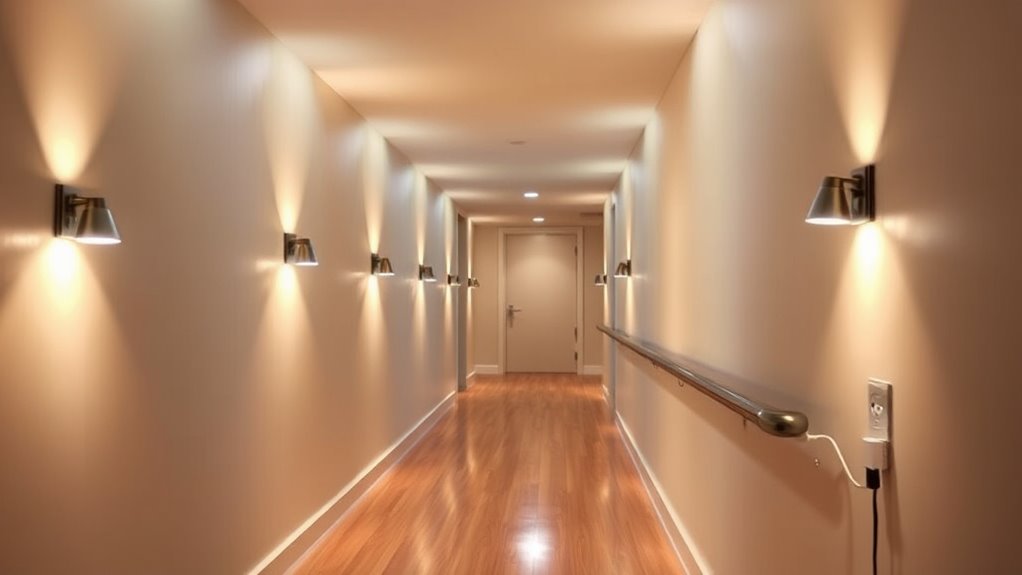
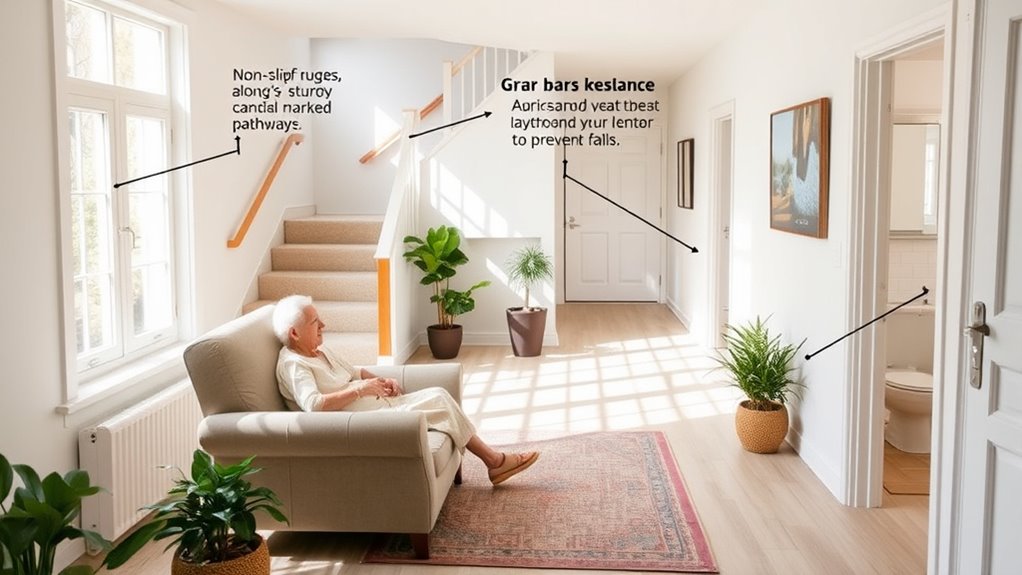
Proper lighting is essential for maintaining safety in your home, especially for seniors or those with vision challenges. Bright, even illumination helps you see potential hazards clearly, reducing the risk of trips and falls. Install sufficient lighting in all living areas, including hallways and bedrooms, to ensure every corner is visible. Nightlights are helpful in hallways and bathrooms, guiding you safely at night without disturbing sleep. Make sure stairways are well-lit from top to bottom, and consider marking step edges with contrasting tape to improve visibility. Outside, solar lights along walkways and paths provide extra illumination, helping you navigate confidently after dark. Consistent, appropriate lighting creates a safer environment and promotes independence in daily activities. Incorporating smart lighting controls can also enhance your home’s security systems, ensuring reliable and energy-efficient illumination. Additionally, thermal behavior of lighting fixtures can impact their effectiveness and safety over time, so choose durable, high-quality options. Regularly inspecting and maintaining your lighting fixtures helps prevent fixture failures that could leave areas unlit and hazardous.
Remove or Secure Trip Hazards Like Rugs and Cords
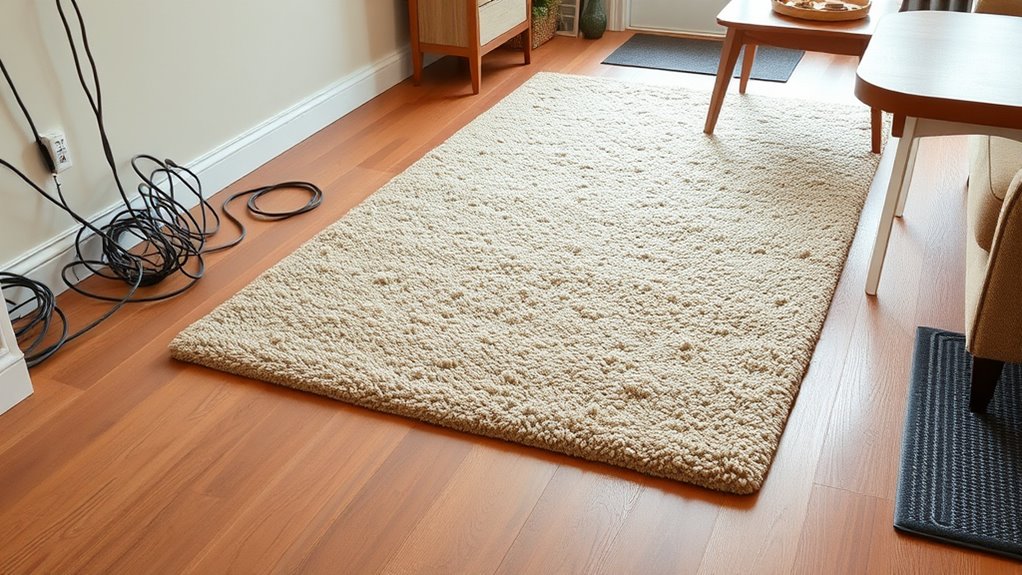
Are loose rugs and tangled cords putting your safety at risk? These common trip hazards can cause falls, especially for seniors. To reduce this risk, remove small or loose rugs entirely, or secure their edges with double-sided tape or non-slip rug pads. Tucking electrical cords behind furniture or securing them with cord covers keeps walkways clear. home safety features, such as grab bars and good lighting, can also help prevent accidents caused by trip hazards. Additionally, ensuring proper flooring materials can reduce the likelihood of slips and trips. Using anti-slip mats in high-traffic areas further enhances safety by providing extra grip. Avoid running cords across high-traffic areas or doorways. Keep cords out of reach of children and pets. Regularly check for frayed or damaged cords and replace them immediately. Maintaining a clutter-free environment helps prevent trips and falls. Additionally, incorporating home safety measures can help ensure your home remains a safer place for everyone, reducing the chance of dangerous falls caused by trip hazards.
Create Clear, Wide Pathways Free of Clutter
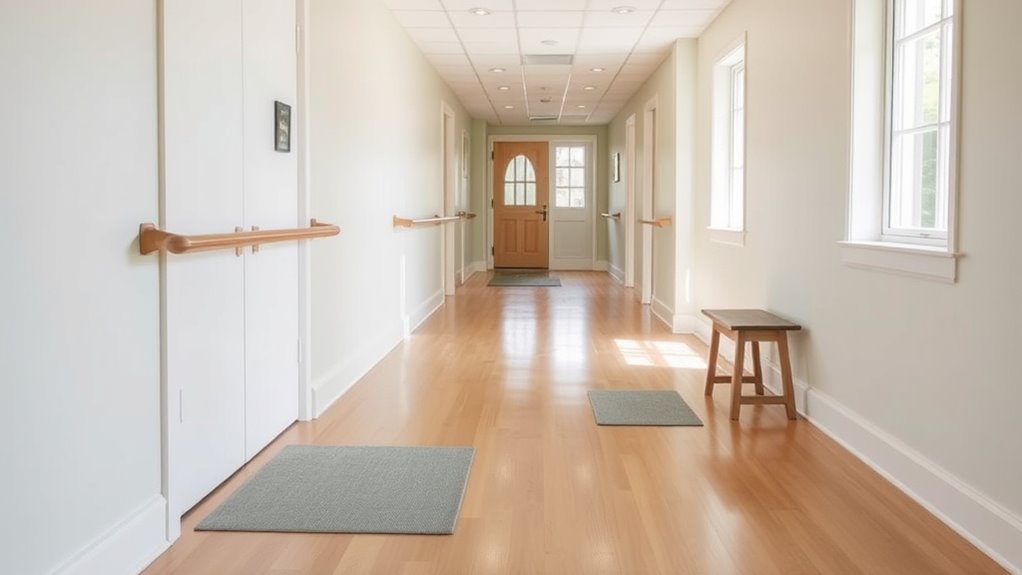
Creating clear, wide pathways in your home is essential for preventing falls. When walkways are cluttered or narrow, it’s easier to trip or lose balance. Keeping pathways unobstructed helps you move safely and confidently. Regularly check for small objects or cords that may have shifted into walkways. Maintaining wide, clear pathways reduces trip hazards and makes your home safer for everyone. Additionally, implementing simple organizational strategies can help keep walkways consistently clear and prevent accidental obstructions. Incorporating safety-focused design principles, such as proper lighting and non-slip flooring, further enhances home safety. Using home layout modifications can also improve overall safety and accessibility. Selecting Suprem fabric for slip-resistant upholstery in your home can provide additional safety benefits, especially in high-traffic or hazard-prone areas. Incorporating slide-resistant flooring options can also significantly reduce the risk of slips and falls throughout your home.
Install Safety Features in the Bathroom
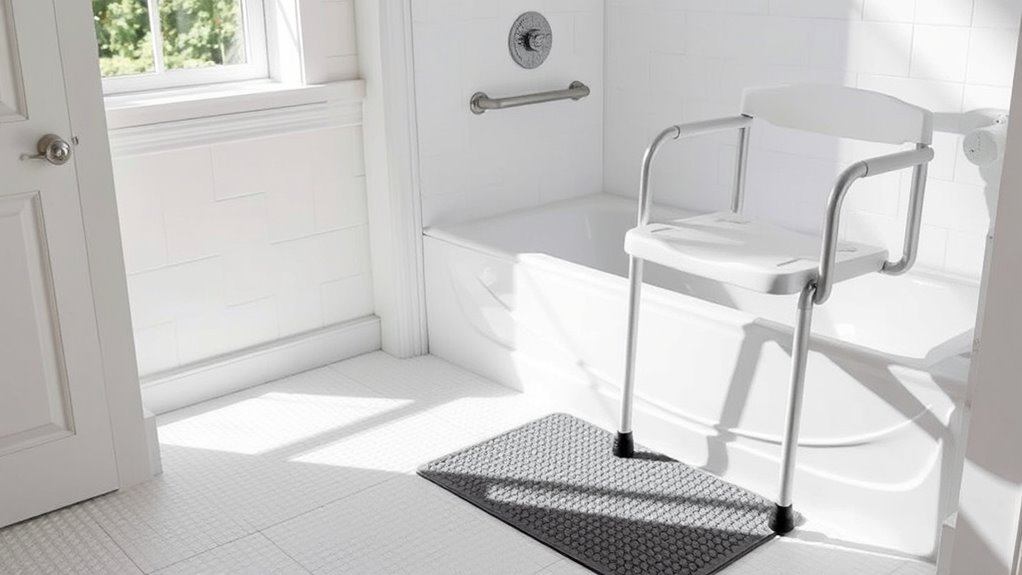
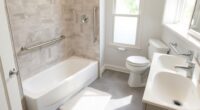
Installing grab bars in strategic locations like near the toilet and inside the shower can prevent slips and falls. Make sure non-slip surfaces are added to bathroom floors and other wet areas to enhance safety. These simple modifications can greatly reduce the risk of accidents in one of the most hazardous parts of your home. Additionally, selecting appropriate surfaces designed for wet environments can further minimize slipping hazards.
Grab Bars Placement
Proper placement of grab bars is crucial for ensuring safety in the bathroom, especially for seniors or individuals with mobility challenges. Correct positioning helps prevent slips and falls during transfers or when standing up.
Consider these key placement tips:
- Install grab bars vertically beside the toilet and in the shower or tub area for stable support during transfers.
- Place grab bars horizontally along the walls of the shower or tub to provide a secure grip while standing or moving.
- Ensure grab bars are mounted into wall studs or with appropriate anchors to support weight safely.
- Familiarity with native cultural practices can help in understanding the importance of safety features rooted in community traditions.
- Proper installation techniques are essential to ensure that grab bars remain secure under daily use and provide reliable support.
Positioning grab bars at accessible heights, typically around 33 to 36 inches from the floor, maximizes their effectiveness. Proper placement encourages independence and reduces fall risks.
Non-slip Bathroom Surfaces
To reduce the risk of slips and falls in the bathroom, adding non-slip surfaces is essential. You can install textured mats or adhesive strips on the shower floor and tub surface to improve grip. Consider replacing smooth tiles with textured ones designed for slip resistance. Using non-slip rugs outside the shower or tub also helps prevent falls when stepping out.
| Surface Type | Safety Feature |
|---|---|
| Shower Floor | Non-slip mats or textured tiles |
| Bathroom Rugs | Non-slip backing |
| Tub Surface | Adhesive strips or textured coating |
| Surface Type | Safety Feature |
| Shower Floor | Prevents slips during use |
| Bathroom Rugs | Provides stable footing |
| Tub Surface | Reduces risk when entering/exiting |
Add Handrails and Non-Slip Strips on Stairs
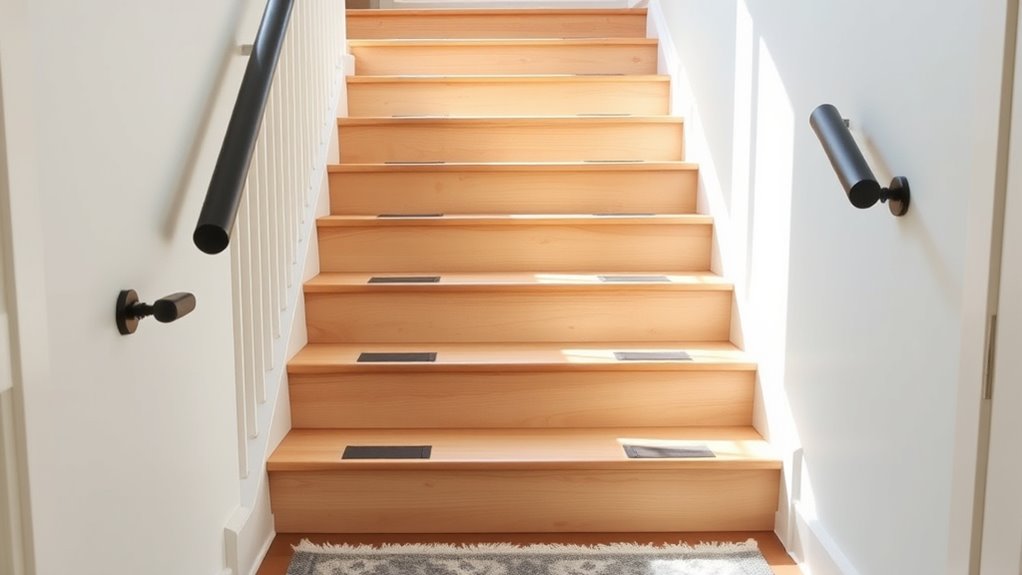
Have you checked whether your stairs are safe enough for everyday use? If not, it’s time to make some simple upgrades. First, install sturdy handrails on both sides of each staircase to provide support. Second, guarantee the handrails are securely attached and extend the full length of the stairs. Third, add non-slip strips or treads to each step to prevent slipping, especially if surfaces are smooth or worn. These modifications can considerably reduce fall risks. Regularly inspect the handrails for stability and replace worn or loose non-slip strips. Additionally, considering the importance of proper installation and maintenance, ensuring your stairs are safe can significantly enhance safety and accessibility, giving both you and your loved ones peace of mind during everyday movements. Incorporating smart home automation solutions, such as sensors that monitor stair safety, can further support fall prevention and provide alerts if potential hazards are detected. Proper stairway lighting is also essential to improve visibility and reduce accidents during nighttime use. To further improve safety, consider checking the stair surface material to ensure it’s suitable for slip resistance in all weather conditions.
Improve Outdoor and Entryway Lighting and Accessibility
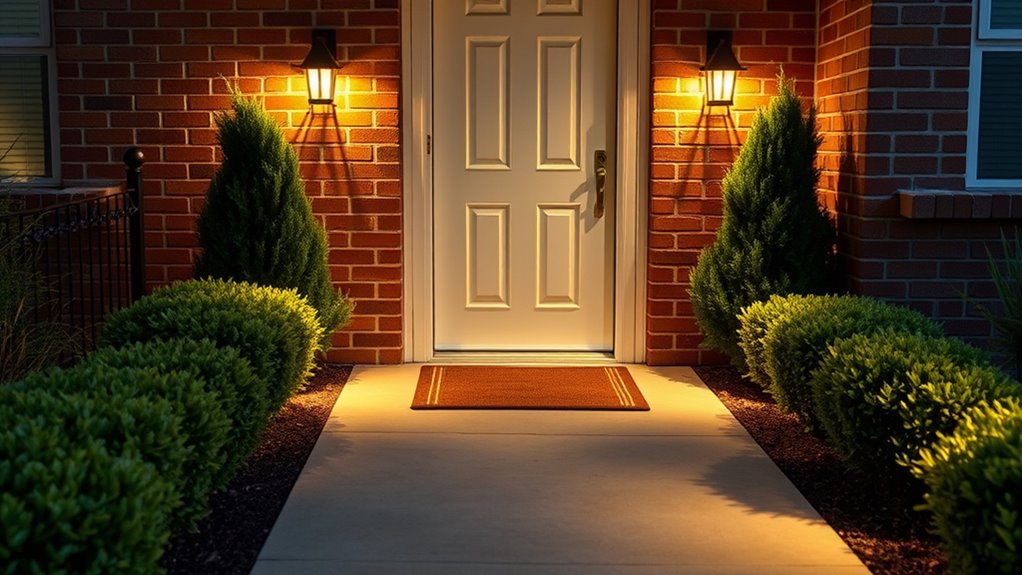
You can reduce fall risks by improving outdoor lighting and making entryways more accessible. Installing bright, motion-activated lights and ensuring easy, obstacle-free access helps everyone navigate safely. Taking these steps creates a safer environment around your home’s exterior. Regularly inspecting and maintaining home safety features can further prevent accidents and promote secure surroundings. Additionally, considering the use of digital literacy tools and resources can help educate family members about online safety, reducing potential hazards indoors.
Enhance Exterior Illumination
Is your home’s exterior adequately illuminated to prevent falls and enhance safety? Proper outdoor lighting makes it easier to see steps, walkways, and potential hazards. To improve safety, consider these steps:
- Install motion-activated lights around entryways, patios, and walkways to ensure areas are lit when needed.
- Use solar-powered pathway lights along sidewalks and driveways for consistent outdoor visibility.
- Replace any dim or burnt-out bulbs promptly, and add additional fixtures if certain areas remain dark at night.
Good exterior illumination reduces trip risks and helps you identify obstacles before they cause a fall. Regularly check and maintain lighting fixtures to keep your outdoor spaces safe year-round.
Ensure Easy Entry Access
Proper outdoor and entryway lighting is essential for preventing falls and ensuring safe access to your home. Bright, well-placed lights help you see steps, walkways, and obstacles clearly, reducing trip hazards. Install motion-activated or dusk-to-dawn lights near entry points to improve visibility at night. Make sure all exterior paths are evenly lit, and add solar lights along walkways and steps for additional illumination. Ensure door thresholds are level and free of clutter, making entry easier and safer. Consider installing ramps instead of steps if needed, and attach sturdy handrails on both sides of stairways. Clear pathways from the driveway to your entrance, keeping them free of clutter and slippery surfaces. Good lighting and accessible design considerably reduce the risk of falls when entering or exiting your home. For added safety, consider incorporating Gold IRA Markets educational resources to explore investment options that can help fund home safety improvements or modifications.
Equip Your Home With Working Smoke and Carbon Monoxide Detectors
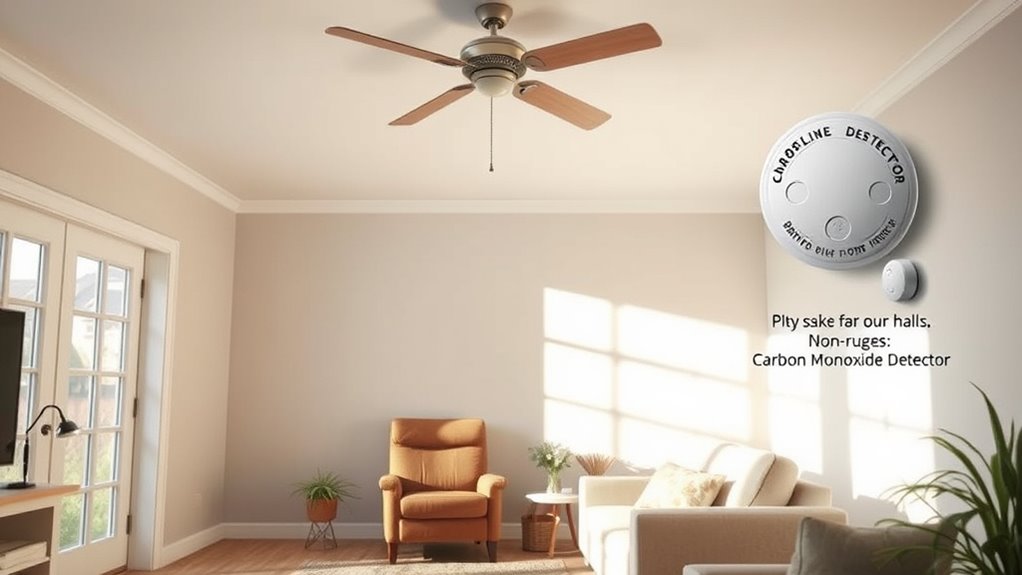
Having working smoke and carbon monoxide detectors in your home is essential for safety. These devices provide early warnings of fires and dangerous gas leaks, giving you time to respond and protect yourself and loved ones. To ensure maximum protection:
Ensure your home stays safe with working smoke and carbon monoxide detectors—early warnings save lives.
- Install smoke detectors on every level, especially near bedrooms and common areas.
- Place carbon monoxide detectors outside bedrooms and near fossil fuel appliances.
- Test detectors monthly and replace batteries at least twice a year, following manufacturer instructions.
Regular maintenance guarantees these alarms will function properly when needed. Remember, a working detector can be the difference between a safe escape and tragedy. Keep your home safe by staying vigilant and maintaining these vital devices consistently.
Adjust Water Heater Settings for Safety
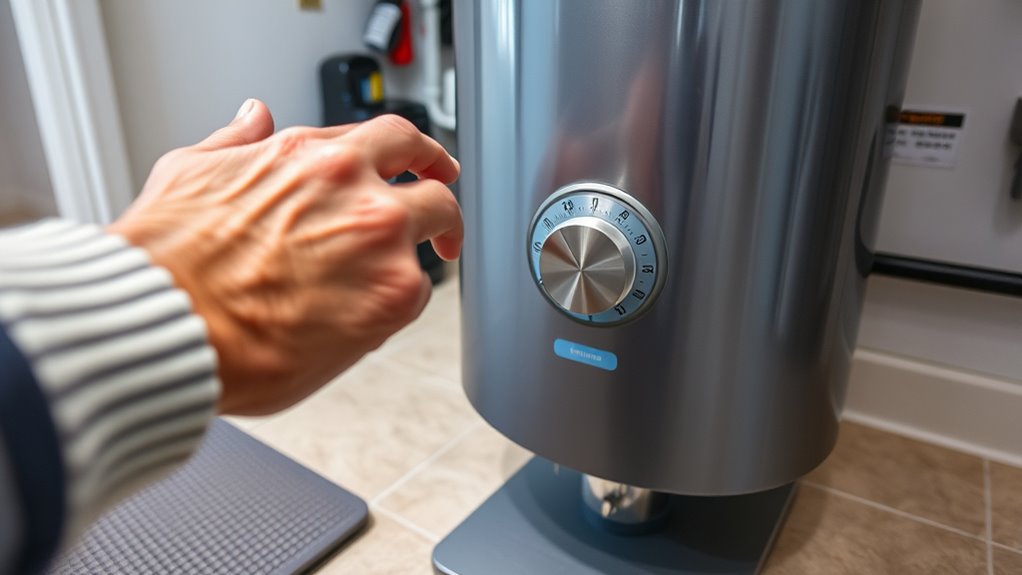
Adjusting your water heater settings is a simple yet effective way to prevent burns and scalding injuries, especially for seniors who may have more sensitive skin or slower reflexes. Set your water heater thermostat to no higher than 120°F (49°C). This temperature reduces the risk of severe burns if someone accidentally touches hot water. Lowering the temperature also helps save energy and prolongs the lifespan of your water heater. Check your current setting regularly and adjust if needed, especially if you notice the water feels hotter than expected. Be sure to inform household members about the temperature change to prevent confusion. Taking this small step can considerably enhance your home’s safety and reduce the chance of accidental burns during daily activities like bathing or washing dishes.
Keep Emergency Equipment Accessible and Up to Date
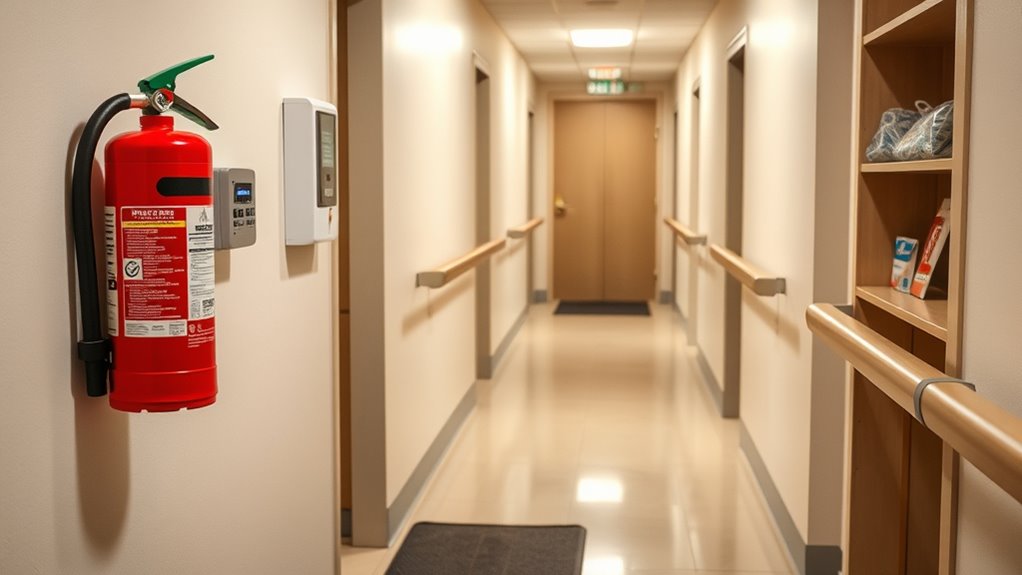
You need to regularly check your emergency equipment to guarantee everything works when you need it. Make sure your fire extinguishers, smoke detectors, and first aid kits are in good condition and easy to reach. Keeping contact information visible and accessible helps you respond quickly in an emergency.
Regular Equipment Checks
Regularly checking and maintaining your emergency equipment guarantees it functions correctly when needed most. To guarantee safety, perform these checks:
- Test smoke and carbon monoxide detectors monthly, replacing batteries at least twice a year.
- Verify that fire extinguishers are fully charged and accessible, and replace or recharge if needed.
- Inspect first aid kits, replacing expired supplies and ensuring all essential items are stocked.
Keeping your emergency gear up to date prevents delays during emergencies. Make it a routine to review these items regularly, so you’re always prepared. Remember, quick access and functioning equipment can make all the difference in preventing serious injuries or worsening situations. Always prioritize safety by staying proactive with your equipment maintenance.
Emergency Contact Accessibility
Ensuring your emergency contacts are easily accessible can make a big difference during urgent situations. Keep a list of your contacts in visible, central locations—near the phone, on the fridge, or in your wallet. Update this list regularly to include current phone numbers and alternative contacts. Consider programming emergency numbers into your phone for quick access.
| Location | Why It Matters |
|---|---|
| On the fridge | Visible in common areas, easy to find |
| In your wallet | Accessible when away from home |
| On your phone | Quick dialing in emergencies |
Conduct Regular Home Safety Checks and Maintenance
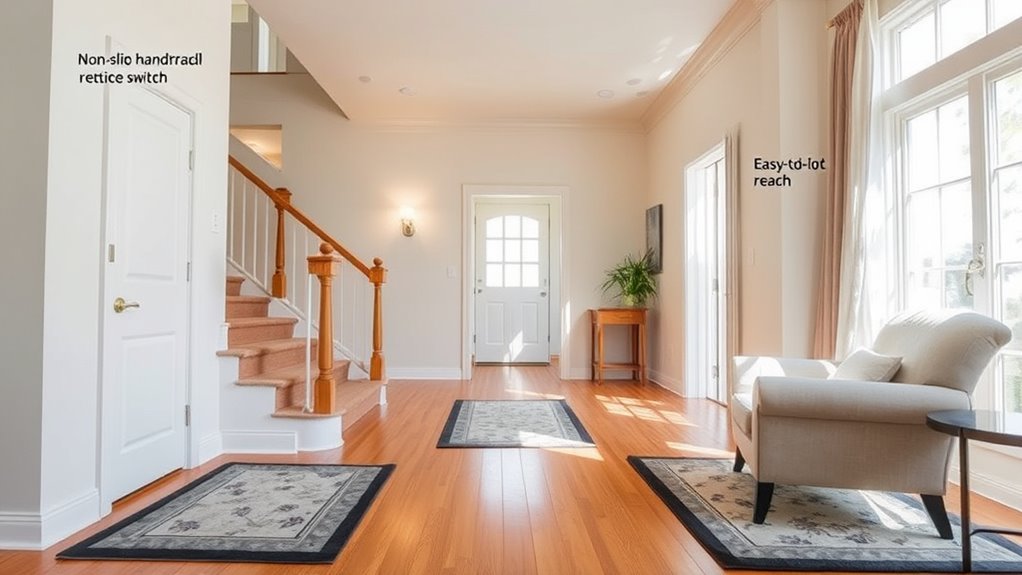
Conducting regular home safety checks and maintenance is essential to prevent falls and other accidents, especially for seniors. Staying proactive helps identify hazards before they cause harm. Here are three key steps:
Regular safety checks help prevent falls and keep seniors safe at home.
- Inspect lighting fixtures and replace burnt-out bulbs to ensure every area is well-lit, including stairways and hallways.
- Check for loose rugs, frayed cords, or unstable furniture, and fix or remove them to prevent trips.
- Test handrails, grab bars, and stair railings for stability, securing or replacing any that are loose or damaged.
Frequently Asked Questions
How Can I Ensure My Home Is Well-Lit at Night for Safety?
You can guarantee your home is well-lit at night by installing nightlights in hallways, bathrooms, and bedrooms to guide your way. Use bright, even lighting throughout living areas, especially near stairways and entry points. Place solar lights along outside pathways for illumination outdoors. Taping down or removing throw rugs reduces tripping hazards. Regularly check and replace bulbs to maintain consistent brightness, helping you see clearly and prevent falls during nighttime navigation.
Which Rugs Are Safest to Keep or Remove to Prevent Falls?
You should definitely keep those plush, decorative rugs—said no one ever. To prevent falls, remove all throw rugs and tape down loose edges on area rugs. Opt for non-slip, low-pile rugs with rubber backing if you must have them. These safer options reduce trip hazards, especially in high-risk areas like bathrooms and hallways. Remember, your goal is a home where slipping isn’t part of the daily routine.
How Often Should I Check and Replace Batteries in Smoke Alarms?
You should check your smoke alarm batteries at least twice a year, ideally during the time change in spring and fall. Replace the batteries immediately if you hear a chirping sound, indicating low power. Regularly testing your smoke alarms guarantees they’re working properly. Consider using long-lasting, 10-year batteries or hardwired alarms with backup power to reduce the frequency of replacements, keeping your home safe.
What Are the Best Types of Handrails for Stairs?
The best types of handrails for stairs are sturdy, continuous, and properly installed on both sides. Look for handrails made from durable materials like wood or metal, ensuring they extend the full length of the staircase. Securely anchored to the wall, they should be easy to grip without sharp edges. Consider textured or non-slip surfaces for added grip, especially if you or your loved ones have limited hand strength or dexterity.
How Do I Identify and Fix Hidden Fall Hazards in My Home?
Think of your home as a treasure chest, hiding unseen dangers. To find these hidden hazards, walk slowly and attentively, observing shadows and changes in floor levels. Check for loose rugs, cords, or uneven surfaces that could trip you up. Fix these by tacking down rugs, securing cords, and clearing clutter. Regularly inspect lighting, stairs, and bathrooms to keep your home safe, turning it into a secure haven rather than a trap.
Conclusion
By taking these simple steps, you create a safer home where accidents become less likely—like a well-lit path guiding you safely through each day. When your home is clear of hazards, and safety features are in place, you’ll notice peace of mind settle in, much like finding a cozy corner after a long day. A little effort now can turn your space into a secure haven, where comfort and safety walk hand in hand.
Fall Picks
fall essentials
As an affiliate, we earn on qualifying purchases.