

To set up a hospital bed at home safely and comfortably, choose a spacious, accessible room near the bathroom, clear of clutter, with good lighting. Assemble the bed carefully following manufacturer instructions, securing all parts and safety features like rails and locks. Pick a supportive mattress, organize electrical cords properly, and regularly maintain the bed to prevent damage. Implement safety measures, and you’ll find practical tips to create a secure and cozy environment tailored to your needs.
Key Takeaways
- Choose a spacious, accessible room near the bathroom with proper electrical outlets and clear pathways.
- Assemble the bed following manufacturer instructions, ensuring stability and proper function of all components.
- Secure and regularly inspect bed rails, locks, and electrical cords to prevent injuries and hazards.
- Select a medical-grade, pressure-relieving mattress that fits snugly and promotes comfort.
- Maintain daily hygiene, routinely check equipment, and keep pathways unobstructed for safety and ease of use.

AireMed Bed Assist Rails (Set of 2) – Fits Some Metal Hospital Beds – for Repositioning & Getting in and Out of Bed Safely – Hospital Bed Rail, Safety Assist Medical Rail for Seniors & Elderly (Brown)
PLEASE READ this and watch the video before ordering. ASTM Certified. These bed rails only fit hospital bed…
As an affiliate, we earn on qualifying purchases.
As an affiliate, we earn on qualifying purchases.
Choosing the Ideal Location in Your Home

Choosing the ideal location for your hospital bed is vital for safety and convenience. You need at least 3 feet of clearance on the primary transfer side to move in and out easily. The opposite side should have a minimum of 2 feet of space for caregivers to assist comfortably. Make sure the room can accommodate additional medical equipment like IV stands or ventilators without clutter. A clear path for wheelchair or walker access is essential for mobility and independence. Proximity to a bathroom enhances safety and convenience, especially during nighttime. Also, guarantee there’s easy access to electrical outlets for powering medical devices. Selecting a well-organized, spacious area helps promote safety, ease of use, and a more comfortable environment for ongoing care. Ensuring proper sleep environment also contributes to overall well-being and recovery. Additionally, choosing a room with good ventilation and lighting can positively impact comfort and healing. Incorporating proper home maintenance practices can further support a safe and comfortable recovery space. Proper room organization can help prevent accidents and improve daily functioning. Furthermore, considering electrical safety measures is crucial to prevent hazards related to medical equipment.

Lunderg Alternating Air Pressure Mattress Pad with Static Mode – Comfortable Bed Sore Prevention – Includes Waterproof Mattress Topper for Hospital Bed or Home & Quiet Pump – Doctors Recommended
Doctor & Therapist Approved – Prevent & Heal Bedsores: Lunderg’s Air Pressure Mattress for bed sores relieves pressure…
As an affiliate, we earn on qualifying purchases.
As an affiliate, we earn on qualifying purchases.
Proper Assembly and Setup of the Bed

Proper assembly and setup of the hospital bed are essential for safety and functionality. You should follow the manufacturer’s instructions carefully to ensure all components are correctly assembled. You can also consult user manuals or online tutorials if needed. To make the process smoother, consider these steps:
- Gather all necessary tools like wrenches and screwdrivers before starting.
- Enlist 2–3 people to lift and position heavy frame components safely.
- Assemble the frame on a flat, clear surface to prevent damage or misalignment.
- Check that all bolts and screws are tightened securely, and test the bed’s stability.
- Incorporate smart technology features where possible to monitor the bed’s condition and enhance safety. These features can provide real-time alerts and improve patient safety during use.
- Ensure proper contrast ratio settings to achieve optimal visibility and reduce eye strain during use. Additionally, paying attention to ergonomic design can further enhance user comfort and safety.
Take your time during assembly, and don’t rush. Proper setup prevents accidents, ensures smooth operation, and guarantees the bed’s longevity. When finished, review all safety features before use.

Invacare Bed Crank Assembly with High and Low Height Adjustments, 1157942
Compatible with invacare Homecare Beds such as 5410IVC, 5310IVC
As an affiliate, we earn on qualifying purchases.
As an affiliate, we earn on qualifying purchases.
Implementing Essential Safety Features

Make sure you secure bed rails properly and double-check that all locking mechanisms work before use. Keep electrical cords managed to prevent tripping hazards, and verify that outlets and cords are in good condition. Taking these steps helps guarantee safety and smooth operation of the bed for everyday use. Additionally, ensure that the electrical safety measures are up to date to prevent electrical hazards. Regularly inspecting smart home integration features can also help monitor and enhance safety in the home environment. Incorporating energy-efficient systems can contribute to reducing overall energy consumption. Furthermore, implementing rigorous testing processes is vital for maintaining reliable and safe equipment in a home setting. Remember to review sauna heater and ventilation systems to maintain a safe and comfortable environment.
Secure Bed Rails Properly
Securing bed rails correctly is essential for preventing falls and ensuring patient safety. Properly installed rails reduce the risk of injury during movement or sleep. To do this effectively:
- Check that the rails are tightly fastened to the bed frame, with no wobbling.
- Confirm the locking mechanisms engage securely and hold the rails in place.
- Inspect the rails regularly for signs of wear, cracks, or damage.
- Adjust the height to ensure the patient can easily get in and out without risking entrapment.
- Ensure that the materials used are compatible with bed safety standards to maximize reliability and safety.
- Incorporate Free Floating concepts into your safety checks to maintain a flexible and adaptable approach to bed setup.
- Incorporate proper maintenance routines to keep safety features functioning effectively over time.
- Staying informed about latest safety guidelines can help you adapt your setup to new standards and best practices.
- Regularly consult trusted safety resources to stay updated on emerging safety technologies and recommendations.
Always follow the manufacturer’s instructions for installation and maintenance. Never leave loose or improperly secured rails, and ensure they’re comfortable and functional before use. Regular checks help maintain safety and peace of mind.
Test Locking Mechanisms
Testing the locking mechanisms on your hospital bed is a crucial step to guarantee safety before use. First, engage each lock to ensure the bed’s wheels or casters are firmly immobilized, preventing unwanted movement. Next, verify that the side rails lock securely when raised, providing a safety barrier. Check that the bed’s height adjustment locks hold steady when you raise or lower the bed, avoiding sudden shifts. Confirm that all mechanical locks operate smoothly without sticking or excessive force. If your bed has electronic locking features, test them by activating and deactivating to ensure reliable function. Regularly inspecting these locks helps catch wear or damage early, ensuring the bed remains safe and secure for daily use. Additionally, understanding the lock mechanisms’ design and operation can help troubleshoot issues and maintain safety over time.
Manage Electrical Safety
To guarantee electrical safety when setting up your hospital bed at home, it’s vital to install circuit protectors and use grounded outlets to prevent electrical shocks and fires. Regularly check that cords are in good condition, free from frays or damage. Use extension cords sparingly, and only if they’re rated for medical equipment. Ensure all electrical connections are secure and kept away from water or moisture. To enhance safety, consider these steps: 1. Install surge protectors on outlets powering your bed and medical devices. 2. Use grounded outlets to prevent shocks. 3. Keep cords organized and out of walkways to avoid tripping. 4. Unplug devices when not in use or during storms. Paying attention to electrical safety tips ensures a safer environment for both patient and caregiver. Implementing proper grounding techniques can further reduce the risk of electrical shock in home medical setups, and staying informed about electrical codes can help maintain compliance and safety standards.

Mini First Aid Kit – 150 Piece Small Waterproof Hard Shell Medical Kit for Home, Car, Travel, Camping, Truck, Hiking, Sports, Office, Vehicle & Outdoor Emergencies- Small First Aid Medical Kit (Red)
ESSENTIALS FOR EMERGENCY: Everything you need is in this first aid kit! Our kit includes over 150 professional-grade…
As an affiliate, we earn on qualifying purchases.
As an affiliate, we earn on qualifying purchases.
Selecting Comfortable and Supportive Mattresses

Choosing the right mattress is essential for ensuring comfort and proper support, especially for someone who spends extended periods in bed. You want a mattress that relieves pressure points, prevents soreness, and promotes good circulation. Look for options designed for medical needs, such as pressure redistribution or memory foam mattresses, which contour to the body. Make sure the mattress fits snugly on the bed frame to avoid gaps that could cause discomfort or safety issues. Breathable materials improve airflow, keeping the patient cool and comfortable. If necessary, consider specialized mattresses for specific health conditions, like pressure ulcers or spinal support. Investing in a quality mattress enhances overall comfort, supports healing, and helps prevent bedsores or other complications.
Preparing the Room for Accessibility and Convenience

Start by clearing a pathway from the entrance to the bed to guarantee easy delivery and movement. Remove unnecessary furniture and check that doorways, hallways, and elevators are wide enough for the bed and equipment. Finally, arrange electrical outlets and equipment so everything is within reach and the room remains safe and functional.
Clear Pathways and Space
Ensuring clear pathways around the hospital bed is essential for safety and ease of movement. You want enough space for both the patient and caregiver to navigate comfortably without obstruction. To achieve this, consider these key points:
- Keep at least 3 feet of clearance on the primary transfer side for safe patient transfer.
- Maintain a minimum of 2 feet on the opposite side for caregiver access.
- Clear the area of unnecessary furniture and clutter to prevent tripping hazards.
- Ensure there’s a straightforward route from the entrance to the bed, including doorways and hallways.
Equipment and Electrical Setup
To optimize safety and convenience, you’ll need to carefully plan your room’s electrical and equipment setup before installing the hospital bed. Start by identifying accessible electrical outlets close to the designated bed area, ensuring they’re grounded and in good condition. Use circuit protectors or surge protectors to prevent electrical issues. Secure cords along the baseboards or walls to avoid tripping hazards, and avoid overloading outlets. Make sure the bed’s controls are within easy reach for the patient and caregiver, possibly mounting control panels or using extension cords if necessary. Prepare space for additional medical equipment like IV stands or ventilators. Finally, double-check that all electrical devices and outlets meet safety standards, reducing risk and ensuring reliable operation.
Daily Maintenance and Care Routines
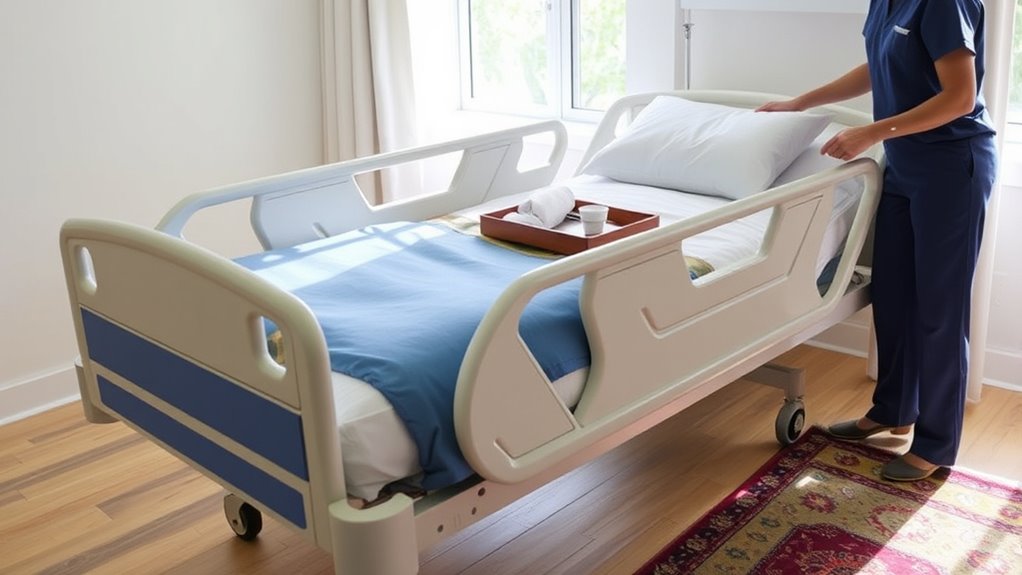
Maintaining a clean and comfortable environment is essential for the safety and well-being of the patient, so establishing a daily routine for care and upkeep helps prevent infections and discomfort. To keep everything in check, consider these steps:
- Make the bed every day using clean linens to ensure hygiene and comfort.
- Regularly inspect the mattress and bed frame for signs of wear or damage.
- Clean and sanitize the mattress, bed surfaces, and accessories to prevent germs.
- Familiarize yourself with bed controls to easily adjust height, head, and foot positions as needed.
These routines help uphold safety, promote comfort, and extend the lifespan of your equipment. Consistency is key to creating a safe, hygienic, and supportive environment for your loved one.
Ensuring Electrical Safety and Functionality

Proper electrical safety is essential to keep the hospital bed functioning reliably and to prevent hazards. Always plug the bed into a grounded outlet and avoid overloading circuits. Check cords regularly for frays, cuts, or damage, and replace them immediately if needed. Keep electrical cords away from water and high-traffic areas to prevent tripping or electrical shocks. Secure cords neatly along walls or furniture to avoid tangling. Test all safety features, like emergency stop functions and lock mechanisms, before use. Use surge protectors if recommended by the manufacturer. Ensure the bed’s electrical components are clean and free of dust. Schedule routine inspections and maintenance of the electrical system to identify potential issues early, maintaining both safety and proper functionality.
Enhancing Comfort With Accessories and Additional Equipment
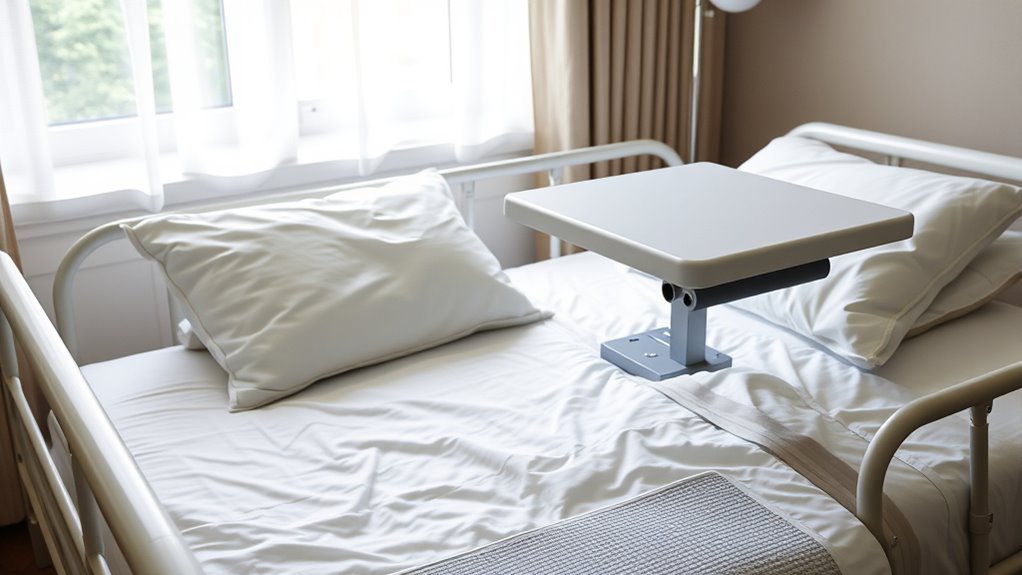
Enhancing comfort with accessories and additional equipment can considerably improve the usability and coziness of a home hospital bed. You can customize your setup to meet your needs and increase safety. Here are four key options:
- Adjustable bed rails – help prevent falls and provide support when getting in or out.
- Supportive pillows – improve comfort for your head, back, or limbs, reducing pressure points.
- Overbed tables – offer a stable surface for meals, reading, or other activities without leaving the bed.
- Trapeze bars – assist with repositioning and transferring, giving you extra leverage and independence.
Adding these accessories can make daily routines easier and more comfortable, enhancing your overall experience.
Frequently Asked Questions
How Do I Choose the Safest Location for My Hospital Bed?
You should pick a spot with at least 3 feet of clearance on the transfer side and 2 feet on the other for safe movement. Make sure there’s enough space for medical equipment and easy wheelchair access. Position the bed near a bathroom and outlets for convenience. Keep pathways clear, remove unnecessary furniture, and make certain the room is well-lit and calming to promote safety and comfort.
What Tools Are Needed for Assembling the Bed Correctly?
You’ll need a set of trusty tools—wrenches, screwdrivers, and possibly pliers—to tame the beast of heavy frame components. Think of the wrench as your wand, tightening bolts with confident precision. The screwdriver is your chisel, carving out proper assembly. Gather these before you start, ensuring a smooth journey. With patience and these tools, you’ll transform scattered parts into a sturdy, safe haven for comfort.
How Often Should Safety Features and Locks Be Inspected?
You should inspect safety features and locks weekly to verify they work properly. Check all bed rails, locking mechanisms, and mobility functions for signs of wear or damage. Test each component to confirm they lock securely and release smoothly. Regular inspections prevent accidents and keep the bed safe for daily use. If you notice any issues, address them immediately or seek professional maintenance to maintain safety standards.
Which Mattress Type Best Suits Specific Medical Conditions?
Like Goldilocks finding the perfect bed, you need a mattress that suits your medical needs. For pressure sores, opt for a pressure-relief or alternating air mattress. If you have respiratory issues, a firm, supportive mattress helps with breathing. For mobility or comfort, memory foam offers pressure points and support. Choose a mattress that fits securely and enhances your safety, ensuring restful, healing sleep tailored to your condition.
How Can I Prevent Electrical Hazards With Hospital Bed Setups?
You can prevent electrical hazards by securing all cords to avoid tripping, using circuit protectors, and ensuring outlets are properly grounded. Keep electrical cords away from water and damp areas, and regularly inspect cords and plugs for damage. Test all safety features, like lockable wheels and emergency stops, before use. Always follow manufacturer instructions for wiring and electrical connections, and avoid overloading outlets to reduce fire risks.
Conclusion
Setting up a hospital bed at home may seem overwhelming, but with the right steps, you can create a safe, comfortable space. Have you considered how small details like mattress support or accessibility can make a big difference in daily comfort? By following these tips, you’ll guarantee safety and ease for your loved ones. Remember, a well-prepared space isn’t just about equipment—it’s about providing care and peace of mind every day.